















































Is Canada Closing Its Doors? Making Sense of the 2026 Immigration Overhaul

Is Canada Closing Its Doors? Making Sense of the 2026 Immigration Overhaul
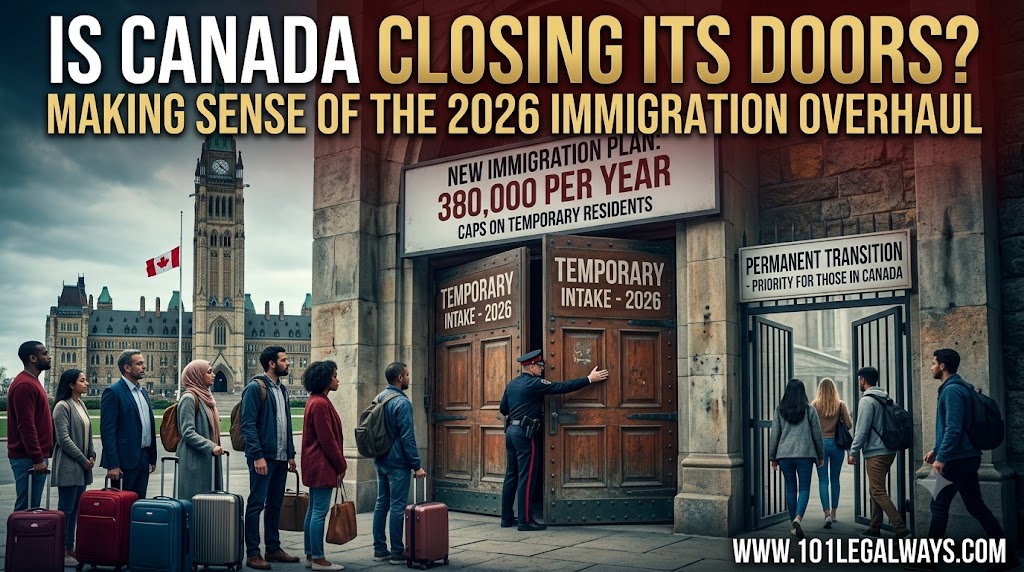
If you’ve tried to rent an apartment, find a family doctor, or buy groceries lately, you know the pressure everyday Canadians are feeling right now. Over the past couple of years, the conversation around the dinner table has shifted. We all want a prosperous, welcoming country, but the reality of our stretched infrastructure, particularly housing and healthcare, has sparked a massive rethink of how Canada grows.Here at 101LegalWays, we break down the legal and daily life realities of living in Canada. Today, we need to talk about the 2026-2028 Immigration Levels Plan, arguably the most significant structural shift in Canadian immigration in a decade.For years, Canada’s approach was simple: bring in more people to grow the economy. But in 2026, the government has hit the brakes. Are we moving in the right direction, or are we slamming the door on the talent we need? Let’s break down what’s actually happening.
1. The Big Shift: Shrinking the Target
Not long ago, Canada was aiming to welcome 500,000 new permanent residents (PRs) annually by 2025/2026. That plan has been scrapped.Under the current 2026-2028 plan, the target for new permanent residents has been stabilized at 380,000 per year. That represents a massive 24% drop from the original 2026 projections. The government’s new goal is to ensure permanent resident admissions do not exceed 1% of the population beyond 2027.But the drop in PR targets is only half the story.
2. The Squeeze on Temporary Residents
If you are an international student or a temporary foreign worker in Canada right now, the anxiety is real. For the first time in history, the government has set hard caps on temporary resident arrivals, aiming to reduce the temporary population to just 5% of Canada’s total population by the end of 2026.Here is what that looks like on the ground:International Students: The intake caps introduced over the last couple of years have drastically reduced study permit approvals. For 2026, the target is 155,000 new student arrivals, a sharp drop designed to ease local rental markets around college towns.Workers & Spouses: Eligibility for Post-Graduation Work Permits (PGWPs) and Spousal Open Work Permits has been heavily restricted to align with specific labour market needs.The Asylum System: With the recent passing of Bill C-12, the asylum process has been tightened. Claims made more than a year after entry, or claims made 14 days after entering between land ports, face much stricter referral rules to the Immigration and Refugee Board.The message from the government is clear: the days of unlimited temporary migration are over.
3. Transitioning Those Already Here
So, who is getting permanent residency in 2026?The focus has shifted inward. Recognizing that sending hundreds of thousands of integrated workers home would cripple certain industries, Immigration, Refugees and Citizenship Canada (IRCC) is heavily prioritizing the people who are already here.Currently, about 50% of new permanent residents are transitioning from temporary status. The economic streams are focusing on drawing talent directly from the pool of foreign nationals already living, studying, and working in Canada, particularly those in healthcare, trades, and rural communities. If you are already in the country contributing to the economy, your pathway is being prioritized over applicants applying from abroad.
Are We on the Right Path?
This is where the debate gets heated.
On one hand, the "common man" perspective makes sense: you can’t invite guests to your house if you don’t have enough beds for them to sleep in. Easing the pressure on our housing supply and public services is a critical necessity. Proponents of the 2026 changes argue this is a long-overdue reality check that brings immigration in line with our actual domestic capacity.On the other hand, many employers are panicking. Retail, hospitality, and agriculture are struggling to fill entry-level positions without the steady stream of international students and temporary workers. Furthermore, refugee advocates are deeply disappointed by a 30% reduction in privately sponsored refugees, arguing that Canada is stepping back from its humanitarian legacy.Are these policies a necessary correction to protect Canadian living standards, or are they a reactive overcorrection that will hurt our economy and international reputation?
We want to hear from you.