






























Teachers and Education Workers: Understanding Express Entry PR Opportunities

Canada depends on education workers to support students, families and communities. Teachers, early childhood educators, teacher assistants and instructors who work with persons with disabilities all play an important role in helping children and adults learn, grow and succeed.
For many foreign trained teachers and education workers, the question is simple:
Can my education experience help me become a permanent resident of Canada?
The answer may be yes, but the process is not automatic. Express Entry category based selection can create opportunities for education workers, but applicants must still meet Express Entry requirements, prove their work experience, match the correct occupation, maintain valid documents and understand licensing rules.
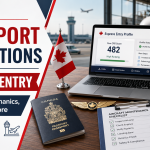
IRCC lists education occupations as one of the current Express Entry category based selection areas. Category based selection allows Canada to invite candidates in the Express Entry pool who meet specific category requirements connected to an economic goal.
Real Life Scenario: Meet Lina
Lina is an elementary school teacher from Lebanon. She has six years of teaching experience, a bachelor’s degree in education and strong English language skills. She wants to move to Canada permanently and continue working with children.
At first, Lina believes that because Canada needs education workers, her teaching background will automatically qualify her for permanent residence.
Then she learns that the process is more detailed.
She needs to check whether her occupation appears in the official education category list. She must prove that her work experience matches the correct National Occupational Classification. She must also qualify for one of the Express Entry programs and compete with other candidates through the Comprehensive Ranking System.
Lina also discovers another important point: immigration eligibility is not the same as professional licensing. Even if she becomes a permanent resident, she may still need provincial certification before working as a teacher in Canada.
What Is the Education Occupations Category?
The education occupations category is part of Express Entry category based selection.
Express Entry is Canada’s online system for managing skilled worker immigration applications. It covers three main federal programs:
• Canadian Experience Class
• Federal Skilled Worker Program
• Federal Skilled Trades Program
To be considered in a category based round, a candidate must first meet the minimum Express Entry criteria, including eligibility for one of the three programs managed through Express Entry.
This means education work experience can help, but it does not replace the basic Express Entry rules.
Eligible Education Occupations
IRCC’s education category includes specific occupations. Applicants must check the official list carefully and compare their real job duties with the correct occupation.
Current education category occupations include:
• Secondary school teachers
• Elementary school and kindergarten teachers
• Early childhood educators and assistants
• Instructors of persons with disabilities
• Elementary and secondary school teacher assistants
These occupations are listed under the education category with their 2021 NOC codes and TEER categories on IRCC’s category based selection page.
This list is important because not every job connected to education will qualify. A school administrator, tutor, daycare worker, training coordinator or office employee may work in an education setting, but that does not automatically mean the occupation fits the category.
The Breakdown: How This Category Works
The education category does not replace Express Entry. It adds another possible invitation route for candidates who are already eligible for Express Entry.
Step 1: You must qualify for Express Entry
You must first be eligible for one of the Express Entry programs. Without that, you cannot rely on a category based invitation round.
Step 2: You must meet the education category requirement
For occupation based categories, IRCC generally requires qualifying work experience in a listed occupation. The work experience must match the occupation selected in the Express Entry profile and must be properly documented.
Step 3: You are ranked by CRS score
IRCC identifies candidates in the pool who meet the category requirements. Then it ranks eligible candidates using CRS scores and invites top ranking candidates to apply for permanent residence.
Step 4: You apply only after receiving an invitation
An Express Entry profile is not a permanent residence application. If IRCC sends an invitation to apply, the candidate has sixty days to submit a full permanent residence application.
Why NOC and TEER Matter
Canada uses the 2021 National Occupational Classification system to identify and categorize jobs based on training, education, experience and responsibilities. These are known as TEER categories.
For education workers, this is very important.
Your job title alone is not enough. Immigration officers look at your actual duties.
For example:
• A person called a “teacher” must still show duties that match the correct teacher occupation
• An early childhood educator must show duties that match early childhood education work
• A teacher assistant must show duties connected to supporting elementary or secondary instruction
• A private tutor may not automatically match a listed education occupation
• A school office worker may work in education but may not qualify under the education category
The strongest profile connects the applicant’s real duties to the correct NOC.
Immigration Eligibility Is Not the Same as Licensing
This is one of the biggest misunderstandings for teachers and education workers.
Getting permanent residence does not automatically allow a person to work as a licensed teacher in Canada. Education is often regulated at the provincial or territorial level.
Depending on the province and occupation, an applicant may need:
• Teacher certification
• Early childhood educator registration
• Credential assessment
• Proof of supervised teaching experience
• Additional courses or training
• Background checks
• Language requirements for the profession
For example, someone may qualify for Express Entry as a teacher, but still need to complete provincial certification before teaching in a public school.
Applicants should research licensing rules in the province where they plan to live and work.
Why CRS Still Matters
Some applicants think that being in a listed education occupation means they do not need a strong CRS score. That is not correct.
In category based rounds, IRCC still ranks eligible candidates in the Express Entry pool and invites top ranking candidates.
CRS points can come from factors such as:
• Age
• Education
• English language ability
• French language ability
• Canadian work experience
• Foreign work experience
• Spouse or partner factors
• Canadian education
• Provincial nomination
A provincial or territorial nomination can add significant CRS points and may help some candidates become more competitive. CRS remains an important part of the Express Entry process.
Common Mistakes Teachers and Education Workers Should Avoid
Mistake 1: Assuming every education job qualifies
Not every job in a school, daycare, college or training centre qualifies under the education category. The occupation must match the official list.
Mistake 2: Choosing an occupation based only on title
Your duties matter more than the title printed on your contract. The selected NOC must reflect what you actually did at work.
Mistake 3: Ignoring licensing requirements
Permanent residence and professional licensing are separate. A teacher may still need provincial certification after immigration approval.
Mistake 4: Submitting weak employment letters
Employment letters should clearly show your job title, dates, hours, salary, duties and employer details.
Mistake 5: Forgetting language test validity
Express Entry requires approved language test results. Language results must remain valid when required during the immigration process.
Mistake 6: Thinking a profile means approval
Creating an Express Entry profile only places an eligible candidate in the pool. It does not guarantee an invitation or permanent residence.
Documents to Prepare Early
Teachers and education workers should start preparing documents before receiving an invitation.
Common documents may include:
• Passport
• Language test results
• Education documents
• Educational Credential Assessment if required
• Teaching certificates
• Early childhood education registration where applicable
• Employment reference letters
• Pay records
• Tax documents
• Proof of classroom duties
• Proof of supervised teaching experience if available
• Professional development records
• Proof of funds where required
• Police certificates
• Civil status documents
• Documents supporting NOC and TEER selection
IRCC’s Express Entry process includes documents such as language test results, education documents, job offer documents where applicable, proof of funds where required and police certificates.
The Solution: Why Guidance Matters
This article is sponsored by 101 Legal Ways, a public awareness platform dedicated to helping people understand Canadian laws, immigration and daily life in clear, practical language.
For teachers and education workers, the immigration process can feel confusing because several issues overlap:
• Express Entry program eligibility
• Education category eligibility
• NOC and TEER matching
• CRS score strategy
• Education credential assessment
• Language testing
• Employment documentation
• Provincial licensing
• School board or employer requirements
101 Legal Ways helps readers understand these pathways in a practical way, so they can avoid guesswork and prepare more confidently.
For someone like Lina, proper guidance can help answer important questions:
• Is my occupation listed in the education category?
• Do my job duties match the correct NOC?
• Which Express Entry program do I qualify under?
• Do I need an Educational Credential Assessment?
• What licensing rules apply in my destination province?
• How can I improve my CRS score?
• Are my employment letters strong enough?
Actionable Takeaways
1. Confirm your occupation on the official education list
Do not rely only on your job title. Check whether your occupation is listed and compare your duties with the correct NOC.
2. Review your Express Entry eligibility
Category eligibility is not enough. You must still qualify under Canadian Experience Class, Federal Skilled Worker Program or Federal Skilled Trades Program.
3. Research licensing early
If you want to work as a teacher or early childhood educator, review provincial or territorial licensing rules before making career plans.
4. Prepare strong employment documents
Collect detailed reference letters, proof of duties, pay records and education documents before you receive an invitation.
Final Thoughts
The education occupations category can create important permanent residence opportunities for teachers and education workers.
But the opportunity is not automatic. Applicants must still qualify for Express Entry, meet category requirements, prove their work experience, maintain valid documents and compete through CRS ranking.
For education professionals, the strongest strategy connects three things clearly: the right occupation, the right documents and the right licensing plan.
Disclaimer
This article is for educational and public information purposes only. It does not constitute formal legal advice, immigration advice or a lawyer and client relationship. Canadian immigration laws, policies and procedures can change. Your options depend on your personal facts. Speak with a licensed Canadian lawyer, a licensed paralegal where permitted or a regulated Canadian immigration consultant before making immigration decisions.