





































Receiving a Canadian study permit can feel like the end of a difficult application process. However, the document is not an unconditional right to remain, study or work in Canada until the date printed on it.
A study permit may be cancelled in specific circumstances. It can also become invalid automatically under the Immigration and Refugee Protection Regulations, even when the printed expiry date has not arrived. A student who violates the conditions of the permit may lose student status, face enforcement consequences or encounter problems in a future application.
These outcomes are related, but they are not identical. Calling every situation a “cancellation” can cause a student to misunderstand what happened and take the wrong next step.
This guide explains the current rules governing cancellation, invalidity, expiry and non-compliance. It also identifies the records students should preserve and the questions they should ask if IRCC contacts them about their permit.
A Student Receives an Unexpected Message
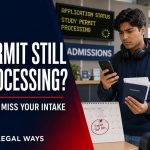
Arjun received a study permit valid for two years and began classes at the designated learning institution named in his application. Several months later, he received correspondence concerning information on the permit and the way it had been issued.
He assumed the document remained usable because the printed expiry date was still more than a year away. A friend told him that IRCC could never cancel a permit after issuing it.
That advice was unsafe.
Since January 31, 2025, the regulations have expressly allowed an officer to cancel a study permit when satisfied that it was issued based on an administrative error. The regulations also identify other events that make a study permit invalid, including cancellation under specified provisions, ceasing to be enrolled at the DLI named in the permit, reaching the applicable point after completing studies or the permit expiring.
Arjun should read the exact correspondence, verify his status and obtain advice before continuing to study, work or travel. The printed document alone does not answer whether it remains legally valid.
The Short Answer
Yes. Canadian law provides specific circumstances in which a study permit can be cancelled after it is issued.
Under section 222.7 of the Immigration and Refugee Protection Regulations, an officer may cancel a study permit if satisfied that it was issued based on an administrative error.
A study permit is also cancelled when:
- Its holder becomes a permanent resident
- Its holder dies
- A removal order against its holder becomes enforceable
The first situation involves an officer exercising a statutory power. The other listed events operate under the regulations when the specified event occurs.
However, many situations commonly described as cancellation are legally different. A permit may become invalid because the student is no longer enrolled at the DLI named in the permit, reaches 90 days after completing studies or reaches the printed expiry date. Non-compliance can lead to loss of status, enforcement action and future application consequences, but it should not automatically be described as cancellation under the administrative-error provision.
What Changed in 2025?
IRCC announced that amendments strengthening the authority to cancel temporary resident documents came into force on January 31, 2025.
The changes gave officers express authority to cancel a study permit or work permit issued because of an administrative error. They also provided for the cancellation of temporary resident visas, electronic travel authorizations, study permits and work permits when a person becomes a permanent resident or dies.
IRCC explained that the amendments were intended to strengthen the integrity of temporary residence programs and border security. They do not mean that officers can cancel any study permit for any reason. The statutory requirements attached to the particular cancellation provision must be satisfied.
Read IRCC’s official notice about the temporary resident document cancellation rules.
Cancellation Because of an Administrative Error
Section 222.7 of the regulations states that an officer may cancel a study permit if satisfied that it was issued based on an administrative error.
The wording matters. It does not say that any mistake by the applicant automatically falls under this provision. It refers specifically to a permit issued based on an administrative error.
The public regulation does not provide a complete list of what may qualify. Students should therefore avoid making assumptions about whether a particular problem is merely typographical, affects the permit conditions or affects the validity of the entire document.
If a student receives a notice mentioning an administrative error, the student should:
- Read the notice in full
- Identify the permit number and application involved
- Check whether IRCC says the permit is already cancelled or is reviewing it
- Confirm the effective date of any cancellation
- Stop any activity that is no longer authorized
- Preserve the original application and all decision correspondence
- Obtain case-specific advice promptly
Do not ignore the notice because the paper permit still shows a future expiry date.
Review the official text of section 222.7 of the Immigration and Refugee Protection Regulations.
Cancellation After Becoming a Permanent Resident
Under section 222.8, a study permit is cancelled when the permit holder becomes a permanent resident.
This is usually not a negative immigration consequence. Permanent residents do not need study permits to study in Canada. Their right to remain in Canada comes from permanent resident status rather than temporary student status.
The student should still update the school, tuition classification records and other relevant accounts. Provincial residency and tuition policies are separate from the federal immigration rule and may require additional evidence or waiting periods.
The regulation also states that a study permit is cancelled if its holder is deceased.
Review the official text of section 222.8 of the regulations.
Cancellation When a Removal Order Becomes Enforceable
Section 243.2 of the regulations states that a study permit and work permit are cancelled when a removal order against the foreign national becomes enforceable.
The distinction between a removal order being made and becoming enforceable can be legally important. The effect may depend on the type of proceeding, whether a statutory stay applies and whether another legal process is underway.
Anyone who receives a removal order or enforcement document should obtain authorized legal advice immediately. Do not rely on a school, employer or informal online explanation to determine whether the order is enforceable or whether the study permit remains valid.
Review section 243.2 of the Immigration and Refugee Protection Regulations.
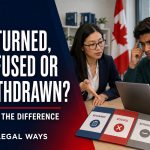
Cancellation, Invalidity, Expiry and Non-Compliance Compared
| Situation | What happens | Key point |
|---|---|---|
| Permit issued through administrative error | An officer may cancel the permit under section 222.7 | Read the exact notice and confirm the effective date |
| Holder becomes a permanent resident | The study permit is cancelled under section 222.8 | Permanent resident status replaces temporary student status |
| Removal order becomes enforceable | The study permit is cancelled under section 243.2 | Urgent legal advice may be required |
| Student is no longer enrolled at the named DLI | The permit becomes invalid under section 222 | A future printed expiry date does not preserve validity |
| Student completes studies | The permit generally becomes invalid 90 days after completion unless an exception applies | The 90 days may end before the date printed on the permit |
| Printed expiry date arrives | The permit becomes invalid | Extension or restoration rules may become relevant |
| Student violates permit conditions | IRCC may find non-compliance and may require the student to leave | This is not automatically the same as cancellation for administrative error |
When Does a Study Permit Become Invalid?
Section 222 of the regulations says a study permit becomes invalid on the first applicable date among several listed events.
These include:
- Ninety days after the permit holder completes their studies, subject to stated exceptions
- The day the permit holder is no longer enrolled at the DLI named in the permit, other than because the studies were completed
- The day the study permit is cancelled under the applicable cancellation provisions
- The date the permit expires
The earliest applicable event controls. This is why the date printed on the document is not always the date on which the permit stops being valid.
Read the current study-permit validity and invalidity rule in section 222.
What Does “No Longer Enrolled” Mean for the Permit?
The regulations state that a study permit becomes invalid on the day its holder is no longer enrolled at the DLI named in the permit, unless that happened because the student completed their studies.
This rule makes withdrawal, dismissal and unapproved school changes especially serious.
Post-secondary students must apply for and receive approval for a new study permit before changing DLIs, subject to narrow exceptions in IRCC’s current instructions. Merely obtaining a new letter of acceptance or updating an online account does not preserve the old permit under the current rules.
Students should determine the school’s official effective date for:
- Withdrawal
- Academic dismissal
- Suspension
- Program termination
- Transfer to another institution
- Loss of enrolment for unpaid fees
The student should request written confirmation rather than relying on the date they last attended a class.
Review IRCC’s rules for changing schools or programs.
The 90-Day Rule After Program Completion
A study permit generally becomes invalid 90 days after the student completes the program, even when the printed expiry date is later.
IRCC generally calculates completion using the first date the school notifies the student through a completion letter, transcript, degree, diploma or email that the program has been completed. Students should preserve the first completion notice because it can affect the permit’s validity and the deadline for post-graduation steps.
The permit can become invalid earlier if the date printed on it arrives before the end of the 90-day period.
The 90-day study-permit rule is not the same as the PGWP application deadline. Eligible graduates generally have up to 180 days after the school confirms program completion to apply for a PGWP, but they must separately consider their status in Canada and whether they are authorized to work. Review the current PGWP eligibility requirements.
Does Violating a Condition Automatically Cancel the Permit?
Not necessarily under section 222.7.
IRCC states that study-permit holders must remain enrolled at a DLI, actively pursue their studies, respect limits on authorized leaves, apply for a new permit when changing post-secondary schools and follow any conditions printed on the permit.
If a student fails to meet those conditions, IRCC may find that the person has lost student status and the study permit. The person may be required to leave Canada and may have to wait six months before becoming eligible to apply for certain new temporary resident documents in Canada.
Future applications can also be affected by unauthorized study or work.
The exact consequence depends on the breached condition, the student’s status history and any enforcement process. It is therefore more accurate to say that non-compliance can make the document unusable or lead to status and enforcement consequences than to claim that every breach triggers the administrative-error cancellation provision.
Review IRCC’s official study-permit conditions guidance.
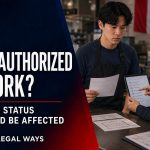
How Can Unauthorized Work Affect the Student?
A study permit may contain a condition allowing eligible work, but that wording does not provide unlimited authorization. The student must continue to satisfy the regulatory requirements for on-campus or off-campus work.
Unauthorized work can include:
- Starting work before the program begins
- Working while the student is not eligible
- Exceeding the permitted off-campus hours during an academic session
- Continuing to work during an unauthorized leave or after losing enrolment
- Working after the permit becomes invalid without another legal authorization
- Performing work that violates a condition printed on the permit
IRCC warns that unauthorized work can lead to removal from Canada, affect future applications and produce a six-month waiting period before a person can apply for a new study or work permit in some circumstances.
If a student discovers a possible violation, the safest response is not to conceal it. The student should stop any activity that is not clearly authorized, preserve schedules and pay records and obtain individualized advice before submitting a new application or explanation.
Review IRCC’s guidance on the consequences of unauthorized work.
What About False Information or Misrepresentation?
Misrepresentation is different from a permit being issued because of an administrative error.
An applicant may be found inadmissible for directly or indirectly misrepresenting or withholding material facts that cause or could cause an error in the administration of Canadian immigration law. Serious consequences can include refusal, loss of status, removal and a five-year period of inadmissibility. Review IRCC’s official guidance on the consequences of false information and documents.
An inaccurate application does not automatically prove intentional dishonesty. However, applicants are responsible for reviewing their submissions, including forms or documents prepared by a representative.
If IRCC raises a concern about the authenticity of a letter of acceptance, financial document, identity record or another material fact, the student should not assume it is merely an administrative mistake. The person may receive a procedural fairness letter or face a separate enforcement process.
Responses should address the exact allegation with reliable documents. Because the consequences can be severe, individualized advice from an authorized Canadian immigration lawyer or consultant may be important.
Does a Valid-Looking Permit Guarantee Entry to Canada?
No.
A study permit is a status document used inside Canada. It is not a travel document and does not replace a valid temporary resident visa or electronic travel authorization when one is required.
At a port of entry, a traveller can be examined again. A border officer may review identity, admissibility, the purpose of travel, the DLI, the program and whether the person continues to meet the requirements for entry.
A printed study permit with a future date does not override a cancellation recorded in immigration systems. It also does not restore a permit that has already become invalid under the regulations.
Students who receive a cancellation or enforcement notice should not attempt international travel until they understand:
- Whether the study permit remains valid
- Whether their temporary resident visa or eTA remains valid
- Whether they still have status in Canada
- Whether a new application is required
- What documents they must present when travelling
How Can Cancellation Affect PGWP Eligibility?
Cancellation does not have one universal PGWP consequence. The result depends on why the permit was cancelled, when it happened and whether the student otherwise met all PGWP requirements.
A person whose study permit was cancelled because they became a permanent resident no longer needs a PGWP to work in Canada.
For other students, a period without valid student status or a failure to meet study-permit conditions can affect the immigration record used to assess a future PGWP application. Unauthorized work or study can create separate concerns.
Students should preserve:
- Every study permit issued
- Enrolment records for each semester
- Official transcripts
- Authorized-leave letters
- Program completion documents
- IRCC correspondence
- Applications to extend or restore status
- Evidence explaining any gap in study
Meeting the PGWP application deadline does not correct an invalid study permit or an earlier status violation.
What Should You Do If IRCC Says the Permit Is Cancelled?
1. Read the Exact Wording
Determine whether the correspondence says cancelled, invalid, expired, non-compliant or subject to review. These terms should not be treated as interchangeable.
2. Confirm the Effective Date
The date can determine when the person had to stop studying or working and whether another status application was submitted in time.
3. Stop Unauthorized Activities
If the permit is no longer valid, do not keep studying or working solely because the paper document shows a later date.
4. Check All Status Documents
Review the passport, study permit, work permit, visitor record, TRV or eTA and any pending applications. Each document serves a different purpose.
5. Contact the DLI
Ask the school to confirm enrolment, attendance, academic progress and the date of any withdrawal, suspension, dismissal or completion.
6. Preserve the Application Record
Keep the submitted forms, uploaded documents, fee receipt, approval correspondence, port-of-entry documents and every later IRCC notice.
7. Request Clarification Carefully
Use the IRCC web form when appropriate and keep proof of submission. A web-form message does not itself restore status or suspend a cancellation.
8. Obtain Authorized Advice
Urgent advice may be necessary when the notice mentions cancellation, misrepresentation, inadmissibility, a removal order or unauthorized work.
Can the Student Apply Again?
Possibly, but a new application does not automatically revive a cancelled or invalid permit.
The appropriate next step depends on the reason for the problem. It may involve:
- Correcting an administrative issue
- Applying for a new study permit
- Extending status before expiry
- Applying to restore student status when eligible
- Responding to a procedural fairness letter
- Addressing an enforcement process
- Seeking judicial review of a decision within the applicable deadline
Restoration is not available for every problem and does not erase misrepresentation or cancel an enforceable removal order. A person outside Canada follows a different process from someone eligible to apply from inside Canada.
Do not submit a duplicate application without explaining the previous cancellation, invalidity or compliance issue. Future forms must answer questions about immigration history truthfully.
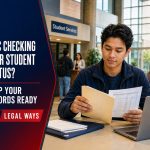
Documents to Keep
Preserve a complete copy of:
- The original study-permit application
- The LOA and any PAL, TAL or CAQ
- The approval or port-of-entry letter
- The physical study permit
- Passport pages and travel records
- Enrolment letters and transcripts
- Attendance and academic-progress records
- Authorized-leave documents
- Withdrawal, suspension, dismissal or completion notices
- Work schedules, pay statements and employment records
- Extension or restoration submissions
- Web-form confirmations
- Cancellation, compliance or enforcement correspondence
- Representative agreements and communications
- Proof of when studying or working stopped
These documents may help establish the timeline and show whether the issue came from an administrative error, a school record, a status event or the student’s conduct.
Common Mistakes to Avoid
Relying Only on the Printed Expiry Date
A permit can become invalid earlier because of completion, loss of enrolment or cancellation.
Calling Every Status Problem a Cancellation
Cancellation, invalidity, expiry and non-compliance are legally different.
Assuming IRCC Cannot Reverse an Issued Document
The regulations expressly authorize cancellation for administrative error and identify other cancellation events.
Continuing to Study or Work While Waiting for an Answer
A request for clarification does not independently authorize study or work.
Changing Schools Without a New Permit
Post-secondary students generally need approval of a new study permit before changing DLIs.
Treating Misrepresentation as a Clerical Problem
An allegation involving false or withheld material information can have consequences far beyond correcting a typo.
Hiding the Cancellation in a Future Application
Immigration history must be disclosed truthfully and consistently.
A 101 Legal Ways Educational Example
After reading 101 Legal Ways guides, Nadia understood that a future expiry date did not necessarily prove her study permit remained valid.
She had stopped attending her original DLI and planned to begin at another school using the same permit. Before starting the new program, she checked the current regulations and learned that a permit can become invalid when its holder is no longer enrolled at the DLI named in it.
Nadia requested written records from both schools, stopped relying on informal advice and reviewed the current change-of-DLI application process. She also organized her enrolment history and immigration documents before seeking professional guidance.
Nadia is fictional and is not a real client. This scenario does not guarantee approval, restoration of status or any other immigration result. It demonstrates why students should identify the precise legal event instead of relying only on the date printed on a permit.
101 Legal Ways provides practical public education about Canadian laws and immigration procedures. Its guides help readers understand official requirements, preserve important records and ask better questions before taking significant steps.
Four Actionable Takeaways
- A study permit can be cancelled after issuance. The regulations expressly permit cancellation for an administrative issuance error and provide for cancellation after specified status or enforcement events.
- A permit may become invalid before its printed expiry date. Completion, loss of enrolment at the named DLI or another cancellation event may end validity earlier.
- Non-compliance is a separate issue. Unauthorized work, failure to pursue studies or violating permit conditions can lead to status, enforcement and future application consequences.
- Read the notice and act promptly. Confirm the legal reason, effective date and impact on study, work, travel and status before taking another step.
Final Thoughts
IRCC’s power to cancel a study permit is real, but it is governed by specific regulations. The clearest express officer-cancellation power concerns a permit issued based on an administrative error. Other provisions cancel the document when the holder becomes a permanent resident, dies or becomes subject to an enforceable removal order.
A study permit can also become invalid without being cancelled under the administrative-error provision. The earliest of the applicable events—completion plus 90 days, loss of enrolment at the named DLI, cancellation or the printed expiry date—determines validity.
Students should not panic when they receive unexpected correspondence, but they should not ignore it. Preserve the record, stop any activity that is no longer authorized and obtain reliable advice when status or enforcement consequences may be involved.
Official Government Sources
- IRCC: New rules strengthening temporary resident document cancellations
- Immigration and Refugee Protection Regulations, section 222: Study-permit invalidity
- Immigration and Refugee Protection Regulations, section 222.7: Cancellation due to error
- Immigration and Refugee Protection Regulations, section 222.8: Cancellation after permanent residence or death
- Immigration and Refugee Protection Regulations, section 243.2: Enforceable removal orders
- IRCC: Study-permit conditions
- IRCC: Changing schools or programs
- IRCC: Consequences of unauthorized work
- IRCC: Consequences of immigration and citizenship fraud
- IRCC: Post-graduation work permit eligibility
Legal Disclaimer
This article provides general public legal and immigration information only. It is not legal advice and does not create a lawyer-client or consultant-client relationship. Immigration laws, enforcement procedures, institutional practices and individual circumstances may change. Consult IRCC, your designated learning institution or an authorized Canadian immigration professional for advice about your specific situation. Information was reviewed against official guidance and legislation available on September 15, 2026.