











































Life does not pause while a study permit application is being processed. A passport expires and is renewed, a school issues an updated letter of acceptance, a family situation changes, or a student simply realizes a document was missed during the original submission. Many applicants assume that because they cannot see these changes reflected anywhere in their online account, there is nothing they can or need to do. This assumption can create real problems, since IRCC requires applicants to actively report certain changes rather than waiting for the department to notice them on its own.
This guide explains when a study permit applicant must update a pending application, what kinds of changes must be reported, how the official IRCC web form works for this purpose, and what to expect after submitting an update.
What This Guide Covers
This article focuses on updating a study permit application that has already been submitted and is still being processed, specifically where the applicant needs to report a change in circumstances or submit a new document that IRCC did not specifically request. It covers the difference between responding to a document request and proactively reporting a change, the categories of changes IRCC requires applicants to report, how to submit updates through the web form, and what happens if an applicant needs to change the program they applied for entirely.
A Realistic Opening Scenario
Fatima submitted her study permit application several weeks earlier and was still waiting for a decision when her passport was due to expire. She renewed her passport and assumed that because her application was already in progress, IRCC would somehow already know about the new passport or would ask for it if it mattered.
A few weeks later, while reviewing her application materials again, Fatima realized her original application still referenced her old, soon-to-be-invalid passport number. She had not been asked for a new document, and nothing in her online account indicated a problem. Rather than continuing to assume the situation would resolve itself, she looked into IRCC’s official process for reporting this kind of change and began preparing the information and proof she would need to submit through the correct channel.
Why an Application Must Be Actively Updated
IRCC’s own guidance is direct on this point: if an applicant has an application in progress, they must tell IRCC when a change in their life affects the information in that application. IRCC states plainly that it needs up-to-date information to properly review and decide on the application. Importantly, updates submitted this way will not appear anywhere in the applicant’s online account, so a student cannot simply check their account status to confirm that a change has been noted; the update must be actively submitted through the correct channel in the first place.
This requirement exists separately from any document request IRCC might send. If IRCC has specifically asked an applicant for new information or documents, different instructions apply for submitting exactly what was requested. This article addresses the other situation: reporting a change or submitting new, unrequested information or documents that support an application already in progress.
What Must Be Reported
IRCC specifies a defined list of changes that applicants must report while an application is in progress. These include changes that may affect eligibility, such as a change in job situation, education, or language skills; marriage, separation, or divorce; a new child through birth or adoption; the death of an applicant, a sponsor, or a family member listed on the application; a new passport; significant changes to health; new criminal charges or convictions; a legal name change; and a change in country or territory of residence. Proof of the change must be included when it is reported.
A study permit applicant should also use this same process to submit a new document or piece of information that supports the application and was not available at the time of the original submission, such as an updated letter of acceptance following a deferred enrolment. The same channel can also be used to add or remove a representative on the application, or to correct an error or supply a document that was accidentally left out of the original submission. On this last point, IRCC’s guidance includes an important warning: an application may be returned as incomplete if a required document is missing, and if this happens, the applicant may need to submit an entirely new application including the document that was missed, rather than simply adding it to the existing file after the fact.
One notable exception applies to electronic travel authorization (eTA) applicants specifically, who are instructed to send new documents only if IRCC requests them, rather than submitting materials proactively.
How to Submit an Update Through the Web Form
The primary channel for reporting these changes or submitting new supporting information is IRCC’s official web form. When completing the form for this purpose, the applicant selects the option indicating they want to add documents to support or complete their application, provides an explanation of what is being submitted and why, and uploads the relevant document or proof of the change being reported.
Applicants using the IRCC Portal – New version for a visitor visa, super visa, or Canadian passport application have an alternative option and can submit new documents or information directly within their account, by signing in, locating the application, and using the upload function under the application management section. However, this Portal-based option is specific to those particular application types; study permit applicants submitting an update should use the web form process unless IRCC’s own instructions for their specific account type indicate otherwise.
Applicants should not attempt to submit updates by email, mail, or fax unless a letter or message from IRCC specifically states that this is permitted for their situation. Where IRCC has not authorized an alternative method, the web form remains the correct channel.
Important Distinction: Reporting a Change Is Not the Same as Requesting Status Updates
It is worth separating two different uses of the same web form, since applicants sometimes conflate them. One use is to report a change in circumstances or submit new supporting information, as described in this article. A separate and different use is to ask a general question about processing time or request a status update on an application that appears delayed. IRCC’s own guidance for status enquiries indicates that these are treated differently and are generally only useful once an application has significantly exceeded its published processing time. Submitting a change-of-circumstances update is not a way to prompt a status check, and submitting repeated or duplicate messages within a short period does not speed up processing; it can instead create confusion in the file.
How This Affects Study Permit Processing
Reporting a required change promptly helps ensure that an officer reviewing the file has accurate information at the time of the decision. Failing to report a change that affects eligibility, such as a new passport number that no longer matches the original application, or a material change in financial circumstances, creates a risk that the application will be reviewed against outdated or inconsistent information. This article does not predict how any specific unreported change might affect an individual decision, since this depends heavily on the nature of the change and the officer’s assessment, but the underlying principle is clear: IRCC expects applicants to keep their application current throughout processing, not only at the time of submission.
How This Affects Work Authorization and PGWP Eligibility
Updating a study permit application through the web form does not itself grant or remove any work authorization, since authorization continues to depend on the study permit conditions in place once a decision is made. However, if the update involves a materially different program, institution, or letter of acceptance, this may have downstream implications for both work authorization tied to the eventual permit and for PGWP eligibility, since PGWP eligibility depends on the specific program and conditions ultimately approved. A student whose update involves a significant change to their program details should treat PGWP eligibility as a separate question to verify once the application is finalized, rather than assuming the original plan’s eligibility carries over automatically.
Changing the Program Applied For Entirely
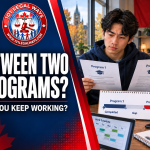
Using the web form to report a change in circumstances is different from changing the underlying program an applicant applied to. If an applicant applied to the wrong program, or wants to switch to a different program altogether, IRCC requires the applicant to withdraw the original application, submit a completely new application for the correct program, and pay the fees associated with that new application. An applicant who withdraws an original application in this situation may be eligible for a refund of some or all of the fees already paid, depending on the circumstances. This is a materially different process from simply updating an existing application, and applicants should not attempt to use the web form update process as a substitute for formally withdrawing and reapplying when the program itself needs to change.
Documents Students Should Obtain and Preserve
- A copy of any new document being submitted, such as a renewed passport, updated letter of acceptance, or proof of a legal name change
- Written proof of the change being reported, since IRCC requires proof to accompany each reported change
- A copy of the completed web form submission and any confirmation or acknowledgement of receipt
- Records of the original application details that are affected by the change, so that the update clearly connects to the existing file
- Any communication from IRCC regarding the update, including responses received through the account message centre where applicable
Step-by-Step Actions to Consider
- Identify whether the situation is a reportable change by comparing it against IRCC’s specific list, such as a new passport, a name change, or a material change in circumstances.
- Gather proof of the change before submitting anything, since IRCC requires supporting proof to accompany the report.
- Use the official IRCC web form, selecting the option to add documents supporting or completing the application, and clearly explain what is being submitted and why.
- Do not submit updates by email, mail, or fax unless IRCC has specifically told you that this is permitted for your situation.
- Keep a copy of everything submitted, including the explanation text and any files uploaded.
- If the update involves changing the entire program applied for, follow the separate withdrawal and reapplication process instead of using the general update channel.
- Avoid submitting duplicate or repeated web form messages about the same update within a short period.
- Continue monitoring your application through your account, understanding that the update itself will not appear as a visible change in your account status.
Possible Consequences of Not Reporting a Required Change
- An applicant who does not report a change that affects eligibility, such as new criminal charges or a significant change in financial circumstances, may have their application reviewed based on outdated information, which could affect the outcome in ways that are difficult to predict in general terms.
- An applicant who does report required changes promptly, with proper proof, gives the officer reviewing the file accurate and current information, though this article does not guarantee any particular result from doing so.
- An applicant who submits an update for something IRCC did not require, such as general commentary about frustration with wait times, is unlikely to see any material effect on processing, since the update channel is designed for factual changes and new supporting documents rather than for general enquiries or complaints.
Common Mistakes to Avoid
- Assuming that a change in circumstances will automatically appear in the online account without being actively reported
- Submitting new documents by email or mail without confirming that IRCC has authorized that method for the specific situation
- Confusing a request for a status update with the process for reporting a change or submitting new supporting information
- Attempting to change the entire program applied for by using the general update process instead of formally withdrawing and reapplying
- Failing to include proof when reporting a change, since IRCC requires supporting proof for each reported change
- Submitting duplicate updates about the same issue within a short period, which does not speed up the process and may create confusion in the file
- Assuming an eTA application should be updated proactively, when IRCC’s guidance for eTA applicants specifically asks for new documents only upon request
A 101 Legal Ways Educational Example
Consider a fictional student, referred to here as Youssef, who is not a real client and whose situation is used strictly as an educational example. While Youssef’s study permit application was still being processed, his designated learning institution issued him an updated letter of acceptance after he requested a change in his intended start term.
Youssef initially assumed that because his application was already submitted, the school would somehow notify IRCC directly on his behalf. After reading 101 Legal Ways guides on updating a pending application, Youssef understood that reporting this kind of change was his responsibility as the applicant, and that IRCC’s web form was the correct channel to submit the updated letter of acceptance along with an explanation of the change. He gathered his original application details, prepared the updated document, and submitted it through the web form rather than assuming the update would happen automatically.
This scenario does not represent a real client, does not describe a real case, and does not guarantee that any student’s application will be processed or decided in a particular way. It illustrates how understanding an applicant’s own reporting responsibilities can prevent an outdated or incomplete file from being reviewed. 101 Legal Ways provides practical public education about Canadian laws and immigration procedures so that students and prospective students can understand their situation clearly before making decisions.
Four Actionable Takeaways
- Know that IRCC requires you to actively report certain changes while your application is in progress; these updates will not appear automatically in your online account.
- Use the official IRCC web form to report a change or submit new supporting documents, and always include proof of the change.
- Do not use email, mail, or fax to submit an update unless IRCC has specifically told you this is permitted for your situation.
- If you need to change the entire program you applied for, follow the separate withdrawal and reapplication process rather than trying to update your existing application.
Final Thoughts
A study permit application is not a static document once it is submitted; it reflects a snapshot of an applicant’s circumstances at a single point in time, and IRCC expects applicants to keep that picture current as their situation changes. Understanding exactly what must be reported, how to report it through the correct channel, and how this differs from simply asking about processing time helps a student avoid the risk of having their file reviewed against outdated information. Careful, proactive reporting, backed by proper documentation, is a straightforward way for a student to stay in control of their own application while it remains in IRCC’s hands.
Official Government Sources
- Update your application (submit new information we didn’t request)
- Submit new information that IRCC requested
- Update your contact information
- Withdraw your application
- Check your application status
Legal Disclaimer
This article provides general public legal and immigration information only. It is not legal advice and does not create a lawyer-client or consultant-client relationship. Immigration rules, institutional procedures and individual circumstances may change. Consult IRCC, your designated learning institution or an authorized Canadian immigration professional for advice about your specific situation. Information was reviewed against official guidance available on August 24, 2026.