


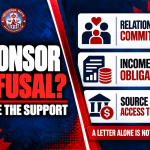
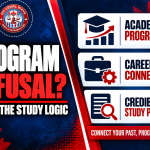















































A parent, spouse, relative, employer or other supporter may genuinely intend to pay for an international student’s education. Yet a promise of support does not automatically prove that the money is sufficient, available or sustainable.
An immigration officer may question the sponsor’s income, relationship to the applicant, number of dependants, existing obligations, bank history or the source of a recent deposit. The officer may also be uncertain whether the student can actually access the promised funds throughout the program.
Consider Leila, a fictional applicant whose aunt agreed to finance a two-year Canadian college program. The application included a signed support letter and a bank certificate showing a substantial balance. It did not include the aunt’s transaction history, employment records, evidence of their relationship or information about the aunt’s own household expenses.
Leila’s application was refused. She initially believed that a notarized letter should have been enough because her aunt’s balance exceeded the required amount. The officer’s decision note, however, questioned whether the sponsor had the financial capacity to support Leila and whether the funds would genuinely be available.
Before reapplying, Leila needed more than another promise. She needed a coherent record explaining who the sponsor was, how the money was earned, what other obligations the sponsor had and how the funds would reach Leila.
This guide explains how IRCC assesses financial capacity, what a sponsor letter should contain and what additional evidence may help address a sponsor-related refusal. It provides general public information and does not guarantee an immigration outcome.
What Is a Financial Sponsor for a Study Permit?
In everyday language, a financial sponsor is a person or organization that promises to pay some or all of a student’s education and living expenses.
This may include:
- A parent or legal guardian
- A spouse or common-law partner
- A sibling or other relative
- A family friend
- An employer
- A scholarship provider
- A government or educational institution
This type of financial supporter should not be confused with a family-class immigration sponsor who signs a formal statutory undertaking for permanent residence. A study permit support letter does not by itself create approval or replace the applicant’s obligation to prove sufficient and available funds.
The evidence must show the actual funding arrangement. If the sponsor is paying only tuition, the applicant must document how living expenses and transportation will be covered. If several people are contributing, the amount and responsibility of each person should be clear.
What Does Canadian Immigration Law Require?
Under section 220 of the Immigration and Refugee Protection Regulations, an officer cannot issue a study permit to most applicants unless they have sufficient and available financial resources, without working in Canada, to:
- Pay tuition for the proposed course or program
- Support themselves and accompanying family members during the proposed studies
- Pay transportation to and from Canada for themselves and accompanying family members
IRCC’s current guidance states that applicants must show enough resources for the first year. For a program lasting more than one year, they must also explain how they plan to pay for the full duration.
IRCC says it assesses:
- The amount of funds
- The source of the funds
- Whether the money is available
- Whether funding is sustainable throughout the studies
A sponsor’s closing bank balance is therefore only one part of the evidence.
What Can Cause a Sponsor-Related Refusal?
The refusal letter and officer decision note should identify the actual concern. Common factual problems may include:
- The sponsor letter does not state a specific amount
- The relationship between the sponsor and student is unclear
- The sponsor’s income does not appear sufficient
- The sponsor has significant dependants or financial obligations
- Large deposits appear without supporting records
- The bank account has little transaction history
- The sponsor’s business income is not documented
- The funds are held in an asset rather than readily available money
- The student has no demonstrated access to the account
- Several sponsors give overlapping or inconsistent explanations
- The package covers the first year but not the rest of a longer program
- Documents contain inconsistent names, dates, salaries or balances
- Local visa-office requirements were not followed
An officer may accept that the sponsor wants to help while remaining unsatisfied that the financial plan is credible. The reapplication should address the precise evidentiary gap rather than merely repeat the sponsor’s intention.
Read the Officer Decision Note First
IRCC provides an officer decision note with refusal letters for most study permit applications. The note is written by the deciding officer and is intended to explain the refusal.
Review it carefully and ask:
- Did the officer question the sponsor’s income or available savings?
- Was a specific transaction or large deposit mentioned?
- Did the officer doubt the relationship?
- Were the sponsor’s dependants or obligations a concern?
- Did the officer question access to the funds?
- Was the problem the total amount rather than the sponsor evidence?
- Were other refusal grounds also raised?
For example, if the concern is a large recent deposit, adding a new support letter will not trace the money. If the concern is the sponsor’s limited income, submitting the same bank certificate may not explain how the balance was accumulated or whether the support is sustainable.
Review IRCC’s official guidance on officer decision notes.
What Should a Sponsor Letter Include?
IRCC currently identifies a letter from the person or institution providing money as one possible form of financial evidence. Its examples state that the letter should include:
- The sponsor’s employment or occupation
- The sponsor’s relationship to the applicant
- The number of the sponsor’s dependants, if any
- The amount of financial support
A practical sponsor letter can also state:
- The sponsor’s full legal name and contact information
- The student’s full name and relationship to the sponsor
- What expenses the sponsor will pay
- The exact amount or maximum commitment
- Whether the support is a gift, loan or recurring payment
- The period the commitment covers
- How and when the money will be transferred
- Whether funds have already been transferred or tuition paid
- The sponsor’s understanding of the program length and expected costs
The letter should be signed and dated. Notarization may help authenticate a signature in some circumstances, but notarization does not prove that the sponsor can afford the commitment. Capacity must be shown through financial records.
Prove the Relationship to the Student
IRCC’s current guidance lists proof of the relationship and evidence of the promised support as relevant documents. It also states that this should include a copy of the supporter’s photo identification or proof of business registration, as applicable.
Relationship evidence may include:
- Birth certificates
- Marriage certificates
- Family registration or civil-status records
- Passports or identification showing relevant family information
- A written explanation supported by records when the relationship is indirect
- Evidence of a genuine prior relationship for a non-relative supporter
The purpose is not simply to prove a family label. The evidence should help explain why this person has committed substantial funds to the applicant.
If an aunt is sponsoring a niece, the records may need to connect the aunt to the applicant through their respective family documents. If a family friend is paying, the application may require a clearer explanation of the history of the relationship and the reason for the commitment.
There is no value in hiding that a sponsor is not an immediate relative. The application should describe the real arrangement truthfully and provide evidence appropriate to it.
Show the Sponsor’s Financial Capacity
Financial capacity means more than displaying a high balance on one day. The documents should show how the sponsor earns or holds the money and whether the commitment is realistic after considering other responsibilities.
Employment Income
An employed sponsor may provide:
- Current employment letter
- Recent pay stubs
- Tax assessments or income-tax records where available
- Employment contract
- Bank statements showing salary deposits
- Evidence of bonuses or other recurring compensation
The figures should be consistent. If the employment letter states one salary while the bank records show materially different deposits, the discrepancy should be explained.
Self-Employment or Business Income
A self-employed sponsor may need more than a business registration certificate. Registration proves that a business exists, not necessarily that it earns enough to support the student.
Useful evidence may include:
- Business registration and ownership records
- Business bank statements
- Personal bank statements
- Tax filings
- Financial statements
- Invoices and payment records
- Contracts with customers
- Evidence of drawings, dividends or salary received from the business
Business funds and personal funds should not be treated as interchangeable without explaining ownership and lawful access. If the business is a separate legal entity, the application should accurately document how money can be paid or distributed to the sponsor.
Savings and Investments
Long-term savings can support a credible plan when the history and ownership are clear. Evidence may include:
- Six months of bank statements
- Fixed-deposit records
- Investment statements
- Redemption or maturity records
- Transfer documents
An asset valuation is not the same as liquid funds. A house, vehicle or business interest may demonstrate wealth, but it does not necessarily show that cash is available for tuition and rent. If an asset has been sold, document the completed sale and movement of the proceeds.
Pension or Rental Income
IRCC lists financial documents connected with pension plans and proof of rental-property income as possible evidence. The application should connect the claimed income to bank deposits and provide the underlying supporting records.
Account for Dependants and Other Obligations
IRCC specifically identifies the sponsor’s number of dependants as relevant information. A sponsor must ordinarily continue supporting their own household while assisting the student.
The application should consider:
- Spouse and children
- Other relatives financially supported by the sponsor
- Mortgage or rent
- Existing education costs
- Loan repayments
- Medical expenses
- Business obligations
- Support promised to other students
This does not mean a sponsor with dependants cannot help. It means the financial plan should demonstrate that the sponsor can meet both the student’s needs and existing commitments.
A simple capacity table can improve clarity:
| Sponsor information | Evidence |
|---|---|
| Annual net or gross income, clearly identified | Employment letter, pay records and tax documents |
| Available savings | Six-month bank statements and source records |
| Household dependants | Sponsor letter and civil-status documents |
| Major recurring obligations | Mortgage, rent, loan or other relevant records |
| Amount committed to the student | Signed support letter and transfer plan |
The table should summarize genuine records, not replace them.
Trace the Source of the Money
IRCC currently lists bank statements for the past six months, including the month of submission or the month before, as a common form of proof. It also says the statements should be accompanied by documentation showing the source of income, such as employment earnings or savings transfers.
Large or recent deposits require particular attention. Depending on the actual source, evidence may include:
- Salary and savings history
- Sale agreement and proof of payment for an asset
- Investment redemption records
- Fixed-deposit maturity documents
- Inheritance or estate-distribution records
- Bank loan approval and disbursement records
- Gift records supported by the donor’s financial capacity
- Transfer records linking the sending and receiving accounts
The dates and amounts should form a continuous trail. A statement that the funds came from “family savings” may be insufficient when the records show a recent unexplained transfer.
Never create, alter or purchase financial documents. False records or material omissions can lead to a misrepresentation finding and serious immigration consequences.
Prove That the Student Can Access the Funds
Money may exist without being available to the applicant. The package should explain:
- Who owns the funds
- Whether the money is a gift, loan or continuing support
- Whether any conditions limit withdrawal
- When the student will receive the money
- How tuition and living expenses will be paid
- Whether the sponsor can transfer funds internationally
- Whether foreign-exchange controls apply
IRCC states that applicants from countries with foreign-exchange controls must prove they will be permitted to export funds for their expenses.
Evidence of access may include:
- Completed transfer records
- Tuition-payment receipts
- A Canadian account in the student’s name
- A guaranteed investment certificate
- A clear scheduled-transfer plan supported by the sponsor’s capacity
- Documents showing joint ownership or lawful account access
Do not count the same funds twice after a transfer. If a sponsor moves $30,000 into the student’s account, the sponsor’s old statement and the student’s new statement describe one pool of money, not $60,000.
Calculate the Full Cost of the Studies
The sponsor evidence must be measured against the actual cost of the plan.
For applications submitted on or after September 1, 2026 outside Quebec, IRCC requires $23,448 for the first-year living expenses of one applicant. This amount excludes tuition and transportation.
The calculation should include:
- First-year tuition and mandatory fees
- The applicable living-expense amount
- Transportation to and from Canada
- Costs for accompanying family members
- A credible plan for later years when the program is longer than one year
Paying first-year tuition does not eliminate the need to prove funds for living expenses and transportation. Similarly, a scholarship covering tuition alone does not cover the remaining financial requirement.
Check the official IRCC proof-of-financial-support page immediately before applying because the living-expense amounts are updated annually.
Quebec uses separate financial-capacity requirements. Applicants planning to study in Quebec should review current provincial and federal instructions.
How to Present Multiple Sponsors
More sponsors do not automatically create a stronger application. Several vague promises can make the funding plan difficult to understand.
If more than one person is contributing, identify:
- Each sponsor’s relationship to the student
- The exact amount each person will provide
- Which expenses each sponsor will cover
- Each sponsor’s financial capacity
- Whether money has already been transferred
- How the combined plan covers the full cost
Avoid counting the same family account or transferred money more than once. If a parent and sibling share an account, explain ownership and access accurately.
The application should also explain why the arrangement is practical. For example, one parent may pay tuition while another relative covers living expenses. The documents should consistently reflect that division.
What if the Sponsor Lives in Canada?
A sponsor’s presence in Canada does not by itself establish financial capacity. The same basic questions remain:
- What is the relationship?
- What amount is promised?
- What income and savings are available?
- What obligations does the sponsor already have?
- Can the applicant access the money?
Canadian pay records, tax documents, bank history and proof of status may help document the circumstances, but no single Canadian document guarantees acceptance.
The application should not imply that the student can solve a funding shortage by working in Canada. Section 220 requires sufficient resources without relying on Canadian employment.
Preparing the Reapplication
IRCC says a person may generally apply again at any time unless the decision letter says otherwise. It also advises reapplying only when new information can be included.
A sponsor-focused reapplication may follow these steps:
- Read the refusal letter and officer decision note.
- Identify whether the concern was amount, source, access, relationship or capacity.
- Recalculate the current financial requirement.
- Prepare a detailed sponsor letter.
- Document the relationship.
- Provide income, tax and employment or business records.
- Provide six months of bank history.
- Trace significant deposits and transfers.
- Explain dependants and obligations.
- Show how the student will access the money.
- Address every other refusal ground.
- Update the LOA, PAL, TAL or CAQ as required.
A concise reapplication letter can identify the previous concern, summarize the new evidence and cross-reference the documents. It should not merely state that the sponsor is trustworthy.
Check the PAL, TAL, CAQ and LOA
IRCC currently states that a PAL or TAL cannot be reused after a study permit refusal. If the applicant requires a PAL or TAL, a new valid document must normally be obtained before submitting the reapplication.
Quebec applicants follow separate CAQ rules. IRCC currently allows a still-valid CAQ to be reused after a previous decision in many circumstances, unless the applicant changes the level of study. School changes can create additional restrictions.
The applicant should also confirm that the letter of acceptance remains valid. If the intake date has passed, the DLI may require a deferral and updated LOA.
Review the current IRCC PAL and TAL instructions.
Documents to Organize
A sponsor-related reapplication may include:
- Refusal letter and officer decision note
- Revised sponsor letter
- Sponsor’s photo identification
- Proof of relationship
- Employment letter and pay stubs
- Tax and income records
- Business registration and operating records, if applicable
- Six months of personal and relevant business bank statements
- Documents tracing large deposits
- Pension, rental or investment-income records
- List of dependants and major obligations
- Tuition invoice and payment receipts
- Student loan, scholarship or GIC records
- First-year cost calculation
- Full-program funding plan
- Evidence that funds can be transferred and accessed
- Updated LOA and deferral documents
- New PAL or TAL where required
Check the application instructions for the applicant’s country or region because local visa-office requirements may request additional documents.
Common Mistakes to Avoid
Relying Only on a Notarized Letter
Notarization may authenticate a signature. It does not prove income, savings or access to funds.
Showing Only a Final Balance
A balance certificate does not establish how the money accumulated or whether it will remain available.
Ignoring the Sponsor’s Household
Dependants and existing obligations are relevant to whether the commitment is sustainable.
Leaving Business Income Unexplained
Business registration alone does not prove personal income or lawful access to company funds.
Using Unexplained Large Deposits
Trace significant transactions with genuine source documents.
Counting Transferred Money Twice
The same money remains one source even when it appears in two accounts.
Depending on Student Work
The required financial resources must be established without relying on work in Canada.
Reusing a PAL or TAL After Refusal
Obtain a new PAL or TAL if one is required for the reapplication.
Hiding the Previous Refusal
Disclose immigration history truthfully and address the officer’s concerns directly.
A 101 Legal Ways Educational Example
After reading 101 Legal Ways guides, Leila understood that her aunt’s notarized letter proved a promise but not the full financial arrangement.
She reviewed the officer’s note and prepared a new package. Civil-status records documented their relationship. Her aunt provided employment and tax records, six months of bank statements and information about her dependants and mortgage. Transfer records explained a recent deposit that had come from a matured investment.
Leila created a cost table showing tuition, living expenses and transportation. The sponsor letter identified the exact amount her aunt would provide and the transfer schedule. Leila also confirmed her deferred intake and obtained a new PAL because the previous study permit application had been refused.
Leila is fictional and is not a real client. This scenario does not guarantee approval or mean that the same documents are appropriate for every applicant. It demonstrates why a credible sponsorship package must prove relationship, capacity, source and access rather than relying on a promise alone.
101 Legal Ways provides practical public education about Canadian laws and immigration procedures. Its guides help readers understand official requirements, organize records and ask better questions before taking important steps.
Four Actionable Takeaways
- Document the complete relationship and commitment. Identify who the sponsor is, why they are supporting the student and the exact amount promised.
- Prove capacity, not just intention. Use income records, bank history and information about dependants and obligations.
- Trace the money and show access. Explain large deposits, transfers, account ownership and how the student will receive the funds.
- Respond to the actual refusal. Use the officer decision note and update all financial and school documents before reapplying.
Final Thoughts
A genuine sponsor can still be poorly documented. A signed letter or impressive closing balance may not establish that the sponsor earned the money lawfully, can afford the commitment and will make the funds available throughout the studies.
The strongest package tells one consistent financial story. The relationship, sponsor letter, income records, bank history, source documents, obligations, student budget and transfer plan should support each other.
No document or sponsor relationship guarantees approval. The appropriate evidence depends on the refusal reasons and the applicant’s actual circumstances. Check current official instructions immediately before submitting a new application.
Official Government Sources
- IRCC: Proof of financial support for a study permit
- Department of Justice Canada: Immigration and Refugee Protection Regulations, section 220
- IRCC: Officer decision notes
- IRCC Help Centre: Reapplying after a refusal
- IRCC: Study permit eligibility requirements
- IRCC: PAL and TAL validity and reuse
Legal Disclaimer
This article provides general public legal and immigration information only. It is not legal advice and does not create a lawyer-client or consultant-client relationship. Immigration rules, institutional procedures and individual circumstances may change. Consult IRCC, your designated learning institution or an authorized Canadian immigration professional for advice about your specific situation. Information was reviewed against official guidance available on September 16, 2026.