










Study Permit Says You Cannot Work in Health Care or Childcare? What Students Should Do

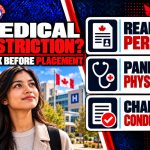
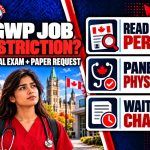
An international student may be allowed to work in Canada yet have a restriction printed on the study permit that excludes work in health services, childcare or primary and secondary school teaching. The restriction can become urgent when a mandatory practicum, internship or paid job is about to begin.
The student should check the actual permit wording before accepting a placement. A school approval or job offer does not remove a federal immigration condition. Completing an immigration medical exam may be necessary, but a student already in Canada with a restricted permit must also apply to have the condition changed.
Consider Noor, a fictional student in a healthcare program. Her college approved a hospital placement for the winter term. Her study permit permitted student work but said she was not authorized to work in health service field occupations. Noor booked a regular appointment with her family doctor and assumed the restriction had been solved. It had not: IRCC requires an immigration medical exam by an approved panel physician and an application to change the conditions on her study permit.
This guide explains when the medical issue arises, how to address a restriction and why students should act well before the placement date. It provides general information rather than advice about an individual permit.
Start With the Exact Words on Your Permit
Read every condition printed on the study permit, including any wording about work and medical restrictions. Examples of restricted fields may refer to childcare, primary or secondary school teaching, or health service occupations. A student may also have a permit that lacks the ordinary student-work wording altogether. These are different issues and may require different steps.
Compare the permit with the intended duties and workplace. A hospital placement, patient-care practicum, childcare setting or school placement can raise the need for an immigration medical exam even when the work is a required part of the academic program. IRCC specifically says a student work placement at a hospital or another place where protecting public health is important requires a medical exam unless the student has already had the required one.
Do not infer authorization simply because the student has a social insurance number, the DLI approved the employer, or an old placement was completed elsewhere. The current permit and circumstances control what the student can do now.
See IRCC’s student work placement instructions and its study permit conditions guidance.
Which Jobs Can Trigger a Medical Exam?
IRCC requires an immigration medical exam for certain jobs where the protection of public health is important. Its examples include work in healthcare or childcare. Guidance on designated occupations also identifies examples such as hospital staff, clinical laboratory workers, patient attendants in nursing and geriatric homes, and work involving children or school teaching.
The need is based on the work and setting, not just the title printed on a job posting. A student should describe the actual duties and placement location when checking IRCC’s guidance. A health-related degree does not mean every job is automatically restricted; likewise, an administrative-sounding role in a sensitive setting should not be assumed exempt without checking the applicable instructions.
An immigration medical exam may also be required for other reasons, such as certain combinations of intended length of stay and recent residence or travel history. That is a separate assessment from the occupational restriction. Review IRCC’s medical-exam requirements for temporary residents.
Is the School’s Health Clearance the Same as an IRCC Medical Exam?
No. Schools and placement sites may require vaccinations, a police check, occupational-health clearance, tuberculosis screening or other documents under their own policies. Those requirements can be important, but they do not by themselves replace an immigration medical exam or change a study permit condition.
An IRCC immigration medical exam must be completed by a panel physician approved by IRCC. IRCC says a student’s own doctor cannot perform the immigration exam unless that doctor is on its panel-physician list.
Keep the two processes organized separately:
| Requirement | Who sets it? | What it addresses |
|---|---|---|
| Placement health documents | DLI or placement site | Eligibility under school or workplace policy |
| Immigration medical exam | IRCC | Immigration medical requirements for certain work or entry |
| Study permit condition change | IRCC | Removing or changing a restriction on the immigration document |
Completing one row does not automatically complete the others. Use IRCC’s panel-physician instructions to locate an approved physician.
What Is an Upfront Medical Exam?
An upfront exam is one the applicant completes before IRCC asks for it during processing. For a student already in Canada who has student-work authorization but wants to lift a medical job restriction, IRCC’s Help Centre says to get an upfront medical exam and include a short letter explaining why the restriction must be removed.
The panel physician provides proof of the completed exam, usually an information sheet or equivalent confirmation. Follow the current application instructions on submitting that proof. The physician sends the medical results through the applicable system; the student should keep the information sheet and any correspondence.
An exam is not a same-day authorization to begin restricted work. IRCC must assess the relevant information and change the permit condition. Allow time for the physician’s submission, any further tests and IRCC processing. If IRCC or the physician asks for more information, respond as instructed.
Read the IRCC Help Centre instructions for removing job restrictions.
How Does a Student Already in Canada Change the Restriction?
IRCC instructs a study permit holder with work authorization who wants to lift a medical job restriction to:
- Get an upfront immigration medical exam from an approved panel physician.
- Prepare a short letter explaining the intended job or placement and why the condition must be removed.
- Apply to change the conditions of the study permit, supplying the required documents and proof of the medical exam.
IRCC’s Help Centre says a study permit holder uses IMM 5709, checking the option to apply for a study permit for the first time or extend the study permit and completing the remaining fields. Follow the current online questionnaire and personalized document checklist rather than relying on an old screenshot of a form.
Include a copy of the current permit and clear information about the placement where relevant. The DLI’s placement letter can help establish what work is planned, but it does not replace the immigration medical evidence or the condition-change application.
IRCC states that changing a condition on a study permit requires an application. Submitting that application does not itself erase the printed restriction while the request is pending. Do not begin a job barred by the current permit merely because an exam was booked or the application was submitted.
See IRCC’s study permit condition-change guidance and the student application guide.
What if the Student Is Still Outside Canada?
A person who has a port-of-entry letter of introduction for a study permit that permits student work can arrange an upfront medical exam before travelling if the intended work requires one. IRCC says they should bring the panel physician’s printed information sheet and present it to the border services officer when entering Canada. The officer may then adjust the conditions before issuing the study permit, provided the medical results are available in IRCC’s system.
IRCC warns that medical results do not necessarily appear immediately; routine results may take time and some cases take longer. The student should check the actual permit when it is issued. If the restriction remains, do not assume that carrying an exam receipt allows restricted work. Follow IRCC’s process to have the condition changed.
This arrival procedure does not replace the separate steps for a student already in Canada whose permit is restricted. Review the applicable section of the IRCC Help Centre response.
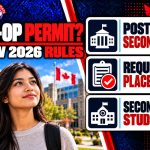
Does the 2026 Co-op Permit Change Remove the Medical Requirement?
No. Since April 1, 2026, eligible post-secondary international students generally do not need a separate co-op work permit for a required student work placement. They still have to satisfy the placement conditions and any applicable medical requirement. IRCC’s placement page specifically flags hospital and other public-health-sensitive settings.
A student should check two questions independently:
- Placement authorization: Is the work a required, DLI-approved component, and does the student meet the current placement conditions?
- Medical and permit conditions: Is an immigration medical exam required, and does the printed permit restrict this type of work?
The answer to the first cannot cancel a restriction identified in the second. International secondary-school students still have separate co-op work permit requirements for eligible placements.
Review IRCC’s current placement rules.
What if the Permit Has No Work Wording at All?
A missing general student-work condition is not identical to a restriction on health services or childcare. IRCC’s placement guidance describes how an otherwise eligible student can ask to have missing work conditions added to a study permit. The appropriate route depends on whether the permit contains an error or the student is seeking a substantive change.
Read the exact permit text and IRCC’s instructions before applying. A medical exam does not create general student-work eligibility where the student fails other conditions. Similarly, a SIN does not grant work rights.
If both a missing work condition and a medical restriction are present, explain both clearly in the application and make sure the resulting permit addresses the actual work intended.
What if the Placement Starts Before IRCC Changes the Permit?
Tell the DLI placement office as soon as the issue is discovered. Ask whether the placement can be deferred or another compliant arrangement is available. Keep the school’s written response and the revised schedule.
Do not rely on an employer’s willingness to let you start, an unpaid label or a school deadline as proof of immigration authorization. IRCC’s definition of work and its placement rules can apply even where a student is receiving academic credit rather than wages. The actual duties and authorization matter.
If the student has already performed restricted work, stop and obtain individualized advice from an authorized Canadian immigration professional. Do not alter timesheets or conceal the activity in a future immigration application. The response depends on the permit wording, work performed and dates.
What About a Future PGWP or Other Work Permit?
Completing an immigration medical exam for a study permit does not guarantee that a future post-graduation work permit (PGWP) will be issued without conditions. Check the medical validity and the wording of the work permit actually issued at that later stage. IRCC has separate instructions for removing job restrictions on a PGWP.
Students planning a healthcare or childcare career should review the medical requirements before applying for the next authorization, rather than waiting until an employer asks for a start date. The relevant application, document and fee rules can differ from the current study permit condition change.
See IRCC’s PGWP application guidance.
A Practical Pre-Placement Checklist
- Read the permit: Identify both general work wording and any medical job restriction.
- Describe the placement: Confirm duties, employer, site, start date and DLI approval.
- Check the medical rule: Use IRCC’s occupation and temporary-resident medical guidance.
- Book the correct physician: Use an IRCC-approved panel physician for an immigration medical exam.
- Keep the exam proof: Obtain the information sheet and respond to requests for further tests.
- Apply to change conditions: If already in Canada with a restricted study permit, follow IRCC’s IMM 5709 and document instructions.
- Check the new document: Begin restricted work only after the applicable condition has been lifted and all other work requirements are met.
- Plan for delays: Arrange a compliant deferral with the DLI if authorization will not be ready for the placement start.
A 101 Legal Ways Educational Example
Noor reviewed her permit with the DLI placement office months before her hospital practicum. The college provided a letter describing the required placement and start date. She used IRCC’s panel-physician list, completed an upfront immigration medical exam and received the examination information sheet.
She applied to change her study permit conditions with the medical proof and a short explanation of the hospital placement. Her placement office adjusted the schedule so she would not start restricted duties while the original condition remained in force. Once she received an updated permit, she checked its wording before attending the site.
Noor is fictional and is not a real client. This example does not guarantee a particular processing time or decision. It shows why placement approval, the immigration medical exam and the actual permit conditions must be checked together.
101 Legal Ways provides practical public education about Canadian laws and immigration procedures. Its guides help readers understand official requirements, organize records and ask better questions before taking important steps.
Four Actionable Takeaways
- Read the actual permit. A general right to work may coexist with a restriction on healthcare, childcare or teaching roles.
- Use an approved panel physician. A routine school or family-doctor clearance is not automatically an IRCC immigration medical exam.
- Apply to change the condition. For a restricted study permit already issued in Canada, an exam alone does not amend the document.
- Act before the placement starts. Leave time for the exam, any additional testing, IRCC processing and a school-approved schedule change if needed.
Final Thoughts
A required practicum can be academically approved yet still conflict with a condition printed on a study permit. The student needs to establish whether an immigration medical exam is required, complete the exam through an approved panel physician and use IRCC’s process to change a restriction already on the permit.
The April 2026 co-op permit change did not remove medical or permit conditions. Check the current IRCC instructions and the wording of the document in hand before beginning work in a restricted setting.
Official Government Sources
- IRCC Help Centre: Removing job restrictions from study permit work authorization
- IRCC: Medical exams for visitors, students and workers
- IRCC: Medical exams and panel physicians
- IRCC: Work in a student work placement
- IRCC: Study permit conditions and changes
- IRCC: Guide 5552 for student condition changes
Legal Disclaimer
This article provides general public legal and immigration information only. It is not legal advice and does not create a lawyer-client or consultant-client relationship. Immigration requirements and individual circumstances may change. Consult current IRCC guidance, your DLI or an authorized Canadian immigration professional about your specific permit and placement. Information was reviewed against official guidance available on October 7, 2026.