















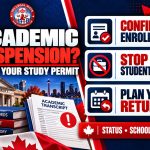
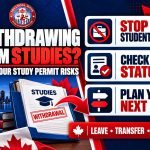
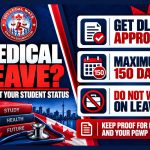













An international student may receive a message from IRCC asking them to confirm that they are enrolled and actively studying at a designated learning institution (DLI). The message can be alarming, especially if the student believes the school’s record is wrong or recently transferred, deferred a start date, or took a break.
Post-secondary DLIs report enrollment information to IRCC. A report showing that a student is no longer registered at one school does not, by itself, tell the whole story. The student may have a valid explanation and documents to support it. The response should be prompt, accurate and specific to the period IRCC asks about.
Consider Mateo, a fictional student who withdrew from his first college after receiving an offer from another. He assumed the new college’s acceptance letter made his transfer complete. His old college reported him as no longer enrolled. When IRCC contacted him, the important questions were whether he had complied with the rules for changing DLIs, when he stopped at the old college, when he started at the new one, and what authorization he had for each period.
This guide explains DLI compliance reports, the conditions students must meet, the records to gather and the steps to take when IRCC asks for proof. It provides general public information, not legal advice.
What Does a DLI Report to IRCC?
IRCC requires post-secondary DLIs to report the enrollment status of international students through its DLI Portal. IRCC says it generally requests compliance reporting in March and November. The information helps it assess whether study permit holders remain enrolled and actively pursue their programs.
A school’s possible classifications include full-time or part-time studies, a regularly scheduled break, authorized leave, deferred enrollment, academic suspension, no show, and no longer registered or enrolled. The terms describe different circumstances. A student who formally changed schools should not assume the former school will continue to show them as enrolled.
The report is a source of information for IRCC. It should not be treated as an automatic final decision on the student’s immigration status. IRCC may seek further evidence, and the student’s complete record matters.
Read the official IRCC student compliance reporting page and the DLI reporting guide.
What Are the Student’s Core Conditions?
IRCC says most study permit holders must be enrolled at a DLI and actively pursue their studies. This generally involves being enrolled full-time or part-time during academic semesters, making progress toward completing courses, and keeping any authorized leave within the permitted limit. Regularly scheduled breaks are treated differently from ordinary academic semesters.
Students must also follow the conditions written on their own study permits, such as restrictions on the school, level of study or work. An exemption from a particular enrollment or active-study condition may apply in certain cases; do not assume every permit holder has identical conditions.
Enrollment on paper and active study are related but distinct. A student can remain registered while failing to attend or make progress. Conversely, a former school may correctly show a student as no longer enrolled after a transfer, while the student may have evidence of a permitted move and active study elsewhere.
Review IRCC’s study permit conditions.
Why Might the School Show “Not Enrolled”?
Possible explanations include:
- The student voluntarily withdrew or was dismissed.
- The student transferred to another institution.
- Registration was not completed for the new semester.
- Tuition or administrative requirements affected registration.
- The student deferred admission and has not started classes.
- The student registered but never attended, or stopped attending without telling the school.
- The school used an incorrect record or mismatched student details.
IRCC’s DLI guide distinguishes “no longer registered or enrolled” from “no show” and academic suspension. These categories should not be casually interchanged. Ask the registrar or international student office what the school actually recorded, the effective date and the reason. Do not guess from a generic portal screen.
If the record is inaccurate, ask the school to review it and provide a written correction or clarification. IRCC’s DLI guide explains that a DLI may contact IRCC about an already submitted report that needs correction. The student should also respond to any direct IRCC request by its deadline; waiting for the school to act can leave a response unanswered.
If IRCC Emails You, Follow Its Actual Instructions
IRCC’s school-change guidance says a study permit holder may receive an email asking them to confirm enrollment and active study in Canada at a DLI. It says the address will end in @cic.gc.ca and the student must follow the instructions by the date indicated.
Read the entire message and identify:
- The date and deadline for responding.
- The period of study IRCC is asking about.
- The documents or explanation requested.
- The specified method for submitting the response.
- Whether the request relates to a former or current DLI.
Verify an unexpected message through your official IRCC account or published contact channels if its authenticity is in doubt. A familiar-looking sender line alone should not lead you to upload personal records to an unfamiliar site. Follow the official request’s submission method once verified, and retain the confirmation.
IRCC can also request evidence through a random check or when it has reason to question compliance. A response should deal with the specific concern and dates rather than provide only a broad statement that the student is serious about school.
Build a Clear Study Timeline
Write a concise chronology before collecting attachments. Include the first and last dates at each school, term start dates, course registration, any leave or deferral, the date a new DLI issued its letter of acceptance, the date an extension application was submitted and the date a new permit was issued, where applicable.
| Period | School or status | Evidence to locate |
|---|---|---|
| Previous semester | Enrolled and attending at original DLI | Transcript, timetable, tuition receipt, enrollment letter |
| Transition | Withdrawal, leave, deferral or transfer | Dated school notice, approval letter, new LOA |
| Current semester | Enrolled and making progress | Current enrollment letter, course record, transcript |
| Immigration step | Application or permit for new DLI, if required | Submitted application, IRCC receipt, decision, permit |
The table is a guide to the documents, not a substitute for them. Address gaps honestly. Do not change dates to make a transfer or leave appear shorter than it was.
What Evidence Can Show Enrollment and Progress?
IRCC says it may request official school documents confirming enrollment, the reason and start date of a leave, the date of withdrawal or dismissal, and the date studies stopped. It may also request transcripts, relevant medical evidence, records of a school closure or other material an officer considers relevant.
Depending on the concern, a student may assemble:
- A current enrollment letter identifying the DLI, program, term and study load.
- Official transcripts and course registration records.
- A timetable and evidence of required academic activity.
- A school-issued letter explaining an administrative error or corrected status.
- A formal authorized-leave approval stating dates and reason.
- Deferral approval and an updated letter of acceptance.
- Withdrawal or transfer documents from the former school.
- A new DLI letter of acceptance, extension submission and new study permit, where required.
- Relevant medical or family-emergency documentation, where genuinely applicable.
An acceptance letter proves an offer; it does not necessarily prove that the student registered, attended and was authorized to study at the new DLI. Current enrollment evidence and the immigration record may be needed too.
If You Changed Schools, Check the New Permit Rule
For a move to another post-secondary DLI, IRCC generally requires the student to apply for and obtain a new study permit before starting at the new DLI. IRCC lists limited circumstances in which a student may begin at the new school while the application is pending, such as closure, loss of designation or discontinuation of the original program, together with other stated conditions.
The former school can truthfully report that the student is no longer registered there. The crucial issue is whether the student followed the applicable transfer requirements and is authorized at the new school. A new LOA alone is not a replacement for a required new permit. A new PAL or TAL may also be needed unless an exemption applies; Quebec students should check CAQ requirements.
If the student changed schools without following the rules, IRCC warns that the permit may become invalid or be cancelled, that the student may be asked to change status or leave Canada, and that future applications may be affected. Review the precise history with an authorized professional promptly rather than describing an unapproved transfer as compliant.
See IRCC’s changing-schools guidance.
If You Took Leave or Deferred Your Start
IRCC recognizes certain authorized leaves of up to 150 days as consistent with actively pursuing studies, provided the DLI authorized the leave and the student can prove its duration if asked. Examples may include an approved medical or family leave. A deferral has its own conditions: IRCC says the student must start in the next semester even if it begins sooner than 150 days, and obtain an updated LOA.
An authorized leave is not a general right to work. IRCC states that a student cannot work on or off campus during an authorized leave even if the study permit contains work wording. A regularly scheduled break is a different category and has its own work rules.
If the absence exceeds the permitted period or the school did not authorize it, do not simply label it a “break” in a response to IRCC. Explain the facts and obtain case-specific advice about status and future applications. Keep the original school approval and dates; an after-the-fact explanation may not establish that the leave was authorized when taken.
What if the DLI Made a Mistake?
A school record might contain a wrong effective date, omit a registered course or confuse a deferral with a withdrawal. Ask for a written review through the registrar or international student office. Provide the student number, relevant term, course confirmations and the exact discrepancy.
Request a corrected official letter that states the accurate status and dates. If the school confirms it submitted an incorrect compliance report, ask whether it has contacted IRCC to correct the submission. Provide IRCC with the school’s corrected evidence using the response method and deadline in IRCC’s request.
Do not claim an error without a basis. If the school maintains its record, the student should respond using the documents and facts available, including any disagreement, rather than invent a correction.
Does a Report Automatically Cancel the Study Permit?
No automatic cancellation follows solely from the phrase “not enrolled” appearing in an old school’s report. IRCC uses reporting to assess compliance and may ask for an explanation. Outcomes depend on the student’s conditions and actual history.
That does not make the concern trivial. IRCC says a student who fails to meet study permit conditions may be asked to leave Canada and may have to wait six months before applying for certain new permits in Canada. Non-compliance can affect future applications. Students should distinguish a reporting mistake from a genuine gap in enrollment, unauthorized leave or unapproved school change.
If the student has stopped meeting the requirements to study or work, they should not continue those activities solely because the printed permit has not expired. Read the permit and current IRCC guidance, and get advice about status options promptly.
Will This Affect a Future PGWP?
It can. IRCC’s post-graduation work permit guidance says an unauthorized leave and a failure to meet study permit conditions may affect PGWP eligibility. It also asks for proof of a DLI-authorized leave when an applicant relies on the permitted leave rule.
PGWP rules include separate requirements about the school, program, study load and other circumstances. A favorable response to a compliance inquiry is not itself a PGWP approval. Preserve transcripts, leave approvals, transfer records and the immigration documents used throughout the program.
Review IRCC’s PGWP eligibility guidance.
A 101 Legal Ways Educational Example
Mateo reviewed the dates before answering IRCC. His original college confirmed when he withdrew. His new college provided an LOA and a current enrollment letter. He also found his application receipt and the decision on his permit for the new DLI. He compared his actual start date with the authorization he held at that time.
He answered IRCC’s request by its stated deadline, listed each term in order and attached official records. Where the timeline raised a possible compliance issue, he described it truthfully and obtained individualized advice instead of assuming that enrollment at the new school erased the earlier problem.
Mateo is fictional and not a real client. His example does not predict an IRCC decision. It illustrates why the school report, immigration authorization and academic timeline must be assessed together.
101 Legal Ways provides practical public education about Canadian law and immigration procedures. Its guides help readers understand official requirements and organize accurate evidence before taking important steps.
Four Actionable Takeaways
- Find the exact record. Ask the DLI what status and dates it recorded, and obtain official documents.
- Respond to IRCC on time. Follow the verified request’s instructions and explain the specific period in question.
- Check authorization during transitions. A new school’s LOA or enrollment does not automatically satisfy the rule for changing DLIs.
- Preserve the full history. Keep transcripts, approvals, permits and submission confirmations for later reviews and applications.
Final Thoughts
A “not enrolled” report may reflect a legitimate transfer, a school mistake or a real failure to meet study permit conditions. The correct response starts with dates and documents. Establish what the school reported, what the student actually did, and what immigration authorization applied at each stage.
Answer any IRCC request by its deadline, correct errors through the school and address genuine problems candidly. The right next step depends on the individual record, especially where study or work continued during a gap.
Official Government Sources
- IRCC: Your conditions as a study permit holder
- IRCC: Student compliance reporting
- IRCC: DLI Portal compliance reporting guide
- IRCC: Changing your school or program
- IRCC: PGWP eligibility
Legal Disclaimer
This article provides general public legal and immigration information only. It is not legal advice and does not create a lawyer-client or consultant-client relationship. Rules and individual circumstances may change. Consult current IRCC guidance, your DLI or an authorized Canadian immigration professional for advice about your particular situation. Information was reviewed against official guidance available on October 6, 2026.