

















Taking Medical Leave From Studies in Canada: Study Permit, Work and PGWP Consequences

An international student may need time away from school because of an illness, injury, mental-health condition, pregnancy, medical treatment or another serious health circumstance. A genuine medical need does not automatically create an immigration violation, but simply stopping classes can create problems if the leave is not formally authorized and properly documented.
Canadian immigration rules require most study permit holders to remain enrolled at the designated learning institution named on the permit and actively pursue their studies. IRCC currently recognizes that a school-authorized leave of no more than 150 days may still be consistent with this requirement.
However, authorized leave does not mean ordinary student privileges continue unchanged. A student cannot work on or off campus during the leave, even if the study permit contains work authorization. The student may also need to prove the leave later during a compliance review, study permit extension or post-graduation work permit application.
Consider Mateo, a fictional international student who needed surgery and several months of recovery. He informed one instructor that he would miss classes and then stopped attending. Mateo assumed that his doctor’s note automatically placed him on immigration-authorized medical leave.
The school had not yet formally approved the absence. Mateo also continued working at his off-campus job because his study permit said he could work. When he later reviewed the IRCC rules, he learned that medical evidence and school authorization served different purposes—and that work was prohibited during the authorized leave period.
This guide explains how medical leave can affect study permit compliance, employment and PGWP eligibility. It provides general public information only and does not guarantee a particular immigration decision.
What Does Canadian Immigration Law Require?
Under section 220.1 of the Immigration and Refugee Protection Regulations, most study permit holders in Canada must:
- Enrol at the designated learning institution named in their permit
- Remain enrolled there until completing their studies
- Actively pursue their course or program of study
- Provide evidence of compliance when requested by an officer
IRCC explains that actively pursuing studies normally involves being enrolled full-time or part-time during each academic semester, making progress toward completing the program and not taking an authorized leave longer than 150 days.
A medical condition may justify an interruption, but it does not remove the need to follow the authorized-leave rules.
Review IRCC’s current study permit conditions.
What Is an Authorized Medical Leave?
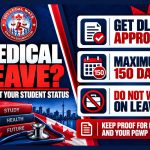
IRCC recognizes that a student may take an authorized leave of up to 150 days and still be considered to be actively pursuing studies.
For immigration purposes, an authorized leave requires two central elements:
- The designated learning institution has authorized the leave.
- The leave is no longer than 150 days.
IRCC lists medical reasons and pregnancy among the circumstances for which a school may authorize leave. Other recognized situations can include a family emergency, death or serious illness of a family member and another type of leave formally authorized by the school.
A student does not normally need to notify IRCC merely because the authorized leave begins. However, IRCC may later require proof that the school authorized the leave and that it did not exceed 150 days.
The authorization should therefore exist in the school’s official records. A conversation with a professor, informal email to a classmate or decision to stop attending is not necessarily the same as approval by the institution.
Medical Evidence and School Authorization Are Different
A medical professional can document the need for an interruption. The DLI decides whether to approve the leave under its academic policies.
Both parts may be important:
| Evidence | What it helps establish |
|---|---|
| Medical certificate or letter | A health-related reason made the absence necessary |
| DLI leave approval | The institution formally authorized the student’s temporary absence |
| Leave start and expected return dates | The duration can be measured against the 150-day limit |
| Updated enrolment or return letter | The student resumed the program after the leave |
| Transcript and academic records | The overall study history and progress remain documented |
A doctor’s note by itself does not prove that the DLI authorized the leave. Similarly, a school approval containing no clear dates may make it harder to demonstrate that the leave remained within the permitted period.
The student should follow the school’s formal leave procedure and obtain written confirmation from the appropriate office, such as the registrar, international student office or another authorized administrator.
What Should the DLI Leave Letter Confirm?
The school controls its own letter format, but useful confirmation may identify:
- The student’s full name and student number
- The program of study
- The DLI name and DLI number, where applicable
- Confirmation that the leave was formally authorized
- The general reason or category of leave, such as medical leave
- The official start date
- The approved end date or expected return date
- Whether the student remained registered in the program
- The date the student was expected to resume studies
- The name, title and contact information of the issuing official
The student should not alter the letter or ask the school to state facts that are untrue. If the approval was issued after an emergency began, the letter should accurately explain the dates and whether the school approved the leave retroactively under its policy.
How Does the 150-Day Limit Work?
IRCC’s compliance guidance describes the maximum as 150 consecutive days from the date the leave started.
This is a maximum, not an automatic entitlement to remain out of class for five months. The DLI may authorize a shorter period, require periodic medical updates or require the student to return on a particular academic date.
For example, if a school approves leave from January 15 to March 30, the student should not remain absent until the 150th day merely because the immigration maximum is longer. The school-approved return date still matters.
The student should record:
- The first official day of leave
- Every extension granted by the DLI
- The final authorized day
- The actual date studies resumed
- Any gap between the approved end date and the return to classes
Successive short letters should not be treated as a way to reset the 150-day clock. IRCC focuses on the continuous period away from studies.
What if the Medical Leave Will Exceed 150 Days?
IRCC’s compliance-reporting guidance states that when a student exceeds 150 days of leave, the student needs to change their status with IRCC or may be considered non-compliant with study permit conditions.
The student should not wait until day 150 to seek advice. Before the limit is reached, they should review:
- Whether they can medically and academically resume studies
- Whether the DLI can offer an appropriate return plan
- Whether they need to leave Canada
- Whether another temporary-resident status is appropriate
- How a change of status could affect the ability to resume studies from inside Canada
- Whether the study permit will expire during the interruption
- Whether a new study permit application may eventually be required
Changing from student status to visitor status is not a simple pause button. IRCC currently warns that most visitors cannot apply for a new study permit from within Canada. A person who changes to visitor status may need to leave Canada to apply for a new study permit.
Because the correct option depends on the person’s medical circumstances, permit validity, school status and eligibility to apply from within Canada, individual legal advice may be appropriate before the 150-day period ends.
Review IRCC’s guidance on changing from student to visitor status.
Can a Student Work During Authorized Medical Leave?
No. IRCC expressly states that a student cannot work on or off campus during an authorized leave from the study program, even when the study permit says the person may work in Canada.
This restriction applies throughout the authorized leave period.
The student should stop:
- Off-campus employment
- On-campus employment
- Self-employment that constitutes work in Canada
- Paid shifts offered because the employer believes the student is on a school break
An authorized medical leave is not a regularly scheduled academic break. The rules allowing eligible students to work unlimited hours during scheduled breaks do not apply to an individual medical leave.
IRCC identifies a narrow exception involving a temporary school closure caused by a strike. That exception should not be applied to ordinary medical leave.
Working during medical leave can create a separate unauthorized-work issue. It may affect future immigration applications even if the leave itself was approved by the school.
When Can Work Resume?
A student should not resume work merely because they feel better or because the original medical note expired.
Before working again under the student work rules, the student should confirm that:
- The authorized leave has ended
- The DLI has recorded the return to studies
- The student has actually resumed an eligible program
- The student meets the current on-campus or off-campus work requirements
- The study permit remains valid and contains the required work condition
- No other restriction prevents employment
The student should keep written proof of the return date. If the school’s records still show authorized leave, the student should ask the institution to correct or update the record before relying on student work authorization.
Review IRCC’s off-campus work rules.
Authorized Leave Is Not a Scheduled Break
The distinction is especially important for employment:
| Authorized medical leave | Regularly scheduled break |
|---|---|
| Granted individually because the student needs time away | Built into the institution’s academic calendar |
| Can last no more than 150 days for study permit compliance | Governed by the school’s regular schedule and current work rules |
| Student cannot work on or off campus | An otherwise eligible student may work unlimited hours during the break, subject to current rules |
| Requires proof of DLI authorization if IRCC asks | Usually shown through the academic calendar and enrolment before and after the break |
Calling medical leave a “semester break” does not convert it into a regularly scheduled break. IRCC looks at the actual circumstances and the institution’s records.
Does Medical Leave Cancel the Study Permit?
An authorized medical leave of no more than 150 days does not automatically cancel a study permit. IRCC says a qualifying authorized leave may remain consistent with actively pursuing studies.
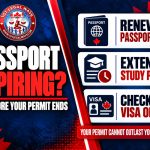
However, the study permit still has an expiry date. Medical leave does not:
- Extend the permit automatically
- Extend passport validity
- Create new work authorization
- Guarantee re-entry to Canada
- Guarantee PGWP eligibility
- Override another condition printed on the permit
If the program’s completion date is delayed, the student may need a study permit extension. IRCC instructs students continuing at the same DLI to apply at least 30 days before the permit expires and recommends applying earlier where possible.
The extension package should accurately explain the interruption and may include the DLI authorization, medical evidence, return-to-study confirmation, current enrolment letter and updated completion date.
Review IRCC’s study permit extension timing instructions.
How Can Medical Leave Affect PGWP Eligibility?
The general PGWP rules require an applicant to have maintained full-time student status in Canada during each semester of the program, except that part-time study may be allowed during the final semester.
IRCC separately addresses leave from studies. It states that a student may not be eligible for a PGWP if they took an unauthorized leave and IRCC finds that they failed to meet their study permit conditions.
IRCC also states that a student may be able to take an authorized leave of up to 150 days and continue meeting study permit conditions. When applying for a PGWP, the applicant needs to provide proof that the DLI authorized the leave.
This means that a medical interruption does not automatically destroy PGWP eligibility. It also does not guarantee approval.
The applicant must still satisfy every applicable PGWP requirement, including requirements concerning:
- The DLI and program
- Program duration
- Full-time studies outside accepted exceptions
- Application timing
- Study permit validity
- Language results
- Field of study, where applicable
- Physical location and distance learning
- Any other rules applying to the applicant
Review IRCC’s current PGWP eligibility requirements.
What Evidence Should Be Kept for a Future PGWP Application?
A student who took medical leave should organize the record before graduation rather than trying to reconstruct it years later.
Useful evidence may include:
- Formal DLI leave request
- Written DLI approval
- Medical letter or certificate supporting the need for leave
- Documents showing the leave start and end dates
- Any DLI-approved extension of leave
- Confirmation that the student resumed studies
- Transcripts before and after the leave
- Enrolment letters
- Revised academic schedule or expected completion date
- Explanation of how the leave remained within 150 days
- Evidence that the student did not work during leave
The PGWP application can include a concise letter of explanation identifying the interruption, the reason, the DLI approval and the supporting documents.
Medical records should be relevant and sufficient without becoming unnecessarily broad. The applicant should follow the document checklist and respond to any specific IRCC request.
Does the Student Need to Notify IRCC When Leave Begins?
IRCC currently states that the student does not need to tell the department merely because they are taking authorized leave.
That does not mean the leave is invisible or irrelevant. IRCC may ask for proof:
- During a random compliance review
- When it has reason to believe the student is not meeting permit conditions
- During a study permit extension
- During a PGWP application
- In another immigration application where study history is relevant
Post-secondary DLIs also participate in student-compliance reporting. IRCC’s DLI Portal instructions include “authorized leave” as a status that institutions may report.
The student should therefore ensure the school record is accurate and keep their own complete copy of the evidence.
Review IRCC’s DLI student-compliance reporting guide.
What Can IRCC Ask the Student to Provide?
IRCC says an officer may request evidence including:
- Official school documents confirming enrolment status
- The reason for and start date of a leave
- The date the student withdrew, was suspended or stopped studying
- Official transcripts
- References from people familiar with the circumstances
- Proof from a medical professional confirming the medical need for leave
- Other documents considered relevant
The records should tell one consistent story. The dates on the medical letter, DLI approval, transcript, employment record and return-to-study letter should not conflict without explanation.
If IRCC sends a request, the student should answer by the stated deadline and provide the requested evidence in the required format.
What if the School Never Approved the Leave?
An undocumented absence is not transformed into authorized leave merely because the student had a real medical condition.
The student should contact the DLI promptly and determine:
- Whether the school has a process for late or retroactive leave requests
- Whether the institution considers the student enrolled, withdrawn or dismissed
- What date the absence began
- Whether the student may return to the program
- What documents the school can truthfully issue
The student should not create or alter an approval letter. If the DLI will not authorize the leave, the student may need advice about the effect on status, work history and future applications.
An unauthorized leave can affect both compliance with the study permit and eligibility for a PGWP.
What if the Student Worked During Medical Leave?
The student should not hide the work or create records suggesting the leave started on another date.
Instead, they should collect accurate documents showing:
- The leave dates
- Employment dates
- Hours worked
- Pay records
- When the student learned of the restriction
- When the work stopped
Unauthorized work can have serious immigration consequences. The appropriate response depends on the facts, and professional advice may be appropriate before submitting another immigration application.
Future forms and explanations must be truthful. A false statement or altered record can create a separate misrepresentation problem.
Travelling During Medical Leave
An authorized leave does not guarantee that a student will be admitted back into Canada.
Before travelling, the student should check:
- Passport validity
- Study permit validity
- Visitor visa or eTA validity
- DLI leave approval
- Expected return-to-study date
- Medical fitness to travel
- Whether an immigration application is processing
- Whether the student can explain the purpose and duration of the absence
A study permit is not a travel document. A border services officer makes the final admission decision.
Travel can also make it more difficult to attend medical appointments, respond to the school or resume studies on time. The student should not assume that being outside Canada pauses the 150-day period.
A Practical Medical-Leave Checklist
Before taking leave:
- Review the DLI’s medical-leave policy.
- Obtain appropriate medical documentation.
- Submit a formal leave request to the authorized school office.
- Obtain written approval with clear dates.
- Confirm the expected return semester or date.
- Stop all on-campus and off-campus work when leave begins.
- Check the study permit and passport expiry dates.
- Calculate the 150 consecutive days carefully.
- Keep copies of every school and medical document.
- Seek advice early if recovery may take longer than 150 days.
When returning:
- Obtain confirmation that the DLI has ended the leave.
- Register for the required courses.
- Resume studies as approved.
- Confirm that the school record shows the correct return date.
- Recheck eligibility before resuming work.
- Update the expected program completion date.
- Apply for a study permit extension before expiry if more time is needed.
- Preserve the leave evidence for the future PGWP application.
Common Mistakes to Avoid
Stopping Classes Before the School Approves Leave
A doctor’s recommendation does not automatically create DLI authorization.
Continuing to Work
Students cannot work on or off campus during an authorized medical leave.
Treating Medical Leave as a Scheduled Break
Individual medical leave does not qualify as a summer holiday, reading week or another regularly scheduled academic break.
Counting 150 Days Incorrectly
IRCC describes the period as 150 consecutive days from the date the leave started.
Assuming Leave Extends the Study Permit
The permit keeps its printed expiry date. Apply for an extension before it expires if the program will take longer.
Keeping Only a Doctor’s Note
The student may also need formal proof that the DLI authorized the leave.
Ignoring PGWP Evidence Until Graduation
Obtain the authorization and return-to-study documents while the school can readily verify the events.
Remaining on Leave Beyond 150 Days Without a Plan
Review status options before the limit is reached.
Altering Dates or Documents
False evidence can create serious misrepresentation consequences.
A 101 Legal Ways Educational Example
After reviewing 101 Legal Ways guides, Mateo stopped treating his doctor’s note as the only document he needed.
He submitted the medical evidence through his DLI’s formal process and obtained written approval confirming the medical-leave start date and expected return date. He stopped working immediately and gave his employer an accurate explanation that his student work authorization could not be used during the leave.
Mateo calculated the 150-day period and monitored his study permit expiry date. When he recovered, the school issued a return-to-study letter and updated his enrolment record. He kept the medical evidence, DLI approval, transcript and return confirmation for a future study permit extension and PGWP application.
Mateo is fictional and is not a real client. This example does not guarantee PGWP approval or mean every student will need the same documents. It demonstrates why medical evidence, school authorization, work restrictions and immigration records must be handled together.
101 Legal Ways provides practical public education about Canadian laws and immigration procedures. Its guides help readers understand official requirements, organize records and ask better questions before taking important steps.
Four Actionable Takeaways
- Obtain formal DLI authorization. A medical note explains the health need, while the school’s approval establishes the authorized leave.
- Stay within the 150-day limit. Track consecutive days from the official leave start date and seek advice early if more time may be needed.
- Do not work during leave. On-campus and off-campus student work authorization cannot be used during authorized medical leave.
- Preserve evidence for the PGWP. Keep the approval, dates, medical proof and return-to-study records for future immigration applications.
Final Thoughts
Medical leave can be necessary and legitimate, but it must be managed as both an academic and immigration matter.
The strongest record shows that the student had a genuine reason for the interruption, requested leave through the proper school process, received formal DLI authorization, remained within 150 days, did not work and returned to studies as approved.
An authorized medical leave does not automatically cancel a study permit or eliminate PGWP eligibility. It also does not extend the permit, authorize work or guarantee a future application. Students should check current IRCC and DLI instructions before acting and obtain individual advice where the leave may exceed 150 days or unauthorized work has occurred.
Official Government Sources
- Department of Justice Canada: IRPR section 220.1
- IRCC: Conditions for study permit holders
- IRCC: Work off campus as an international student
- IRCC: PGWP eligibility requirements
- IRCC: DLI student-compliance reporting guide
- IRCC: When to extend a study permit
- IRCC Help Centre: Changing from student to visitor status
Legal Disclaimer
This article provides general public legal and immigration information only. It is not legal advice and does not create a lawyer-client or consultant-client relationship. Immigration rules, school policies, medical circumstances and individual study histories may change. Consult IRCC, your designated learning institution or an authorized Canadian immigration professional for advice about your circumstances. Information was reviewed against official guidance available on September 18, 2026.