





























Withdrawing From Studies in Canada: What Happens to Your Study Permit, Work Rights and PGWP?

An international student may decide to leave a Canadian program because of financial pressure, a poor program fit, family circumstances or an offer from another school. A withdrawal is an academic decision with immediate immigration questions. What date will the school record as the end of enrollment? Does the student still have permission to work? Can they start at another school? What happens to a future post-graduation work permit (PGWP)?
Consider Amir, a fictional student who withdrew halfway through his college diploma. His study permit displayed an expiry date eight months away, so he planned to keep working off campus while applying to a different college. He did not realize that the printed date alone could not settle his permit validity or work authorization once his school recorded that he was no longer enrolled.
This guide explains the current federal rules and practical documents to check. It does not determine anyone’s status or guarantee a particular application outcome.
The Key Rule: Enrollment Can Affect Permit Validity
Section 220.1 of the Immigration and Refugee Protection Regulations generally requires a study permit holder in Canada to enroll at the designated learning institution (DLI) named on the permit, remain enrolled until completing studies and actively pursue the course or program. There are specified exemptions.
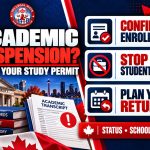
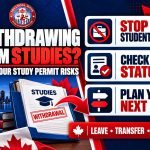
The more immediate rule appears in section 222(1). A study permit becomes invalid on the first applicable event, including the day its holder is no longer enrolled at the DLI named on the permit for a reason other than completing the studies. Its printed expiry date is another possible event, but it may arrive later.
Do not assume that a withdrawn student can use the permit until the date printed on it. Obtain the school’s written effective date and assess the person’s exact permit, enrollment history and immigration position promptly. The familiar rule that a permit can become invalid 90 days after completion of studies is a different rule; it does not provide a general 90-day withdrawal period.
This article addresses ordinary withdrawal. An approved leave, an official scheduled break, a transfer and successful completion require their own analysis. Labels used by a school’s billing office do not alone decide the immigration consequences.
Withdrawal, Authorized Leave, Transfer and Completion
These situations may look similar to a student who is away from class, but they have different records and rules.
| Situation | Central question | Immediate document to obtain |
|---|---|---|
| Withdrawal | When did enrollment at the named DLI end? | Written withdrawal confirmation with effective date |
| Authorized leave | Did the DLI authorize a qualifying leave of no more than 150 days? | DLI leave approval with dates and reason |
| School transfer | Is a new study permit required and approved before study begins at the new DLI? | New LOA and permit application or approval records |
| Program completion | When did the school first confirm completion? | Final transcript or completion letter |
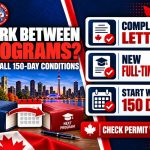
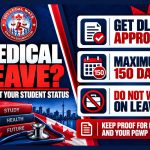
IRCC’s study permit conditions page explains that an authorized leave of up to 150 days may count as active pursuit when the school authorizes it and the student can provide proof. It lists medical reasons, pregnancy, family emergencies and other school-authorized reasons. A student on such a leave generally cannot work on or off campus; IRCC notes a specific exception for a temporary school closure caused by a strike. An informal break after dropping all courses is not automatically an authorized leave.
If a student intends to resume, ask the school before withdrawing whether an authorized leave, deferral or other official academic arrangement is actually available. Get its decision in writing. Do not ask the school to mislabel a withdrawal as a leave.
Does the Student Have to Stop Working?
Student work permission depends on meeting the relevant conditions, not just possessing a card bearing work language or a social insurance number. IRCC’s off-campus work guidance requires eligible enrollment and says a student whose situation changes so that they no longer meet the requirements cannot continue off-campus work under that authorization.
For an actual withdrawal, stop work that relies on the study permit’s student-work conditions. This includes reviewing on-campus employment, placements and self-employment where permission depended on being a student. The ordinary 24-hour weekly off-campus limit during classes does not turn into a right to work 24 hours after withdrawal. A school’s scheduled break is not the same as leaving the program.
Someone who independently holds another valid authorization to work should assess that authorization on its own terms. Do not assume an employer’s willingness to schedule shifts establishes immigration permission.
Tell the employer promptly when student-work eligibility changes and keep records of the date work stopped. If work continued after withdrawal, preserve the facts and obtain individualized advice before submitting a new immigration application. Omitting the period can make the problem worse.
What Happens to Immigration Status in Canada?
The validity of the study permit, the person’s authorization to remain in Canada, and the right to work are related but distinct questions. Section 222 expressly addresses study permit invalidity after enrollment at the named DLI ends. It is unsafe to infer from the printed expiry date that all three permissions continue unaffected.
The appropriate response depends on the student’s immigration history and timing. A person might leave Canada, pursue a permitted application for another study permit, seek another immigration status for which they qualify, or need to address loss of status. The availability and timing of an in-Canada application require case-specific review. A pending plan to study again does not automatically restore permission to work or study.
If the student wants to remain as a visitor, review IRCC’s current visitor-status guidance before applying. IRCC cautions that switching to visitor status generally does not give a person extra time to extend a study or work permit, and most visitors cannot apply for a new study or work permit from within Canada. Visitor status also does not authorize ordinary student work.
If the current permit or status has already expired or become invalid, seek qualified advice promptly about available steps; avoid assuming a generic grace period applies. Record exact dates rather than relying on when a school eventually sends an email.
Can the Student Switch to Another School?
Changing to a different post-secondary DLI is a distinct process. Under IRCC’s changing schools or programs instructions, a student generally must apply to extend the current study permit and obtain the new permit before starting at the new DLI. Limited exceptions permit starting while an extension is pending when all listed criteria are met, such as certain circumstances in which the previous school closed or discontinued a program. Do not assume those exceptions apply to a voluntary withdrawal.
The school-change application ordinarily needs a new letter of acceptance, an explanation and a new provincial or territorial attestation letter (PAL or TAL) unless an exception applies. Quebec has separate CAQ requirements. The new institution must be a DLI, and prospective PGWP eligibility should be checked at the program level.
Changing programs at the same school can follow a different process if the permit remains valid and its conditions allow the change. In either case, the timing of the old enrollment ending, any authorized gap and the student’s current permit are crucial. Applying to the new school does not itself authorize continued work during a period without eligible studies.
Before withdrawing to transfer
- Obtain a written offer and verify the new DLI and program.
- Confirm whether the existing school can keep the student enrolled through the relevant date or authorize a genuine leave where appropriate.
- Check IRCC’s school-change requirements, PAL/TAL or CAQ and the need for a new permit.
- Map the dates of final attendance, effective withdrawal, application and intended new start.
- Stop student work when the work conditions are no longer met.
This sequence is for planning, not a promise that every student can remain or begin at a new DLI. Get advice before an irreversible withdrawal if the dates are tight.
What About the PGWP?
A PGWP is generally a benefit connected to completing an eligible program. IRCC’s PGWP eligibility page requires, among other things, completing an eligible program of at least eight months (or 900 hours for a Quebec program) and maintaining full-time student status in Canada during each semester, with a final-semester part-time exception. Additional requirements depend on the program and application dates, including language or field-of-study rules where applicable.
Withdrawing before completing a program does not yield a PGWP based on that unfinished program. If a student later completes another eligible program, IRCC will assess the actual study history and applicable rules. IRCC says an unauthorized leave that breaches study permit conditions may make a person ineligible. A properly documented authorized leave of up to 150 days may be treated differently; proof of DLI authorization is needed when applying for a PGWP.
For transfers, IRCC also has rules on the length of study at eligible DLIs. Do not assume that credits or semesters completed at the first school automatically make the second program PGWP eligible or increase a future permit’s length. Verify the proposed credential, institution, program delivery and the student’s dates against the current PGWP criteria.
If the school has actually confirmed that the student completed all program requirements, use the completion rules rather than describing the departure as a withdrawal. The completion confirmation date matters for the 180-day PGWP application window and for the separate study-permit validity rule.
What Should the Student Ask the School?
Request an official letter or email stating:
- The student’s name, ID, DLI and program
- Whether the record says withdrawal, leave, transfer, dismissal or completion
- The effective date and, where relevant, the last date of attendance
- Whether the student remains enrolled in any courses
- Any approved leave period and return date
- The availability of a new LOA or deferral, if relevant
- When and how tuition refunds, insurance and housing are affected
IRCC says it may request official school records confirming enrollment status, withdrawal date, suspension or dismissal date, or when studies stopped. Obtain the records early and preserve the original messages and transcript. If an administrative date looks wrong, seek a written correction from the school instead of simply asserting another date in an application.
A Practical Decision Timeline
Before the school processes a withdrawal: Review the permit and options with the international student office or an authorized immigration professional. Ask whether the school can offer a genuine approved leave or a formal transfer plan. Confirm any refund deadline separately; a refund deadline does not decide immigration law.
On the effective withdrawal date: Preserve the written confirmation. Stop any work based on student status and do not start studying at another DLI without the authorization required for that change. Determine how section 222 applies to the student’s permit.
Immediately afterward: Decide whether to leave Canada or pursue a status or permit application that is actually available in the circumstances. Where a new study application is contemplated, prepare a clear chronology, explain why the first program ended and provide truthful financial and school documents.
Before a future PGWP application: Review every semester, any gap and every approved leave against current eligibility requirements. Keep the DLI’s contemporaneous records; a later explanation alone may be insufficient.
Common Mistakes
Relying on the Printed Expiry Date
Under section 222, a permit may become invalid when enrollment at the named DLI ends for a reason other than completion. The printed date is not a guarantee of continuing study or work authorization.
Treating Withdrawal as an Authorized Leave
The school must actually authorize the leave, and IRCC’s maximum for the leave described in its guidance is 150 days. A student should retain dated approval and observe the no-work rule applicable to authorized leave.
Working While Waiting for a New LOA
An admission application or a future start date does not itself satisfy the conditions for off-campus student work.
Starting at a New DLI Too Early
Most post-secondary school changes require a new approved permit before studies begin at the new DLI. Check whether a narrow exception truly applies.
Assuming Withdrawal Counts as Graduation
PGWP eligibility generally requires completion of an eligible program. Withdrawal after many completed credits does not replace a completion letter.
Concealing the Gap
IRCC and schools may have records of enrollment. A later application should give a consistent account of the dates and what the student did during the interruption.
A 101 Legal Ways Educational Example
Amir reviewed his school’s withdrawal confirmation and saw the effective date was two weeks earlier than the day he had read the email. He stopped his campus job, obtained his official transcript and documented the date of his last shift. An international student adviser helped him distinguish the old school’s academic refund policy from his immigration obligations.
He had an offer from another college but did not start classes there on the strength of his old permit. He reviewed IRCC’s DLI-change instructions and sought individual advice about his status and application options. His explanation for a new program described the academic mismatch with the first one and supplied the actual withdrawal and work dates.
Amir is fictional and is not a real client. His next application has no guaranteed result. The example shows why withdrawal should be approached as a documented change in enrollment with immediate permit and work consequences.
101 Legal Ways provides public education about Canadian laws and immigration procedures. Its guides help readers identify official requirements, organize evidence and ask more precise questions before important decisions.
Four Actionable Takeaways
- Confirm the effective date. Get written school records showing when enrollment at the named DLI ended and why.
- Stop work that depends on student eligibility. A printed permit date or SIN does not preserve student-work rights after the conditions cease to be met.
- Choose the next immigration step promptly. A transfer, visitor application or departure has separate rules; a new LOA alone is not permission to study or work.
- Protect the future record. Retain transcripts, leave approvals, withdrawal notices and an honest chronology for any new study permit or PGWP assessment.
Final Thoughts
Withdrawal has a different legal effect from completing a program. Current regulations expressly make a study permit invalid when its holder is no longer enrolled at the DLI named on it for a reason other than completion. That rule makes the school’s effective date, the student’s work history and the next immigration step especially important.
Before dropping a program, get the school’s written account and review the actual permit and IRCC instructions. If the withdrawal has already happened, address the record promptly and accurately. Neither a later printed expiry date nor a plan to enroll elsewhere answers every status question.
Official Government Sources
- Department of Justice Canada: Immigration and Refugee Protection Regulations, section 220.1
- Department of Justice Canada: Immigration and Refugee Protection Regulations, section 222
- IRCC: Study permit conditions
- IRCC: Work off campus as an international student
- IRCC: Changing schools or programs
- IRCC: PGWP eligibility
- IRCC Help Centre: Changing status to visitor
Legal Disclaimer
This article provides general public information, not legal advice, and does not create a lawyer-client or consultant-client relationship. Immigration status, permit validity, school reporting and eligibility depend on individual facts and current law. Consult IRCC, the DLI and an authorized Canadian immigration professional about your circumstances. Information reviewed September 23, 2026.