


























PGWP Eligibility in 2026: How to Check Your School, Program, Language Results and Field of Study

An international student receives an offer from a Canadian designated learning institution (DLI). The school says graduates can apply for a post-graduation work permit (PGWP). The student assumes every diploma at that school qualifies.
That assumption can lead to an expensive mistake. IRCC states that graduating from a DLI does not automatically make someone eligible for a PGWP. The school must offer an eligible program, and the graduate must satisfy the requirements that apply to their study history, credential and application date.
Consider Noor, a fictional student comparing two diploma programs. Both schools are DLIs. One program appears on the relevant PGWP-eligible program listing; the other does not. Noor also discovers that her non-degree credential may require an eligible six-digit field-of-study code and a qualifying language result. She needs to verify those details before relying on a future PGWP in her study plans.
This guide sets out a practical eligibility check using current official IRCC guidance. It explains the 2026 field-of-study list freeze, common document errors and important deadlines. It does not guarantee that a particular program or person will qualify.
What Is a PGWP?
A PGWP is a work permit available to eligible graduates of certain Canadian DLIs and programs. Its length depends on the program’s level and duration and on the applicant’s passport validity, subject to IRCC’s rules.
It is not a benefit automatically attached to every Canadian letter of acceptance, study permit, diploma or DLI number. A student should check eligibility before enrolling and again before applying because both personal circumstances and applicable rules matter.
Use the current IRCC PGWP overview and who-can-apply page as the starting points.
Step 1: Check the DLI and the Exact Program
The first question is not merely, “Is the school a DLI?” It is, “Does this DLI offer this specific program as PGWP-eligible under the rules that apply to me?”
IRCC’s DLI list identifies schools offering PGWP-eligible programs and directs readers to the school’s details. It expressly warns that not all programs at a listed DLI are eligible.
Record the:
- Exact legal school name and DLI number
- Campus and delivery location
- Full program name and credential awarded
- Program duration and official description
- PGWP status shown in the DLI details
- Any delivery arrangement involving another institution
Do not rely solely on a brochure line saying the institution is “designated.” That establishes one aspect of the study-permit context; it does not decide PGWP eligibility for every program.
IRCC also excludes many programs delivered through curriculum licensing agreements, often called public-private partnerships or P3s, subject to limited transition exceptions based on when studies began. If a public institution’s name appears on a credential but a private partner delivers the program, review IRCC’s specific rules and dates.
Step 2: Check Program Length and Full-Time Study
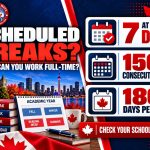
IRCC’s general PGWP eligibility page requires a PGWP-eligible program of at least eight months, or 900 hours for applicable Quebec programs. Graduates generally must have maintained full-time student status in Canada during each semester. IRCC allows part-time study in the final semester when the student needs fewer courses to finish.
A program advertised as “one academic year” should be checked against its official length. A student who transfers from a non-DLI to a DLI cannot automatically count the time at the non-DLI; IRCC says at least eight months at the DLI are required in that situation.
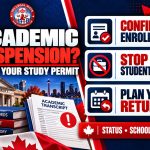
Keep the official transcript and enrolment records. IRCC’s document guidance says an official transcript or a copy from the DLI’s website can be used to prove full-time enrolment.
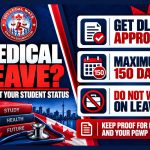
An unauthorized leave may affect eligibility if IRCC finds the student failed to comply with study-permit conditions. Certain authorized leaves of up to 150 days may be permitted, with school documentation. Do not assume that every semester recorded as part-time, absent or on leave fits the final-semester exception.
Step 3: Determine the Language Requirement
For PGWP applications submitted on or after November 1, 2024, most applicants must provide language results. IRCC identifies an exception for eligible flight-school graduates. The level depends on the type of program:
| Graduate’s program | General minimum in each of four abilities |
|---|---|
| Bachelor’s, master’s or doctoral degree | CLB 7 in English or NCLC 7 in French |
| Other university program | CLB 7 or NCLC 7 |
| College, polytechnic or other non-university program | CLB 5 or NCLC 5 |
| PGWP-eligible flight school | No new PGWP language requirement under IRCC’s stated exception |
The four abilities are reading, writing, listening and speaking. A strong overall impression is not enough if one required ability falls below the applicable benchmark. Compare actual test results against IRCC’s conversion tables.
IRCC accepts specified tests, including CELPIP-General, IELTS General Training, PTE Core, TEF Canada and TCF Canada. Results must be less than two years old when the PGWP application is submitted. A school’s own language assessment or an unrelated test format should not be assumed acceptable.
There is a practical upload trap: IRCC says the online PGWP checklist may show language proof as “optional” even when it is required for the applicant’s program. Follow the substantive rule and the current document instructions, not the label alone.
Step 4: Decide Whether a Field-of-Study Rule Applies
The field-of-study requirement and the language requirement have different triggers. A student who is exempt from one is not necessarily exempt from the other.
IRCC says a graduate does not need to meet the field-of-study requirement if one of these applies:
- They graduated with a bachelor’s, master’s or doctoral degree
- They applied for a study permit before November 1, 2024
- They graduated from a PGWP-eligible flight school
- They submitted their PGWP application before November 1, 2024
For a current student whose study-permit application was submitted on or after November 1, 2024, a non-degree university program or a college, polytechnic or other non-university program generally needs an eligible field of study. Check the exact credential category in IRCC’s eligibility rules.
A graduate degree and a diploma with the word “graduate” in its marketing name are not necessarily the same type of credential. Determine whether the awarded credential is actually a bachelor’s, master’s or doctoral degree before claiming the degree exemption.
What Is a CIP Code?
IRCC uses a six-digit Classification of Instructional Programs (CIP) code to classify a program’s field. The field-of-study assessment turns on the applicable code and official program description, not a broad label such as “health,” “technology” or “business.”
Ask the DLI for the six-digit code for the exact program. Compare it with IRCC’s field-of-study page and eligible-code list. IRCC also points to Statistics Canada’s CIP catalogue to help identify a code when necessary.
If the school’s advertising, program title and CIP description do not seem to match, request a written explanation. Do not pick a nearby eligible code simply because its title sounds similar. The proof submitted with the PGWP application should support the program’s actual classification.
IRCC says an applicant who must meet the field requirement needs to include evidence that the graduated program meets the eligible CIP description. Due to system limitations, IRCC directs applicants to place this proof in the Client Information section of the online application.
What Is the 2026 Field-of-Study List Freeze?
IRCC states that it will not add or remove eligible fields of study during 2026. This provides a defined list for the year, but it does not turn an ineligible program into an eligible one or remove the need to verify the correct code.
IRCC’s current field page says a relevant CIP code can meet the requirement if it was eligible when the applicant submitted either the study-permit application or the PGWP application. Dates can matter when a code’s status changed in an earlier period. The detailed tables may display different eligibility windows for particular codes.
Keep the dated study-permit submission confirmation and a record of the relevant official code information. Check IRCC’s live field-of-study instructions again at PGWP filing. Do not interpret the 2026 freeze as a promise about rules in a later year.
Online Study, Transfers and Other Special Cases
Delivery method can matter independently of a school’s PGWP listing. IRCC has specific distance-learning rules tied to the period when studies took place. For a lock-in date on or after September 1, 2024, IRCC says at least 50% of the program must be completed in class within Canada, and time studied from outside Canada is deducted from PGWP length.
Earlier pandemic-era policies have different dates and conditions. A student should assess their actual history rather than apply a general statement such as “online courses never count” or “all online courses count.” Review the distance-learning section of IRCC’s eligibility page.
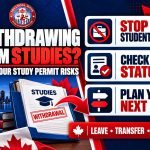
Transfers between schools, authorized leaves, accelerated programs, certain Quebec credentials and flight training may also have special rules. Keep letters, transcripts and school records covering every period. A transfer does not erase the earlier study history or automatically combine all program lengths.
When Must You Apply?
IRCC generally requires a PGWP application within 180 days of confirmation that the program was completed. The study permit must have been valid at some point during that 180-day period. These are application-eligibility rules, not a guarantee of permission to work while the application is pending.
A study permit can become invalid before the date printed on it: under the regulations, it generally becomes invalid 90 days after study completion, or at an earlier applicable expiry event. If a graduate wants to work while waiting for a PGWP decision, IRCC has a separate rule requiring the study permit to have been valid when the PGWP application was submitted, along with prior off-campus work eligibility and compliance.
An applicant who waits until after the study permit expires may still need to consider restoration or an application from outside Canada, depending on the facts, but cannot assume the same interim work permission. See IRCC’s PGWP application instructions and after-you-apply guidance.
How Long Can the PGWP Be Valid?
Eligibility and permit length are separate questions. IRCC’s current PGWP overview explains:
- An eligible master’s degree program of at least eight months, or the applicable 900-hour Quebec minimum, may support a three-year PGWP even when the program was less than two years. This does not apply to a certificate or diploma merely called a “master’s program.”
- For most other eligible programs lasting at least eight months but less than two years, IRCC may issue a PGWP for up to the length of the program.
- An eligible program lasting two years or more may support a three-year PGWP.
- Two eligible programs may sometimes be combined if each meets the minimum length and other requirements; a PGWP cannot be obtained a second time after one was already issued.
The passport can shorten the issued permit. If it expires before the graduate’s full eligible PGWP period, IRCC may issue only to the passport expiry date. The graduate may then be able to request the remaining eligible period after renewing the passport under IRCC’s specific paper-application procedure. Do not assume an old or soon-to-expire passport has no effect.
Documents to Prepare Before Applying
Depending on the program and circumstances, organize:
- Completion letter, diploma or official transcript
- Official transcript showing full-time study history
- Study permit and its relevant dates
- DLI and exact program eligibility information
- Accepted language test results, if required
- Evidence of the eligible six-digit CIP code, if required
- Records explaining an authorized leave, transfer or distance-learning period
- Passport covering the desired permit period
- Medical-exam evidence if the intended occupation requires it
- Proof of the date the study permit application was submitted, where a field exemption or earlier code eligibility matters
IRCC may request more. The PGWP document page should be checked immediately before filing. An online checklist field marked “optional” should not override an applicable substantive requirement.
Common Mistakes to Avoid
Assuming Every DLI Program Qualifies
IRCC’s DLI list warns that a school can offer both eligible and ineligible programs.
Confusing a Diploma With a Degree
The field-of-study exemption for bachelor’s, master’s and doctoral degrees does not automatically extend to every post-graduate diploma or certificate.
Checking a Broad Field Instead of a Six-Digit Code
Verify the exact CIP code and program description against IRCC’s list.
Treating Language Proof as Optional Because the Portal Says So
IRCC warns that the checklist label may be misleading for an applicant who must provide test results.
Using Expired or Wrong-Format Test Results
Use an accepted test and results less than two years old at submission; check each language ability.
Assuming a Study Permit Guarantees a PGWP
Study authorization and post-graduation work eligibility are separate decisions.
Waiting for the Graduation Ceremony
The 180-day PGWP application period is tied to confirmation of program completion, not a later ceremony.
A 101 Legal Ways Educational Example
After reading 101 Legal Ways guides, Noor stopped comparing schools only by tuition and the DLI label. She checked each exact program in the official DLI information and asked the schools for their six-digit CIP codes and credential types.
Because her intended credential was a diploma and her study-permit application would be submitted after November 1, 2024, she checked the field-of-study list instead of assuming the degree exemption applied. She also planned an accepted language test and compared her results with the CLB 5 requirement for the relevant college program category. She saved the official program information and her application submission date for future reference.
Noor is fictional and is not a real client. The example does not guarantee her admission, study permit or PGWP. It demonstrates how checking the school, specific program, credential, CIP code and language requirement can reveal a problem before graduation.
101 Legal Ways provides practical public education about Canadian legal and immigration procedures. Its guides help readers understand official rules, organize evidence and ask better questions before important decisions.
Four Actionable Takeaways
- Verify the precise program. A DLI number alone does not establish PGWP eligibility for every credential offered by the school.
- Match the language level to the credential. Most current applicants need accepted results showing CLB/NCLC 7 or 5 in each ability, depending on the program category.
- Check the CIP code when required. Non-degree graduates affected by the field rule need the correct six-digit code and evidence supporting it; IRCC has frozen additions and removals for 2026.
- Protect the deadlines and record. Keep transcripts, completion confirmation, study-permit dates, test results and any evidence explaining special circumstances.
Final Thoughts
PGWP eligibility is a series of linked checks. A student needs an eligible institution and program, a qualifying study history, the appropriate language proof, an eligible field where required, and a timely application. Each requirement can affect the result.
The most useful time to perform the check is before committing to a program. Repeat it before submitting a PGWP application, using the exact credential and current IRCC instructions. A school’s marketing statement is not a substitute for verifying the rule that applies to the student’s own record.
Official Government Sources
- IRCC: About the post-graduation work permit
- IRCC: PGWP — Who can apply
- IRCC: Designated learning institutions list
- IRCC: PGWP field-of-study requirement and eligible CIP codes
- IRCC: How to find your language level
- IRCC: PGWP documents
- IRCC: How to apply for a PGWP
Legal Disclaimer
This article provides general public legal and immigration information only. It is not legal advice and does not create a lawyer-client or consultant-client relationship. Immigration rules, program classifications and individual circumstances may change. Consult current IRCC instructions, the institution and an authorized Canadian immigration professional for advice about a specific program or application. Information was reviewed against official guidance available on September 29, 2026.