


































Studying Part-Time in Canada: What Happens to Your Study Permit, Work Rights and PGWP?

An international student may need a lighter course load because of an illness, a failed prerequisite, course availability, financial strain or a final semester with only one requirement left. The school may permit part-time registration. That academic permission does not answer every immigration question.
Three different tests can apply at the same time: whether the student is actively pursuing studies under their study permit, whether they qualify to work as a student, and whether their study history will meet the rules for a post-graduation work permit (PGWP). The answers may differ.
Consider Maya, a fictional student in a two-year Canadian diploma program. She dropped from four courses to two midway through her second semester but continued working at a café. Her school accepted the reduced schedule and kept her enrolled. She assumed that being enrolled meant her off-campus work and future PGWP were protected. She needed to check the separate full-time requirements before making that assumption.
This guide explains the current federal guidance, the special final-semester rule and the records that help establish what actually happened. It is general public information rather than an individual immigration assessment.
Part-Time Study and the Study Permit Condition
Section 220.1 of the Immigration and Refugee Protection Regulations generally requires a study permit holder in Canada to remain enrolled at the designated learning institution (DLI) named on the permit and actively pursue the course or program. Certain specified people are exempt from these conditions.
IRCC’s study permit conditions guidance explains that active pursuit can involve being enrolled full-time or part-time during each academic semester, except regularly scheduled breaks, while making progress toward completing courses and respecting the rules for authorized leave.
Therefore, part-time study is not automatically a breach of the active-pursuit condition. It also does not mean that any amount of course registration will always suffice. An officer may look at the student’s progress, duration and explanation for the lighter load. The permit may contain other conditions that also matter.
The DLI determines its own enrollment classifications. Ask the registrar how it recorded each semester and whether the student made satisfactory progress. A course enrollment screenshot is less useful than an official letter stating dates, course load and status.
Three Tests That Should Be Kept Separate
| Question | General rule | Part-time implication |
|---|---|---|
| Active pursuit under the study permit | Enrollment and progress at the named DLI | Part-time enrollment can count, depending on the facts |
| On- or off-campus student work | Generally requires full-time study and other criteria | Usually ends when full-time study stops; narrow final-semester exception |
| PGWP eligibility | Generally requires full-time status in Canada each semester | Part-time may jeopardize eligibility, except the final-semester allowance and any applicable special case |
This is why advice such as “part-time is allowed” can be incomplete. It may answer the study permit question without answering the work or PGWP questions.
Can a Part-Time International Student Work Off Campus?
IRCC’s off-campus work instructions generally require a student to be full-time at a DLI, have started an eligible program, have a valid study permit or a qualifying timely extension application, have the relevant work condition printed on the permit and have a social insurance number (SIN). The qualifying program generally must be at least six months and lead to a degree, diploma or certificate.
There is a defined exception for a part-time final semester. IRCC says a student may work off campus when they meet the other requirements and are part-time only because they do not need a full course load to finish in the final semester, having studied full-time in their program in Canada until that semester.
If Maya drops to part-time in an ordinary second semester, the final-semester exception does not apply. Her permit may still allow her to continue studying, but she should stop off-campus work that relies on student eligibility when she no longer meets the full-time rule. A café schedule, an unexpired SIN or a printed work condition does not override the underlying criteria.
When eligible full-time students are in regular academic terms, IRCC currently allows up to 24 hours per week off campus. Eligible students may work unlimited hours during regularly scheduled school breaks. Neither rule turns a student who is ineligible to work because of an ordinary part-time semester into an eligible worker.
What About Working on Campus?
The on-campus work rules also generally require full-time study at a DLI, a valid permit or qualifying timely extension application, the necessary permit conditions and a SIN. IRCC says students must stop working on campus if they stop studying full-time, unless they are in the final semester and satisfy the other on-campus requirements.
For a genuine part-time final semester, IRCC says eligible students can continue working on campus for unlimited hours. This does not mean every student with one remaining course can work: the student must have studied full-time in each previous semester of the program and meet the other conditions.
An approved leave is a different situation. IRCC says students cannot work on or off campus during an authorized leave from studies, subject to its specific strike-related exception. Do not describe an inactive leave period as a part-time semester simply to preserve work eligibility.
Does Part-Time Study Affect PGWP Eligibility?
IRCC’s PGWP eligibility page generally requires a graduate to have maintained full-time student status in Canada during each semester of the program. It expressly allows part-time study in the final semester. The student must also complete an eligible program and satisfy the other criteria that apply to their program and dates.
One ordinary part-time semester before the final semester can therefore create a serious PGWP issue even if the school approved the lighter schedule and the student maintained a study permit. A school can verify its own record but cannot promise that IRCC will waive a federal PGWP requirement.
The final-semester allowance should be documented. Request a letter confirming that the semester was the last one required for program completion, the number of remaining credits or courses, and full-time status during earlier semesters. Keep the transcript and completion letter.
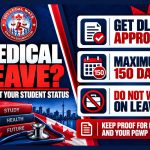
IRCC also lists special cases, including authorized leaves of up to 150 days where the DLI approved the leave and proof is provided. That is not the same as converting a semester with part-time courses into a full-time semester. Review the exact PGWP special-case guidance if an interruption occurred.
PGWP eligibility includes other requirements, such as program length, DLI and program eligibility, application timing and, where applicable, language or field-of-study criteria. Passing the full-time test alone does not guarantee a PGWP.
What Counts as the Final Semester?
The final semester is the semester in which the student completes the outstanding requirements of the program. It is not simply the term a student expected to graduate when they first enrolled.
For example:
- A student who completed all other requirements and needs one final course may be part-time in the last semester and fall within the final-semester rules if the other criteria are met.
- A student who takes two courses this fall but still has required courses next winter is not in the final semester merely because the fall load is light.
- A student who fails the supposed last course and must register again should obtain an updated school record and review the actual sequence of semesters.
Ask the school to confirm how many required credits remained at the beginning of the term, whether this was the final term of the same program, and how all earlier terms were classified. Do not assume a spring or summer course is automatically part of a scheduled break or automatically the final semester.
What If a Course Is Unavailable?
A student may be forced into part-time enrollment because a required course is not offered or a timetable conflict prevents a full load. The reason may help explain the academic history, but it does not automatically create an exception to student-work or PGWP rules.
Before dropping a course, ask the school whether it can:
- Offer another eligible course within the program
- Document that a full-time load was unavailable
- Explain whether the student remains on track to complete
- Confirm whether a leave is actually authorized and appropriate
- Provide a letter describing the course schedule and revised graduation date
The strongest document states the facts rather than promising an immigration outcome. Where PGWP eligibility is especially important, obtain individualized advice before changing the course load if possible.
What If the Student Is Part-Time for Medical or Family Reasons?
A student with health or family circumstances may have genuine reasons to reduce courses. The school may grant academic accommodation, a part-time schedule or an approved leave. These are different records.
If the student remains registered part-time, assess the study permit, work and PGWP tests for a part-time semester. If the DLI instead authorizes a leave, IRCC’s leave guidance describes circumstances in which an authorized leave of no more than 150 days may count as active pursuit, provided it is documented. Student work is generally prohibited during that leave.
Medical evidence can explain circumstances, but a doctor’s note by itself does not necessarily establish that the school authorized an immigration-relevant leave. Ask the DLI what it formally approved, on what date and how the semester appears on the transcript.
Never assume the 150-day leave rule is a general permission to study part-time while working. It applies to a different situation.
Scheduled Breaks, Gaps and Withdrawal
IRCC treats a regularly scheduled break differently from an academic semester. Eligible students may have different off-campus work hours during those breaks. A personal decision to skip a term or take one course does not automatically turn the semester into a scheduled break.
If the student withdraws entirely, an additional rule may arise. Section 222 of the Regulations can make a study permit invalid when the holder is no longer enrolled at the named DLI for a reason other than completing studies. That is a different and potentially more immediate issue than remaining enrolled part-time.
Ask the school for the exact term dates, academic-calendar breaks, enrollment status and effective withdrawal date, if any. These dates affect which rule applies.
How to Review an Existing Part-Time Semester
If the semester has already happened, create a factual timeline:
- List every semester from the start of the program.
- Obtain official transcripts and full-time or part-time enrollment letters.
- Identify the date the course load changed.
- Record when on- and off-campus work was performed.
- Determine whether the term was truly the final semester.
- Obtain written records of any approved leave or accommodation.
- Review the current PGWP requirements for the particular program.
If the student worked while ineligible, do not alter records or omit that period from an application. Get advice on how to address the facts accurately. IRCC says breaches of work or study conditions can affect future applications.
Common Mistakes to Avoid
“My School Allowed Part-Time Study, So I Can Keep Working”
School approval of course registration does not replace IRCC’s generally full-time student-work requirement.
“My Permit Says I May Work”
Work wording on a permit is conditional. The person must continue meeting the relevant regulatory and IRCC criteria.
“Any Part-Time Semester Is Fine for a PGWP”
IRCC’s general rule is full-time status in Canada for each semester, with an express allowance for the final semester and possible special cases.
“A Light Term Is a School Break”
Check the official academic calendar. A semester with reduced courses is not automatically a regularly scheduled break.
“One Course Means It Must Be My Final Semester”
Verify that no other program requirement remains afterward. Obtain written confirmation from the DLI.
“A Doctor’s Note Automatically Fixes the Gap”
Medical documentation, an academic accommodation and a DLI-authorized leave have different purposes. Keep the school’s actual decision.
A 101 Legal Ways Educational Example
After reading 101 Legal Ways guides, Maya requested a semester-by-semester enrollment letter. Her DLI confirmed that the two-course semester was part-time, that it was not the final semester and that no leave had been authorized. She stopped off-campus work based on student status and preserved her pay records.
Maya met with the school’s adviser to build a feasible course plan. She obtained a factual letter explaining why she reduced the load, but she understood that the letter would not automatically satisfy the PGWP full-time rule. Before making future work or immigration applications, she sought advice using her complete academic and work history.
Maya is fictional and is not a real client. Her example does not guarantee a permit or PGWP outcome. It illustrates why a reduced course load should be checked against three separate sets of requirements.
101 Legal Ways provides public education about Canadian laws and immigration procedures. Its guides help readers identify official requirements, organize evidence and ask better questions before important decisions.
Four Actionable Takeaways
- Verify the school’s classification. Get an official record showing whether each semester was full-time, part-time, an authorized leave or a scheduled break.
- Recheck work rights as soon as the load changes. Ordinary part-time students generally cannot rely on student on- or off-campus work permission; a genuine final semester has specific exceptions.
- Protect the PGWP record. IRCC generally expects full-time status in Canada each semester, apart from its final-semester allowance and applicable special cases.
- Document the reason and dates. Keep transcripts, course plans, final-semester confirmation and any leave approval, and address inconsistencies honestly.
Final Thoughts
Part-time enrollment can be compatible with actively pursuing studies under a study permit. It can also end student-work eligibility and create a PGWP problem when it occurs before the final semester. These are different legal questions with different evidence.
Before reducing a course load, ask the DLI how it will record the term, review the work conditions and check the PGWP requirements that apply to the program. If the change already happened, gather the contemporaneous school and work records and assess the actual timeline.
Official Government Sources
- Department of Justice Canada: Immigration and Refugee Protection Regulations, section 220.1
- Department of Justice Canada: Immigration and Refugee Protection Regulations, section 222
- IRCC: Study permit conditions and authorized leave
- IRCC: Work off campus as an international student
- IRCC: Work on campus as an international student
- IRCC: PGWP eligibility and special cases
Legal Disclaimer
This article provides general public legal and immigration information, not legal advice, and does not create a lawyer-client or consultant-client relationship. School classifications, individual study histories and immigration rules may affect the result. Consult IRCC, your DLI or an authorized Canadian immigration professional for advice about your circumstances. Information reviewed September 23, 2026.