





































Working On Campus in Canada: Who Qualifies, Where You Can Work and When You Must Stop

A university library job may obviously appear to be on campus. A café operated by a private company inside a college building may also qualify. A research assistant assigned to an affiliated hospital across town raises a more specific question. International students should examine both their own eligibility and where the work physically takes place.
IRCC currently says eligible international students may work on campus without a separate work permit and that there is no immigration limit on on-campus work hours during academic terms or scheduled breaks. Those permissions are conditional. Full-time study is generally required, the permit must support work and the student must stop when the criteria no longer apply.
Consider Priya, a fictional student offered two jobs: tutoring in a university learning centre and weekend shifts at a shop across the street owned by a company that also runs the campus bookstore. She assumed both were on-campus work because the university advertised them. The worksite and authorization for each position needed separate review.
This guide explains IRCC’s current on-campus rules, examples of eligible employers and locations, the final-semester exception, and the records to keep. It provides general information rather than an individual work-authorization decision.
The Legal and Practical Starting Point
Paragraph 186(f) of the Immigration and Refugee Protection Regulations addresses work without a work permit by a full-time student on the campus of the university or college at which the student studies, during the period covered by the study permit.
IRCC’s on-campus work guidance translates the rule into a practical checklist. The student must generally:
- Be a full-time student at a designated learning institution (DLI)
- Be enrolled in an eligible post-secondary academic, vocational or professional training program, or qualifying secondary-level vocational training in Quebec
- Hold a valid study permit, or have applied to extend it before it expired
- Have the necessary work condition printed on the initial study permit
- Have a social insurance number (SIN)
- Have started the study program
IRCC sets out an exception for a student studying part-time in the final semester after studying full-time in each prior semester of the program, provided the other requirements are met.
A job offer is not enough on its own. The school, employer and student should verify these criteria before the first shift.
Can a Student Work Before Classes Begin?
No, under the student on-campus work route. IRCC states that a student can begin working in Canada only after starting the study program. Receiving the study permit, entering Canada early, obtaining a SIN or signing an employment contract before orientation does not change the program-start requirement.
If a student has another independent work authorization, assess that document under its own conditions. Do not assume the study permit’s on-campus wording permits an early start.
What Does “On Campus” Mean?
IRCC says on-campus work generally covers all buildings on the student’s school campus. If a school has several campuses, a student can in most cases work only at the campus where they are studying. The employer’s connection to the school does not automatically transform every offsite location into the student’s campus.
Examples that may qualify if the student otherwise meets the rules include:
- A library desk in a building on the student’s campus
- A student union office on that campus
- A café or bookstore physically located there
- A university department’s administrative office on campus
- A student-operated service located on campus
The actual address matters. Priya’s campus learning-centre job fits the location description. A store across the street needs another basis for work authorization even if the same company operates a campus bookstore. Branding, ownership, job advertisements and payroll location do not replace the physical-worksite test.
Ask the employer for the specific building and worksite address. If shifts move between sites, assess each location. A qualifying job on Monday does not authorize every off-campus assignment on Saturday.
The Research Assistant Exception Away From Campus
IRCC identifies a specific circumstance in which a student may work somewhere other than the school campus under on-campus authorization. All three conditions must be met:
- The student works as a teaching or research assistant.
- The work is strictly related to a research grant.
- The work takes place at a library, hospital or research facility associated with the school.
Review the official location rules. A student assigned to an affiliated hospital should obtain confirmation of the assistant role, the research grant, the association with the school and the location.
This is not a general exception for all hospital jobs or every university-affiliated company. If the work is in a hospital or another setting where public health must be protected, IRCC says an immigration medical examination may be needed. Check the student’s permit and medical examination history before starting.
IRCC also notes that another location may be possible when a student is eligible for a student work placement. Placements have their own rules; do not classify an ordinary off-campus job as on-campus work merely by calling it an internship.
Who Can Employ a Student On Campus?
The employer need not always be the DLI itself. IRCC’s on-campus employer examples include:
- The school
- A faculty member
- A student organization
- A private business
- A private contractor providing services on campus
- The student, where the student runs a business physically located on campus
The campus location and the student’s eligibility remain essential. A private company’s retail counter in the campus building may be on-campus work. The same company sending the student to its city-centre branch generally calls for an off-campus authorization analysis.
For a student-run business, IRCC gives the example of a coffee shop physically on campus. Selling services from an apartment or visiting clients away from campus does not become on-campus work because the business owner is a student.
Is There a Weekly Hour Limit?
IRCC says eligible students can work as many on-campus hours as they want during regular academic terms and scheduled breaks. There is no federal student-immigration weekly hour cap on this category while eligibility continues. This differs from the ordinary 24-hour-per-week off-campus cap during academic sessions for eligible off-campus workers.
“No hours cap” does not mean a student can stop meeting study permit conditions. IRCC’s study permit conditions page generally requires enrollment at the named DLI and active pursuit of studies. Very heavy work combined with little progress could prompt questions about the student’s study record.
Employment standards, collective agreements, campus policies and contractual limits may also affect working hours and pay. This article’s “no cap” statement concerns the on-campus student immigration hour rule, not every rule governing employment.
If a student holds both an on-campus and an off-campus job, keep their hours and authorizations separate. On-campus hours do not turn off-campus work into on-campus work. The off-campus limits still apply to work performed under the off-campus student provision.
What if the Student Becomes Part-Time?
IRCC says on-campus work must stop if the student stops studying full-time, unless they are in their final semester and meet the remaining on-campus requirements.
For that final-semester allowance, IRCC says the student may work unlimited on-campus hours if they:
- Study part-time in the final semester to finish required coursework; and
- Studied full-time in every preceding semester of the program.
Request an official letter confirming that the current term is truly the final semester, the remaining requirements and the student’s full-time history. A student who takes fewer courses in the middle of a program because a class is unavailable is not within this particular exception simply because the lighter load was approved by the school.
Part-time enrollment can sometimes be consistent with actively pursuing studies under a study permit, but on-campus work and PGWP rules may be stricter. Those are separate tests.
Authorized Leave, School Changes and Withdrawal
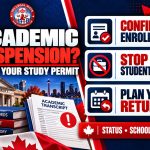
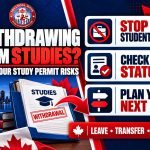
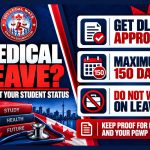
IRCC says a student must stop working on campus during an authorized leave. It also says on-campus work stops when the student is switching schools and is not currently studying. Work may resume only once studies resume and all work criteria are again met. See IRCC’s on-campus guidance.
An authorized leave is different from a regularly scheduled school break. The fact that the school permits time away from study does not itself allow a student to keep campus shifts. IRCC notes a particular strike-related work exception in its study permit conditions guidance; do not apply it to ordinary personal leave.
Withdrawal or dismissal can also affect the validity of the study permit. Section 222 of the Regulations can make the permit invalid when the holder is no longer enrolled at the DLI named on it for a reason other than completing studies. Stop relying on student work authorization and obtain the school’s effective enrollment date promptly.
After completion, do not assume a campus job can continue merely because graduation ceremonies are later or the card’s printed expiry date is in the future. IRCC says students generally must stop student work after receiving written completion confirmation unless they qualify under a specific post-completion work route. Those routes have separate conditions.
What if the Permit Has No Work Condition?
IRCC says an otherwise eligible student whose initial study permit lacks the relevant work condition can ask to have the condition added. Its on-campus guidance states there is no fee to add these conditions in that situation. The student needs the condition added before applying for a SIN on this basis.
Read the actual permit. IRCC provides examples of wording authorizing on- or off-campus employment subject to eligibility criteria and wording authorizing only on-campus employment. The second does not authorize off-campus shifts. If a permit expressly prohibits work or contains a relevant restriction, do not infer permission from a school letter.
Keep the amended permit, SIN record and current enrollment evidence. An employer’s decision to hire is not a substitute for the immigration condition.
Does Unpaid Work Count?
IRCC’s on-campus page defines work broadly. It may include an unpaid activity that would usually be paid or would provide valuable work experience of a kind considered work. A student should not assume that changing a job title to “volunteer,” “trial shift” or “intern” eliminates immigration rules.
Ask what duties will actually be performed, where and for whose benefit. Genuine volunteering and a work placement may raise different facts, so check the applicable IRCC instructions before beginning.
Documents Worth Keeping
For a campus job, organize:
- A copy of the study permit showing applicable work conditions
- SIN record
- Current full-time DLI enrollment letter, or final-semester confirmation where applicable
- Employment offer identifying employer, role and exact worksite
- Research-grant and school-affiliation documents for an offsite assistant role
- The academic calendar and any leave or program-change records
- Timesheets or schedules distinguishing on-campus and off-campus shifts
If the employer changes a worksite, ask for a revised letter before accepting shifts there. If the student loses full-time status, the school should provide the effective date in writing.
Common Mistakes to Avoid
“The University Advertised the Job, So It Must Be On Campus”
Check the physical worksite. An affiliated employer may operate both campus and off-campus locations.
“I Can Work at Any Branch of My College”
IRCC says students at schools with multiple campuses generally work at the campus where they study.
“There Is No Hour Limit, So Enrollment No Longer Matters”
Unlimited on-campus hours depend on continuing to meet student-work and study permit conditions.
“Part-Time Study Always Preserves Campus Work”
The stated part-time allowance is for a genuine final semester after full-time study in every earlier semester, with other requirements satisfied.
“An Unpaid Trial Shift Is Automatically Exempt”
The substance of the activity may count as work even without wages.
“I Can Keep My Campus Job During a Leave”
IRCC generally requires students to stop on-campus work during an authorized leave.
A 101 Legal Ways Educational Example
After reading 101 Legal Ways guides, Priya requested written worksite addresses. The learning-centre tutoring position was located in a building on the campus where she studied. The private shop’s weekend shifts were across the street. She reviewed the latter as off-campus work, with its separate eligibility and hour rules, rather than assuming both jobs shared one authorization.
Priya also obtained a full-time enrollment letter and checked the wording on her study permit before beginning. When an employer later proposed shifts at another campus, she asked the international student office to review the location rather than relying on the same payroll account.
Priya is fictional and is not a real client. The example does not guarantee work authorization in any particular setting. It shows why student status, permit wording and the actual worksite should be checked together.
101 Legal Ways provides public education about Canadian laws and immigration procedures. Its guides help readers identify official requirements, preserve records and ask better questions before important decisions.
Four Actionable Takeaways
- Check personal eligibility first. Full-time DLI enrollment, valid study permit or qualifying timely extension, permit work wording, SIN and program start all matter.
- Confirm the physical worksite. A private employer can operate on campus, while a school-linked role may be off campus.
- Know the hour rule’s scope. Eligible on-campus work has no weekly immigration cap, but off-campus work follows different limits.
- Stop when a condition ends. Part-time status outside the final-semester exception, authorized leave, permit expiry or a school change can alter work permission.
Final Thoughts
On-campus work can include more employers and roles than students expect, including private businesses physically operating on the student’s campus. The permission remains tied to the student’s school, location, enrollment and permit conditions.
Before accepting a shift, verify the worksite, the permit wording and the current enrollment record. Recheck those facts when a semester, campus, employer or job location changes. IRCC’s on-campus work page provides the current checklist.
Official Government Sources
- Department of Justice Canada: Immigration and Refugee Protection Regulations, section 186
- IRCC: Work on campus as an international student
- IRCC: Work off campus as an international student
- IRCC: Study permit conditions and authorized leave
- Department of Justice Canada: Immigration and Refugee Protection Regulations, section 222
Legal Disclaimer
This article provides general public legal and immigration information only. It is not legal advice and does not create a lawyer-client or consultant-client relationship. Eligibility can depend on the permit, study history, worksite and current rules. Consult IRCC, the DLI or an authorized Canadian immigration professional for guidance about a specific situation. Information reviewed September 23, 2026.