
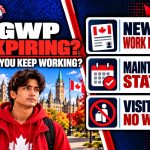













































Your post-graduation work permit (PGWP) expires in a few months. You have a job, perhaps an Express Entry profile, and an employer who wants you to stay. What can you do before the date printed on the permit—and can you continue working afterward?
The central distinction is between a new basis to work and permission to remain in Canada. A PGWP is generally a one-time work permit. An Express Entry profile, a job offer or an application to become a visitor does not, on its own, renew work authorization. Some people qualify for another work permit; others can remain temporarily as visitors but must stop working when their PGWP expires.
Consider Nadia, a fictional PGWP holder whose permit expires on December 15. Her employer says a permanent job is available, and she has created an Express Entry profile. Neither fact alone provides a new work permit. She checks whether she qualifies for a bridging open work permit, whether her employer could support an employer-specific permit and what she would need to do if neither option is ready before December 15.
This guide explains the principal routes and the timing issues. The appropriate choice depends on the actual permit, immigration category and application history. It does not promise continued employment or approval.
Check the Exact Expiry Date and Conditions
Start with the PGWP itself. Record:
- Its expiry date and any separate “must leave Canada by” date
- Its restrictions, including any medical condition
- Your passport expiry date
- Whether a work permit or permanent residence application has already been submitted
- Whether IRCC has received a complete new application before the PGWP expires
- Your employer’s role, if an employer-specific permit is being considered
IRCC says the work permit expiry is the date the person must stop working, unless another legal authorization applies. In most cases it is also the temporary resident status expiry, although a separately stated “must leave Canada by” date can differ.
Do not confuse the expiry of a social insurance number, passport, visitor visa or eTA with the actual conditions of a work permit. Each document serves a different purpose.
Can You Simply Renew a PGWP?
Usually, no. IRCC’s Help Centre describes the PGWP as a one-time opportunity. Completing another program or continuing at the same job does not normally generate a fresh PGWP.
There is a specific exception if the original PGWP was issued for less than the full eligible period because the passport was going to expire. After renewing the passport, an eligible person may request the remaining PGWP period through IRCC’s paper process. This is not an extension beyond the original entitlement.
Compare the PGWP and original passport dates and read any note on the permit. If passport expiry did not shorten the PGWP, focus on eligibility for a different type of work permit or a lawful transition to another temporary status.
What Does Maintained Status Mean for Work?
IRCC says that a person who applies to extend or change a work permit before the current permit expires can generally remain in Canada until IRCC decides the application. If the person is eligible to work while awaiting that decision, they must remain in Canada and continue under the conditions of the original permit.
For a PGWP holder, this can mean continuing under the existing PGWP conditions while a timely application for another work permit is processed. The pending application does not confer the conditions of the new permit early. If the requested permit will be employer-specific, the conditions of that new permit take effect upon approval; until then, the person’s present authority must be assessed under the existing PGWP and maintained-status rules.
IRCC’s work permit guidance and Help Centre answer explain the work-while-waiting rule. It depends on a timely, eligible application and continued presence in Canada. A late filing, an incomplete application or travel can alter the result.
Keep the old PGWP, complete new application, payment confirmation and IRCC acknowledgements. An eligible online applicant may receive a WP-EXT letter; a paper applicant will not automatically receive that letter and may need to show application and delivery records to an employer. A letter is evidence of a legal position, not an independent permit.
Option 1: A Bridging Open Work Permit
Some people who have already applied for permanent residence may qualify for a bridging open work permit (BOWP). The details vary by permanent residence program. IRCC’s BOWP instructions include routes for eligible Express Entry and Provincial Nominee Program applicants, among others.
For the main Express Entry categories, IRCC identifies requirements including:
- Living in Canada and intending to live outside Quebec when applying
- Being the principal applicant on the permanent residence application
- Having an eligible current or maintained status, or qualifying for restoration
- Having submitted a complete permanent residence application that passed the completeness check
- Having the acknowledgement of receipt (AOR) for that permanent residence application
An Express Entry profile in the pool is not a permanent residence application. An invitation to apply is also not, by itself, proof that a complete permanent residence application passed the required check. A person whose PGWP is about to expire should not assume that a profile, CRS score or expected invitation makes them BOWP-eligible.
Provincial nominees may face additional requirements, including restrictions associated with their nomination. Quebec-related and other program routes have their own rules. Check the precise category before filing.
If the BOWP application is submitted before the PGWP expires and the person otherwise meets the maintained-status work rules, work may continue under the old PGWP conditions while the BOWP is decided. If the person applies only after losing status, a restoration-based BOWP process does not authorize work while awaiting approval.
Option 2: An Employer-Specific Work Permit
An employer may be willing to keep a graduate, but a job offer by itself does not grant work authorization. An employer-specific work permit can be based on a qualifying Labour Market Impact Assessment (LMIA) or an applicable LMIA exemption, depending on the position and program.
Where an LMIA is required, the employer generally has to complete the relevant employer-side process and provide the worker with the documents needed for the application. For certain LMIA-exempt routes, the employer may need to submit an offer through the Employer Portal and meet compliance requirements. Exceptions vary.
The graduate must still meet the eligibility requirements for the particular work permit. A supportive employer cannot replace a required LMIA, exemption, offer submission or admissibility requirement with a promise letter.
Start early. Employer preparation, labour-market steps and the worker’s application can take time. If a proper work permit application is received before PGWP expiry, assess maintained status using the original PGWP conditions while waiting. The employer-specific permit’s new restrictions and permissions are governed by the decision when issued.
Option 3: Another Open Work Permit Category
The BOWP is not the only possible open work permit, but each category has its own conditions. A person may qualify under a particular family, permanent residence, international agreement or other program. Eligibility cannot be inferred merely from holding a PGWP.
Use IRCC’s current work permit pathways to identify a genuine category, then read that category’s criteria and application instructions. Do not submit a generic “open work permit extension” with no underlying eligibility.
The relevant question is: Which specific legal category authorizes the next application, and can a complete application be filed before the current permit expires?
What If You Apply to Become a Visitor?
A PGWP holder who needs to remain in Canada but cannot make an eligible work permit application may apply for a visitor record before the current status expires. IRCC recommends applying at least 30 days before expiry.
A timely visitor application can permit the person to remain while a decision is pending. It does not permit work after the PGWP expiry date. IRCC states that someone who applies for a visitor record or study permit must stop working when the original work permit expires.
Be careful if the goal is to obtain another work permit from within Canada. IRCC warns that changing to visitor status does not simply buy more time to extend a work permit. Most visitors cannot apply for a new work permit from inside Canada, and some may need to leave to apply. Review the rules for the particular intended permit before choosing the visitor route.
Visitor status can be a lawful way to remain when appropriate. It is not a placeholder that preserves the right to work or guarantees access to an in-Canada work permit application later.
What If the PGWP Expires Before You Apply?
If the PGWP and temporary resident status expire without a timely application that maintains status, stop working. IRCC says a person may generally seek restoration within 90 days of losing status if they meet the conditions. Restoration is not automatic, and a restoration application does not permit work while it is being processed.
IRCC’s restoration guidance also discusses when a new work permit may be sought and the conditions the person must meet. If more than 90 days have passed without applying for restoration, the general instructions require leaving Canada and considering an application from outside Canada, subject to any specific exception that applies.
The date status was lost can require careful analysis if there were other applications, a return for incompleteness or a separately stated “must leave Canada by” date. Obtain individualized advice promptly rather than assuming that every 90-day period starts from the same document date.
Does a Permanent Residence Application Allow You to Work?
No automatic work authorization flows from entering the Express Entry pool or submitting a permanent residence application. Some permanent residence applicants qualify for a separate BOWP or another work permit, but the relevant work permit requirements still have to be met.
Nadia, for example, has an Express Entry profile but has not been invited to apply, submitted a complete permanent residence application or received an AOR. She cannot claim BOWP eligibility simply because she expects to become a permanent resident.
Even after a permanent residence application is submitted, determine whether a valid work permit, maintained-status work authorization or another applicable permission covers each day of work. An employer’s need for continuity does not change the immigration rules.
What if Your Employer Says to Keep Working?
Explain the exact permit expiry and any application filed before that date. If you are relying on maintained-status work authorization, provide appropriate records and IRCC’s official guidance. Confirm that you remain in Canada and respect the old permit’s conditions while awaiting a decision.
If you applied only to become a visitor, or your worker status expired before an eligible application was filed, tell the employer when work must stop. Do not continue shifts because payroll remains active, the social insurance number still appears in a system or the employer believes permanent residence is inevitable.
IRCC says an eligible worker who applied to extend or change a work permit before expiry may continue working even if the SIN expiry date has passed while the application is pending. The SIN does not create immigration authorization by itself; the timely application and applicable rules do.
Keep copies of the permit, application, receipts and communications. These records help explain the work history later.
Should You Travel While Relying on Maintained Status?
Travel can affect the authority to work after a permit expires. IRCC’s general rule for continued work while an extension or change is pending requires the applicant to remain in Canada. Returning with a visitor visa or eTA is not the same as returning with work authorization.
For example, IRCC warns BOWP applicants that if their work permit expires while they are outside Canada, or they leave after it expires, they may be unable to work on return until a new permit is approved. Re-entry also has its own document and admissibility requirements.
Before travel, check your permit, pending application and current IRCC travel instructions. Do not make a travel plan based only on a pending application receipt.
A Practical Timeline Before PGWP Expiry
Several months before expiry: Confirm whether the PGWP was passport-limited. Check your passport, permanent residence stage and whether an employer is prepared to support a distinct work permit.
Well before the filing deadline: Identify the precise work permit category. Obtain required employer documents, LMIA or exemption material, AOR and other evidence as applicable. IRCC generally recommends applying to extend or change a work permit at least 30 days before expiry.
Before the permit expires: Submit a complete, eligible application through the required channel. Save the submission confirmation. If applying on paper, preserve reliable proof of when IRCC received it.
After expiry while a timely application is pending: Follow the conditions of the original permit and the applicable maintained-status rules. If the pending application was for visitor status, stop work on the PGWP expiry date.
If an application is refused or returned: Reassess status and work authorization immediately. An application found incomplete may not preserve maintained status. Do not treat a past receipt or WP-EXT letter as continuing authorization after a decision without checking the applicable rules.
Common Mistakes to Avoid
Assuming a PGWP Can Always Be Renewed
The passport-limited remainder is a specific exception. A PGWP issued for its full eligible duration is generally a one-time opportunity.
Treating an Express Entry Profile as BOWP Eligibility
A profile is not a complete permanent residence application with an AOR and the applicable completeness assessment.
Believing a Job Offer Is a Work Permit
An employer-specific permit requires its own qualifying process and worker application.
Confusing Maintained Status With Universal Work Rights
The pending application type matters. A visitor application may preserve permission to remain but not the right to work after PGWP expiry.
Applying After Expiry and Continuing to Work
Restoration applicants generally must stop working until authorization is restored and a work permit is approved.
Leaving Canada Without Checking the Effect
Continued work under maintained status normally depends on remaining in Canada.
A 101 Legal Ways Educational Example
After reading 101 Legal Ways guides, Nadia reviewed her PGWP and saw it had not been shortened by passport expiry. She also recognized that her Express Entry profile did not make her BOWP-eligible. Her employer explored whether an employer-specific permit could be supported and began gathering the required documents.
Nadia set a deadline before December 15 for deciding whether a complete, eligible work permit application could be submitted. If that did not happen, she planned to seek a visitor record while still in status and to stop working when the PGWP expired. She kept records of her employer’s steps and her own applications rather than assuming an offer letter would preserve work rights.
Nadia is fictional and is not a real client. The example does not guarantee eligibility for an employer-specific permit or visitor status. It shows how a graduate can separate permission to stay from permission to work and plan around the actual expiry date.
101 Legal Ways provides practical public education about Canadian laws and immigration procedures. Its guides help readers understand official requirements, organize documents and ask better questions before making important decisions.
Four Actionable Takeaways
- Check the true PGWP expiry. Confirm whether passport validity shortened it and whether any extension of the original entitlement is possible.
- Find a specific next permit category. A BOWP, employer-specific permit or other open permit has its own eligibility requirements.
- File before expiry when eligible. A timely work permit application may preserve status and work under the old permit conditions while IRCC decides.
- Separate staying from working. A visitor application may allow continued stay but does not authorize work after the PGWP expires.
Final Thoughts
When a PGWP nears expiry, the most useful question is not simply “How do I extend it?” It is: What legal basis, if any, will let me work after this permit ends?
The answer may be a passport-limited PGWP extension, a separate work permit application made in time, or a transition to visitor status with work stopped. An Express Entry profile and a willing employer can be parts of a plan, but neither grants permission to keep working. Review the requirements and act before the date on the permit.
Official Government Sources
- IRCC: Can I renew my post-graduation work permit?
- IRCC: Bridging open work permit for permanent residence applicants
- IRCC: Employer-specific work permits
- IRCC: If your work permit expires or is expiring
- IRCC Help Centre: New work permit and maintained status
- IRCC: Visitor record eligibility and when to apply
- IRCC Help Centre: Changing worker status to visitor
- IRCC: Restore your status and get a work permit
Legal Disclaimer
This article provides general public legal and immigration information only. It is not legal advice and does not create a lawyer-client or consultant-client relationship. Immigration rules, individual eligibility and procedures may change. Check current IRCC instructions or consult an authorized Canadian immigration professional about your circumstances. Information was reviewed against official guidance available on October 1, 2026.