










































Freelancing and Self-Employment on a Canadian Study Permit: How the Work Rules Apply in 2026

An international student who designs websites, tutors online or sells handmade products may think the student-work rules apply only to an ordinary job with a manager and pay stubs. That assumption can be costly. IRCC specifically addresses self-employed students in its off-campus work guidance and says they must track their work hours and prove compliance with their study permit conditions.
Consider Arjun, a fictional full-time student at a Canadian designated learning institution (DLI). He works 12 hours each week in a café and takes occasional graphic-design projects through an online platform. He charges a fixed fee per project, sometimes invoices a Canadian business and sometimes receives payment from a client abroad. His platform profile calls him an “independent contractor.”
Arjun needs to assess whether he is eligible to work off campus, how much time the projects take, and whether a foreign-client project actually fits IRCC’s specific remote-work guidance. The fact that he has no conventional employer does not create an exemption.
This guide explains the principal immigration rules, practical record-keeping and common distinctions. It provides general public information, not legal or tax advice for a particular business.
Can an International Student Freelance in Canada?
Potentially, yes. IRCC’s off-campus work guidance expressly mentions self-employed students. It does not state that freelancing is categorically prohibited. The student must still satisfy the applicable off-campus work requirements and comply with the weekly limit during regular academic terms.
Examples of possible self-employed activities include:
- Graphic design, writing or translation for clients
- Online tutoring or consulting
- Website development and digital marketing
- Photography or video services
- Selling products through an online shop or at a market
- App-based delivery or other contract services
- Commission-based sales
The name on the contract does not decide immigration status. “Freelancer,” “sole proprietor,” “independent contractor,” “creator” and “gig worker” can all describe productive work. A platform account, business registration or tax number is not immigration permission to perform it.
First Check Whether You May Work Off Campus
IRCC says an eligible student may work off campus without a separate work permit if the student meets all applicable requirements. Its current list includes being a full-time student at a DLI, having started the study program, being in a program at least six months long that leads to a degree, diploma or certificate, having the appropriate condition printed on the study permit and having a social insurance number (SIN).
There is a narrow final-semester exception for a student studying part-time because they need fewer courses to finish and were previously full-time in the Canadian program. Part-time enrolment for other reasons does not automatically preserve off-campus work eligibility.
Students taking only English or French as a second language, general-interest courses or courses required for entry to a full-time program cannot rely on the ordinary off-campus work authorization described on IRCC’s page. A study permit with a condition prohibiting off-campus work also cannot be ignored. The student must follow the current instructions for changing an applicable condition before working.
Starting a freelance business does not fix missing student-work eligibility. Confirm enrolment, program type, study-permit wording, SIN and status before taking a Canadian work project.
The 24-Hour Rule During Regular Academic Terms
An eligible student may ordinarily work up to 24 hours per week off campus while classes are in session. This is a combined limit, not a separate allowance for each client, platform or job.
If a student works 12 hours in a café and spends 10 hours on qualifying off-campus freelance work in the same week, the combined figure is 22 hours. Another five hours of such work would raise it to 27. Splitting invoices among different clients or using multiple platform accounts does not create extra hours.
IRCC says an otherwise eligible student whose older permit still states a 20-hour limit may work up to the current 24-hour limit, provided all eligibility conditions continue to be met. Students should read the full wording of their own permit and current IRCC instructions, especially if it contains a restriction beyond an older numerical limit.
During a break scheduled by the DLI, eligible students may work unlimited off-campus hours under IRCC’s break rules. A personal vacation, a quiet week with no classes, or an invented “break” on a freelancer’s calendar is not necessarily a scheduled academic break. When the regular term resumes, the weekly limit resumes.
How Should a Self-Employed Student Count Hours?
IRCC says self-employed students are responsible for tracking off-campus hours and proving compliance. Its public guidance describes hours spent earning wages, being paid for a service or product, and collecting a commission.
Freelance jobs are often paid by deliverable rather than by the hour. A $500 design contract may involve client calls, research, drafts, revisions and final delivery across several days. The invoice amount alone cannot show how much time the student worked.
A useful contemporaneous log records:
| Date | Client or project | Activity | Start and finish | Hours |
|---|---|---|---|---|
| Monday | Client A | Brief and draft | 6:00–8:00 p.m. | 2 |
| Wednesday | Client A | Revisions and delivery | 5:30–8:30 p.m. | 3 |
| Saturday | Client B | Product photography | 10:00 a.m.–1:00 p.m. | 3 |
Maintain a total for each week alongside hours from every other off-campus job. Keep contracts, messages, invoices, platform records, calendars, delivery records and bank deposits that corroborate the log. Do not recreate a convenient schedule months later from the amounts deposited into an account.
Some business activity does not map neatly onto an invoice, such as advertising, customer correspondence, inventory preparation or administration. IRCC’s public examples do not resolve every possible task. When a task is connected to earning from the business, record the time and obtain individualized guidance on any genuinely uncertain classification rather than assuming that unpaid preparation is always outside the limit.
Does Working from a Dorm Room Make It “On-Campus Work”?
No automatic rule turns online work into on-campus work merely because the laptop is physically in a dormitory or school library.
IRCC lists specific on-campus work conditions, locations and possible employers. Its list includes a student working for themselves if they run a business physically located on campus, giving an on-campus coffee shop as an example. That example does not establish that every remote design business becomes an on-campus business when the owner opens a laptop on school property.
IRCC permits eligible on-campus work without a weekly immigration hour limit. Because the distinction can have major consequences, a student should not use that rule for a location-independent freelance business without a sound basis tied to IRCC’s actual on-campus criteria.
What If the Client Is Outside Canada?
This is where many online discussions overgeneralize. IRCC says a student may work remotely for an employer outside Canada, as long as they continue to meet study permit conditions. IRCC says that type of work does not count toward the 24-hour weekly off-campus limit.
That statement expressly refers to a foreign employer. A Canadian-based freelancer who serves a customer abroad through an independent business may have a different relationship from an employee remotely working for a company abroad. The fact that a client pays in foreign currency or that a platform is headquartered abroad does not, by itself, prove the student fits the foreign-employer example.
Compare these scenarios:
| Situation | Issue to verify |
|---|---|
| Employee of an overseas company working remotely while studying in Canada | Whether the actual employer is outside Canada and the student continues to meet study conditions |
| Canadian-based freelancer invoicing a foreign customer | Whether this independent activity is Canadian self-employment rather than IRCC’s stated foreign-employer arrangement |
| Student using an international platform to serve Canadian customers | The platform’s location does not necessarily change where or for whom the work is performed |
| Student who actually travels outside Canada and works there | Different territorial facts; reassess status and ability to resume student work on return |
Contracts, the identity and location of the business receiving services, the student’s role, invoicing arrangements and where the activity occurs all matter. This is an area where a case-specific opinion may be worthwhile. Do not simply relabel a Canadian freelance arrangement as foreign remote employment.
Can a Student Start an Online Shop or Register a Business?
Business registration and the right to work are different matters. A registration may be required by a province, municipality or tax authority for a particular business, but it does not expand study-permit work authorization. Equally, a person cannot assume there is no immigration work because they have not formally registered a business.
Selling a product may involve sourcing, making, listing, marketing, packing and customer service. Record the relevant activity and income carefully. If employees or contractors are involved, the operation introduces further employment, tax and legal issues that require professional review.
An on-campus business can have a different analysis if it is genuinely physically located on campus and the student meets IRCC’s on-campus rules. Confirm the school’s own permission and the immigration conditions separately.
Taxes and Business Records Still Matter
The Canada Revenue Agency (CRA) provides guidance for small businesses and self-employed individuals. A student should keep complete records of income and expenses and determine their tax filing obligations. Payment through an overseas platform, cash, electronic transfer or a personal bank account does not by itself make income invisible or exempt.
GST/HST registration is a separate issue governed by tax rules, including whether the person is a small supplier and what taxable supplies are made. CRA’s registration guidance explains the general thresholds and exceptions. The detailed result depends on the business and its transactions.
A tax return is not proof that the underlying work was authorized under immigration law. Conversely, a valid study-permit work condition does not remove tax obligations. Keep work-hour logs and financial records in a way that tells one consistent, truthful story.
Freelance Income Is Not a Substitute for Study-Permit Funds
IRCC requires a study-permit applicant to show sufficient financial resources without working in Canada for tuition, living expenses and transportation. For a program longer than one year, the applicant must also explain how later years will be funded. See IRCC’s proof of financial support guidance.
An applicant should not rely on hoped-for Canadian freelance contracts to fill a shortfall in required funds. If they already have lawful income or savings, the application should document their source and availability accurately. The financial and student-work tests answer different questions.
Will Freelancing Count Toward Canadian Experience Class?
Do not assume that any work done in Canada builds qualifying Canadian Experience Class (CEC) experience. IRCC’s CEC eligibility page says work obtained while studying full-time and self-employed work generally cannot be counted toward the CEC minimum requirements. It describes a specific public-policy exception for certain physicians providing publicly funded medical services.
That is a permanent-residence eligibility question, separate from whether the student may legally freelance during studies. A lawful student freelance project may be useful experience or income without qualifying for CEC. Other immigration programs have their own criteria and must be checked separately.
What Happens During a Leave, School Change or Program Completion?
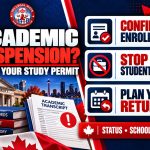
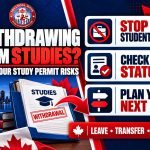
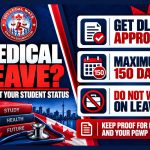
IRCC states that students on an authorized leave, or switching schools while not studying, cannot work off campus under the student authorization. A student who loses the required full-time status outside the final-semester exception must reassess eligibility. A permit’s printed work condition does not preserve the privilege when the underlying criteria are no longer met.
That can affect active client commitments. Before withdrawing, taking leave, changing schools or finishing a program, review when student work authorization ends and whether another lawful basis exists. Do not keep accepting new Canadian freelance projects merely because existing contracts remain open.
The situation after program completion has specific IRCC rules tied to a timely work-permit application or a new study program. It is not a general permission to keep freelancing indefinitely. Verify the current post-completion instructions for the student’s circumstances.
Common Mistakes to Avoid
“I Am My Own Boss, So the Work Limit Does Not Apply”
IRCC specifically requires self-employed students to track hours and prove compliance.
Counting Only the Hours Printed on Invoices
A fixed-price invoice does not establish the time spent on client work. Keep a real-time log.
Treating Each Platform as a Separate 24-Hour Allowance
The weekly off-campus limit covers the student’s combined eligible off-campus work during regular terms.
Assuming Every Overseas Client Is a Foreign Employer
IRCC’s express remote-work example refers to working for an employer outside Canada. Independent cross-border contracting needs its own factual analysis.
Calling Online Work “On Campus” Because of the Wi-Fi
IRCC’s on-campus criteria involve the actual location and nature of the employer or business, not simply where the student sits with a laptop.
Ignoring Study Status Changes
An authorized leave or other loss of student-work eligibility can require work to stop even if a project is unfinished.
Assuming Freelance Work Qualifies for CEC
Full-time student work and self-employment are generally excluded from the CEC minimum work-experience requirement, subject to the narrow stated exception.
A 101 Legal Ways Educational Example
Arjun reviewed his café schedule and began a weekly log for design projects. In one term-time week, he worked 12 café hours and spent nine hours researching, designing and revising work for a Canadian client. He recorded 21 combined hours, kept the project contract and saved the invoice and messages.
When a company abroad offered him remote work, Arjun did not decide the issue based on the invoice currency. He examined whether it would actually employ him or merely buy services from his Canadian-based freelance operation. He sought advice about the distinction before treating the hours as outside the off-campus limit.
Arjun is fictional and is not a real client. His example does not determine another student’s eligibility. It illustrates that the time spent, work arrangement, client relationship and continuing student status must all be assessed accurately.
101 Legal Ways provides public education about Canadian legal and immigration procedures. Its guides help readers understand official requirements, organize evidence and ask better questions before important decisions.
Four Actionable Takeaways
- Check eligibility first. A freelance contract or business registration does not replace the required study permit conditions, program eligibility and SIN.
- Track every work stream. Add qualifying self-employed hours to other off-campus hours during regular academic terms and preserve records supporting the total.
- Identify the real remote-work relationship. IRCC’s foreign-employer guidance should not be applied automatically to every foreign client or platform.
- Keep immigration and tax questions separate. Lawful work, tax reporting, proof of funds and future CEC eligibility each have their own tests.
Final Thoughts
Freelancing can fit within a student’s lawful work options, but flexibility does not remove the rules. IRCC expects self-employed students to establish off-campus eligibility, count their hours and show that they continue to meet study-permit conditions.
The most reliable practice is to document the actual arrangement: who receives the service, where the business and client are located, what tasks are done and when. Verify the correct category before accepting work, especially when the project crosses borders or the student’s enrolment changes.
Official Government Sources
- IRCC: Work off campus as an international student
- IRCC: Work on campus as an international student
- IRCC: Your conditions as a study permit holder
- IRCC: Proof of financial support
- IRCC: Canadian Experience Class eligibility
- CRA: Small businesses and self-employed income
- CRA: When to register for and start charging GST/HST
Legal Disclaimer
This article provides general public legal, immigration and tax information only. It is not legal or tax advice and does not create a lawyer-client or consultant-client relationship. Rules and individual circumstances may change. Consult current IRCC and CRA guidance and an authorized Canadian professional for advice about a specific work arrangement. Information was reviewed against official guidance available on September 29, 2026.