







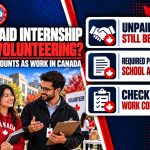





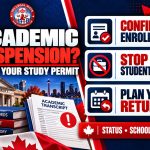
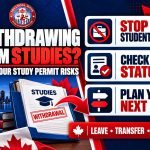
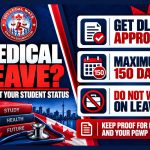




















An international student may need time away from school because of illness, pregnancy, a family emergency or another serious event. The student may assume that a valid study permit allows them to stay in Canada and keep working until classes resume. That assumption can create problems.
Immigration, Refugees and Citizenship Canada (IRCC) recognizes certain authorized leaves of up to 150 days while a student remains considered to be actively pursuing studies. The designated learning institution (DLI) must authorize the leave, and the student needs evidence of it. During an authorized leave from the program, the student generally cannot work on or off campus under the study permit’s student work provisions. A later post-graduation work permit (PGWP) application should include proof of the DLI-approved leave.
Consider Maya, a fictional student in a Canadian diploma program. She needed six weeks away for medical treatment. Her supervisor offered to keep her part-time shift available. Maya thought that because the leave was temporary and her study permit still displayed a work condition, she could continue working. Before doing so, she asked the school to document her leave and checked IRCC’s work rule. She learned that the leave could be authorized, but the student work authorization would pause while she was away from studies.
This guide explains how to document a leave, what the 150-day rule means, when work must stop and how the interruption may affect a future PGWP. It provides general information rather than advice for a particular student.
What Is an Authorized Leave From Studies?
An authorized leave is a period away from a study program that fits IRCC’s rules and is authorized by the student’s DLI. IRCC says a student may be able to take a leave of up to a maximum of 150 days and still be considered to be actively pursuing studies.
IRCC’s study permit conditions page gives examples when a school has authorized a leave for:
- Medical reasons or pregnancy
- A family emergency
- The death or serious illness of a family member
- Another type of leave the school authorizes
The page also discusses particular situations involving a school closure, strike, a school change or a deferred program start. Those cases have details of their own. For example, a deferred student must begin the next semester even if it starts sooner than 150 days and obtain an updated letter of acceptance.
The key point is that a student’s personal decision to stop attending does not automatically become an authorized leave. Ask the DLI for its decision and keep a clear written record.
Does IRCC Need to Approve the Leave in Advance?
IRCC says students do not need to tell IRCC that they are taking an authorized leave. But if IRCC asks, the student must prove that the DLI authorized the leave and that it lasted no longer than 150 days. A later PGWP application has a separate documentation point: IRCC says to provide proof of the DLI authorization with the PGWP application.
The practical first step is therefore to contact the school, explain the circumstances and follow its leave procedure. Request confirmation that clearly states:
- The student’s name and program
- That the DLI authorized a leave from the program
- The reason or approved category, described accurately
- The leave’s start date
- The expected return date or authorized end date
- Any later amendment to the dates
- The date on which the student actually resumed studies
Where medical evidence or other sensitive records are involved, provide what the institution and IRCC properly require. The school letter can identify the approved leave without disclosing unnecessary private detail in every document.
Keep emails, school portal decisions and revised dates. An informal conversation with an instructor may be difficult to prove later if the school’s official enrolment record shows something different.
How Does the 150-Day Limit Work?
The 150 days are a maximum in IRCC’s authorized-leave guidance, not an automatic entitlement to take that much time. The leave must be authorized by the DLI, and the student must be able to prove the relevant dates.
A school may approve a shorter period. A student who needs more time should contact the school before the existing leave ends and consider their immigration position before the interruption exceeds IRCC’s limit. Do not simply assume that a new email or a second label resets the 150-day issue.
IRCC’s study permit conditions require students to remain enrolled and actively pursue their studies, including not taking authorized leaves longer than 150 days. If the break will be longer, the student should review the available options for their specific situation and seek qualified advice where needed. A valid expiry date printed on a study permit does not excuse failure to meet its other conditions.
The 150-day rule also does not extend an expiring study permit. If the permit will expire before studies can resume or finish, the student must address the permit expiry separately and apply to extend their stay when eligible.
Can You Work During an Authorized Leave?
Generally, no. IRCC states that a student cannot work on or off campus during an authorized leave from their study program, even if the study permit says the holder is allowed to work in Canada.
The work condition printed on a permit applies only while its underlying eligibility conditions are met. During leave, the student is not studying in the way required for the usual student work authorization. IRCC’s off-campus work page says off-campus work may resume only once studies resume and the student again meets the requirements. Its on-campus work page also lists authorized leave as a time when on-campus work must stop.
This applies even if an employer wants the student to continue remotely, work fewer hours or cover only an occasional shift in Canada. An employer’s permission cannot replace immigration work authorization. A student with an independent work permit would need to assess that separate authorization and its conditions rather than relying on the study permit’s student work provisions.
There is a narrow distinction for a school temporarily closed because of a strike: IRCC says a student who was authorized to work on or off campus may remain authorized to work for up to 150 days in that situation. Do not treat the strike provision as permission to work during an ordinary personal leave.
Is an Authorized Leave the Same as a Scheduled School Break?
No. A scheduled break is part of the school’s academic calendar, such as a regular summer or winter break or reading week. IRCC’s off-campus work guidance permits eligible students to work unlimited off-campus hours during a break scheduled by the DLI.
An individual leave interrupts that student’s own studies and has a different work result. A school’s general holiday does not turn a student’s separate medical leave into a scheduled break. Likewise, a student cannot label a personal gap “summer vacation” merely because it happens in summer.
| Situation | General student work treatment |
|---|---|
| Regular academic session, while fully eligible | Up to 24 hours a week off campus under current rules; on-campus rules differ. |
| DLI-scheduled break, while eligible | Unlimited off-campus hours may be allowed. |
| Individual authorized leave from the program | No on- or off-campus student work. |
| Temporary school closure because of a strike | IRCC describes a limited exception for previously authorized student work, up to 150 days. |
The student must meet all other work conditions in each situation. Keep the school calendar and the leave approval as separate records.
What Happens to PGWP Eligibility After a Leave?
An authorized leave does not automatically disqualify a graduate from a PGWP. IRCC’s PGWP eligibility page says there are cases where an authorized leave of up to 150 days can still satisfy study permit conditions. It tells applicants to provide proof that the DLI authorized the leave when applying for a PGWP.
IRCC also says a person may not be eligible for a PGWP if they take an unauthorized leave and IRCC finds that the leave caused them to fail to meet the conditions of their study permit. This is a fact-specific assessment. The later application should not conceal an interruption or describe an unauthorized absence as a school-approved leave.
The regular PGWP criteria still apply. Among them are completion of an eligible program at a PGWP-eligible DLI, the required full-time status during semesters subject to stated exceptions, applying within 180 days after confirmation of completion, and having held a valid study permit at some point in that 180-day period. Current program-specific language and, where applicable, field-of-study requirements also need to be checked. The authorized-leave documentation addresses one issue; it does not replace the rest of the PGWP eligibility assessment.
What Should You Upload With a PGWP Application?
IRCC explicitly calls for proof that the DLI authorized the leave when the graduate applies for a PGWP. A useful explanation can connect the records in a short timeline:
- When the student was enrolled and studying
- When the need for leave arose
- When the DLI approved it
- The authorized start and end dates
- When studies resumed
- When the program was completed
Include the official school letter and any revised approval or return-to-study confirmation. Transcripts or enrolment letters can help explain a term with no courses or a change to the graduation date. If a medical reason was involved, retain relevant medical proof in case it is needed, while keeping the account accurate and appropriately limited to what the application requires.
If the online checklist has no field labelled “authorized leave,” follow the current IRCC document instructions and use the appropriate additional-document field or web form when instructed. The goal is for the officer to find the leave approval and understand the dates without reconstructing the history from scattered documents.
What If the Leave Was Not Approved Before It Began?
Contact the DLI promptly and ask it to review the actual circumstances and records. Do not ask the school to backdate or falsely describe a leave. A later written decision should accurately state what the DLI authorized and when.
If the school refuses to authorize the time away, the student must address the possible study permit and PGWP consequences honestly. Reasons for the interruption may matter to an officer, but personal evidence alone does not establish that the DLI authorized a leave. The student should review their attendance, enrolment history and any work performed during the gap before making another immigration application.
An unauthorized leave may affect a future permit. IRCC says failure to meet study permit conditions or unauthorized work can affect future applications and may lead to being asked to leave Canada. Avoid continuing work while the facts are unresolved.
What If a Medical or Family Emergency Lasts Longer Than Expected?
Tell the DLI before the approved leave ends, if possible. Ask for a written update to the school’s records and a realistic return plan. At the same time, review the immigration effect of exceeding 150 days, the study permit expiry date and any need to change status or leave Canada.
The school’s willingness to keep a seat open does not by itself change IRCC’s 150-day condition. A student should not rely on a long-running “leave” label when the actual interruption exceeds the period IRCC recognizes for active pursuit of studies. If illness prevents timely action, preserve the medical records and obtain individual advice promptly.
Do not restart work simply because the original expected return date has arrived. Resume student work only after studies have actually resumed and all applicable on- or off-campus work requirements are met.
What If the Student Changes Schools or Defers Their Start?
IRCC includes school changes and program-start deferrals among the circumstances discussed on its authorized-leave page. They are not permission to remain away from studies indefinitely.
For a deferral, IRCC states the student must start the next semester, even if it begins sooner than 150 days, and obtain an updated letter of acceptance. For a post-secondary school change, current IRCC rules may require an application to extend the study permit for the new DLI. Check the study permit conditions and school-change instructions before changing institutions.
IRCC also says a student switching schools and not currently studying cannot work off campus. The paperwork for the new school and the work rules need separate attention.
A Student’s Leave Checklist
Before the leave:
- Explain the situation to the DLI and request a formal decision.
- Record the approved start and end dates.
- Tell employers when student work authorization must pause.
- Check the study permit’s expiry and the expected return date.
- Keep the approval, school emails and supporting documents.
During the leave:
- Do not work under the study permit’s on- or off-campus student provisions.
- Track the actual time away and any school change to the approved dates.
- Contact the DLI promptly if a return on time becomes impossible.
- Monitor the study permit’s validity and any IRCC correspondence.
After returning:
- Obtain confirmation of resumed enrolment or attendance.
- Check that all student work requirements are again met before working.
- Retain the leave record for the eventual PGWP application.
- Explain the interruption accurately in later immigration forms and supporting material.
Common Mistakes to Avoid
Assuming a Valid Study Permit Means You Can Keep Working
The printed work condition does not override the rule that student work stops during an authorized leave.
Calling a Personal Leave a Scheduled Break
The school’s academic-calendar break and an individual student’s leave follow different work rules.
Relying on a Verbal Approval
Get a clear DLI record with the reason and dates. IRCC may request proof and PGWP applicants should include it.
Treating 150 Days as a Guaranteed Allowance
IRCC describes a maximum. The DLI must authorize the leave, and a shorter return requirement may apply in a deferral.
Letting the Study Permit Expire
An approved leave does not automatically extend immigration status or the date printed on a permit.
Hiding the Gap in a PGWP Application
Explain the term without studies and include the school’s authorization. Inconsistent dates can undermine credibility.
Restarting Work Before Studies Resume
Student work can resume only when studies have resumed and the person meets all the other work requirements.
A 101 Legal Ways Educational Example
Maya asked her DLI for a written leave approval showing a six-week medical absence. She informed her employer that she had to pause work while she was on leave. She kept the school’s approval, relevant medical documentation and a later letter confirming the date she resumed full-time studies.
When she eventually completed her eligible program, Maya checked every PGWP criterion and included her DLI’s leave letter with a short timeline. The record showed what happened without claiming that the leave itself guaranteed PGWP approval.
Maya is fictional and is not a real client. Her example does not guarantee an immigration result. It illustrates the difference between an authorized academic interruption and permission to work during it.
101 Legal Ways provides practical public education about Canadian laws and immigration procedures. Its guides help students understand official rules, organize documents and ask better questions before important decisions.
Four Actionable Takeaways
- Get DLI authorization in writing. Keep the reason, start date, end date and return confirmation.
- Respect the 150-day maximum. Contact the school promptly if the leave must change and assess your immigration status.
- Pause student work during leave. The usual on- and off-campus work permissions do not continue merely because the study permit is valid.
- Document the gap for a PGWP. IRCC says to provide proof of the DLI-authorized leave when applying.
Final Thoughts
An authorized leave can allow an international student to manage a temporary interruption without automatically losing the ability to show active pursuit of studies. The approval, duration and actual return to studies must be clear.
The work rule is particularly important: a student generally cannot work on or off campus during the leave under their study permit’s student work conditions. A future PGWP application should show the DLI’s authorization and a truthful timeline, while also meeting every other PGWP requirement.
Read more guides at 101 Legal Ways, share your questions in the blog comments and subscribe for more Canadian immigration education.
Official Government Sources
- IRCC: Conditions of a study permit and authorized leaves
- IRCC: PGWP eligibility and taking leave from studies
- IRCC: Working off campus as an international student
- IRCC: Working on campus as an international student
- IRCC: While you study and study permit expiry
Legal Disclaimer
This article provides general public immigration information only. It is not legal advice and does not create a lawyer-client or consultant-client relationship. Study permit conditions, work authorization and PGWP eligibility depend on individual circumstances and current IRCC rules. Consult IRCC, your DLI or an authorized Canadian immigration professional about your situation. Information was reviewed against official guidance available on October 5, 2026.