








































An international student may discover that another Canadian school offers a better program, a different location or a more suitable start date. An offer from the new school is important, but it does not by itself authorize the student to begin studying there.
Under current Immigration, Refugees and Citizenship Canada (IRCC) rules, most post-secondary students changing designated learning institutions (DLIs) must apply to extend their study permit and obtain the new permit for the new DLI before starting at that school. A narrow exception allows some students to begin while the extension is pending when their former DLI closed, discontinued the program, was suspended or lost its designation, and other conditions are met.
Consider Amina, a fictional student enrolled at a Canadian college. She received an offer from a university and planned to withdraw immediately, move cities and start the new term. She had a valid study permit and assumed that reporting the new school online would be enough. After reviewing IRCC’s current instructions, she learned that the older DLI-update approach had changed. She needed a new study permit application, a new school letter, a PAL or TAL if required, and a plan for the period before she could lawfully begin at the university.
This guide explains the main process for a student already in Canada, the limited early-start exception, related work and PGWP considerations, and how the answer differs when changing programs at the same school or changing schools before arriving in Canada.
What Is a DLI and Why Does the School Matter?
A designated learning institution is a school authorized by a provincial or territorial government to host international students. Most foreign nationals studying in Canada need a study permit and an offer from an eligible DLI.
Check IRCC’s DLI list before accepting the new offer. A school’s marketing materials or acceptance letter do not replace verification that the institution is a DLI. Also check the specific program’s post-graduation work permit (PGWP) eligibility if a PGWP is part of the student’s plans. A DLI designation alone does not make every program PGWP-eligible.
The DLI on the student’s study permit is part of the current school-change rules. IRCC states that since November 8, 2024, students can no longer generally switch post-secondary schools on the same study permit through a simple online DLI update.
The Main Rule for Post-Secondary School Changes
IRCC’s changing schools page says a student changing to a new post-secondary DLI must get a new study permit by applying to extend the current one before starting studies at the new DLI.
An application to extend is necessary, but merely submitting it normally does not authorize classes at the new school. Unless the student meets IRCC’s specific early-start exception, they must wait for the new permit to be approved.
IRCC advises students who do not meet the exception to apply for and receive the extended permit for the new DLI before finishing studies at the current school. That timing can avoid an avoidable gap in studies. A student should compare the new school’s intake date, the current program end date, document preparation and processing before withdrawing.
The exact process changes with the student’s situation. Primary and secondary school changes, a move from secondary to post-secondary, a same-school program change, a change while an initial application is pending, and a change from outside Canada have different instructions. Use IRCC’s interactive school and program change guidance for the right category.
Can You Start at the New DLI While the Application Is Pending?
Only in a narrow set of circumstances. IRCC says a student may begin studying at the new DLI while waiting for a decision only if all of these conditions are met:
- The student has not left Canada since receiving the new DLI’s letter of acceptance.
- The student continues to meet the conditions of the previous study permit.
- Before the student completed the previous course or program, the former DLI closed, discontinued the course or program, was placed on the suspension list, or lost its designated status.
The student must submit the extension application and include documents proving the relevant criteria if relying on this exception. A preference for another city, a better-ranked school or a new scholarship does not itself fit the former-DLI events listed above.
Suppose a college permanently stops teaching a student’s program while the student is still enrolled. The student obtains a new DLI offer, remains in Canada after receiving it, keeps meeting the old permit’s conditions and submits a complete extension application. They may be within the early-start exception, subject to the precise facts and IRCC’s current instructions. If the college remains open and continues the program, the student normally needs the new study permit before studying at the new DLI.
Do not treat a pending application, an application receipt or a new letter of acceptance as permission to start. Confirm that every exception condition actually applies before attending classes.
What Documents Are Needed to Change DLIs?
IRCC identifies the following in its school-change instructions:
- A letter explaining why the student is changing schools
- A new, valid provincial or territorial attestation letter (PAL or TAL), unless an exception applies
- Documents proving eligibility for the early-start exception, if the student claims it
The new DLI’s letter of acceptance and the rest of the study permit extension documents are also required by the application process. IRCC’s extension instructions say a post-secondary DLI sends a letter of acceptance or enrolment, as appropriate, for upload in the designated online field. The school must verify the letter within IRCC’s deadline; otherwise the application can be returned and the processing fee refunded.
A practical package may include:
- Current study permit and passport
- New DLI letter of acceptance
- New PAL or TAL if required, or evidence of an exemption
- Explanation of the academic and practical reason for changing schools
- Evidence of current enrolment and academic history
- Proof of finances for the proposed studies
- Documents about any previous DLI closure, program discontinuation, suspension or loss of designation if claiming early-start permission
- Quebec CAQ documents, where applicable
Keep the dates consistent across the old school record, new offer, PAL or TAL, tuition documents and application. The explanation should state the real reason for the transfer rather than a generic claim that the new school is “better.”
Do You Need a New PAL or TAL?
Often, yes. IRCC says that since January 22, 2025, a student changing schools or levels of study generally needs a new, valid PAL or TAL, unless they meet an exemption. Obtain it before submitting the application when one is required.
The PAL or TAL is linked to the school. IRCC’s attestation guidance lists exemptions, including certain public DLI master’s and doctoral degree programs starting in 2026 and some other categories. A student should check the exemption that fits their actual situation and include proof when relying on it.
An attestation obtained for the old school should not simply be reused for a different DLI. Contact the new school about the required document and verify its validity for the application year.
Quebec generally uses an attestation of issuance of a Quebec Acceptance Certificate (CAQ) instead of a PAL or TAL. A school change in Quebec can require a new CAQ or other provincial steps. IRCC lists a particular exception for changes between vocational training centres: a new study permit is not required in that situation, but a new CAQ is. Check both the federal and Quebec instructions before moving.
Can You Continue at Your Current School While Waiting?
A student with a valid study permit who continues to meet its conditions can generally keep studying at the current DLI while the new-school extension is processed. This is often the most practical way to avoid a long gap.
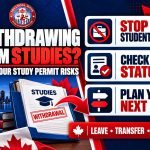
IRCC says students should plan to obtain the new study permit before finishing at the old DLI when they cannot use the early-start exception. Coordinate the transition with both institutions. Ask the current school how withdrawal, transcripts and tuition refunds work, and ask the new school about deferral if approval does not arrive before its start date.
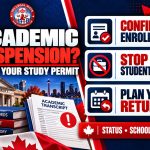
Do not submit inaccurate attendance or enrolment information to create an appearance of continuous study. The former DLI reports student status to IRCC. If the student stops studying, the work and study permit conditions need to be reassessed.
IRCC currently describes faster processing in 60 days for students changing to a new post-secondary DLI when they follow the online instructions and identify that they are changing schools. This is a stated processing measure, not a guarantee that a particular application will be approved or finished before a fixed intake. Plan for possible delays.
Can You Work During the School Change?
Work authorization depends on meeting the applicable student work requirements, not merely holding a study permit with a printed work condition.
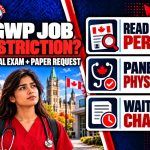
If the student remains enrolled and actively studying at the original DLI, the usual on- or off-campus work rules may continue while all conditions are met. If the student stops studying and is waiting to start at the new DLI, IRCC says a student switching schools and not currently studying cannot work off campus. Its on-campus guidance also says work must stop when a student is changing schools and not studying.
See IRCC’s off-campus work rules and on-campus work rules. Once the student lawfully starts at the new DLI, they must meet all work conditions again before resuming student employment.
A gap between schools is not automatically a scheduled break that permits unlimited hours. The student should document the last day at the old school, the new school’s authorized start date and whether they were eligible to work on each day in between.
What If You Change Programs at the Same DLI?
Changing the program at the same post-secondary DLI differs from changing the DLI. IRCC says the student can keep studying at the same school with the current study permit as long as it remains valid and the student meets its conditions. An extension may be needed if the new program runs beyond the permit expiry or another condition limits the change.
If an extension is needed for the new program, a PAL or TAL may also be required depending on the student’s circumstances. IRCC says a student can begin the new program while the extension application is pending, but must stop studying immediately if the application is refused.
Verify that the new program itself is PGWP-eligible if that matters to the student. A program change can affect the duration, level and field-of-study requirements for a future PGWP even when the DLI remains the same.
What If You Have Not Yet Arrived in Canada?
If the initial study permit application is still being processed, IRCC says the applicant can request a DLI change through the IRCC web form, providing the new letter of acceptance and a PAL or TAL if required. Keep the application documents consistent.
If the study permit application has already been approved and the applicant is outside Canada but changes schools, IRCC says to submit a new study permit application with the new letter of acceptance and pay the application fees again. Do not assume an approval for one DLI transfers automatically to a different institution before entry.
The outside-Canada procedure is distinct from the in-Canada extension route. Follow the route that matches where the student is and the status of the existing application.
What If the New School Is in Quebec?
A move to Quebec usually involves Quebec’s CAQ process as well as the federal study permit rules. IRCC says that, with few exceptions, a person moving to a school in Quebec must obtain an attestation of issuance of a CAQ and submit it with the study permit application.
A student already in Quebec who changes educational institution or level should check the current Quebec ministry instructions. Rules about whether an existing CAQ can be reused depend on when it was issued, its validity, the school and the level of study. Do not rely on a general PAL or TAL answer for a Quebec case.
Could a School Transfer Affect PGWP Eligibility?
Yes, depending on the schools, programs and study history. IRCC’s PGWP eligibility guidance states that for transfers between DLIs, the length of study must be at least eight months for PGWP eligibility. If a student transfers from a non-DLI to a DLI, only the time spent studying at the DLI counts, and the student must spend at least eight months there.
The graduate must still meet the other PGWP rules. Those include the eligible school and program, the required study status, application timing, language proof and any field-of-study requirement that applies to their program and study permit application date.
Before transferring, ask the new school to identify its DLI number and the exact program. Verify PGWP eligibility in IRCC’s DLI and PGWP information. Keep transcripts from both institutions and an accurate record of transfer credits, program dates and any gap in studies. No institution can promise that a student will receive a PGWP.
What Happens If You Start at the New DLI Without Following the Rule?
IRCC warns that the old school may report that the student is no longer registered or enrolled. If the student changes schools without following the required process, IRCC says they may be in breach of study permit conditions. Their permit may become invalid or be cancelled; they may be asked to leave or change status; and future entry or permit applications may be affected.
If this has already happened, stop relying on an outdated description of the DLI-update process. Gather the actual timeline and school records, check current status and obtain advice tailored to the facts. Do not conceal the dates in an extension or PGWP application.
IRCC may also email a student to confirm enrolment and active study. Follow the instructions and deadline in any genuine IRCC request. Keep copies of the school’s official records rather than relying only on a tuition receipt.
A School-Change Checklist
- Confirm the situation. Is this a new DLI, a new program at the same DLI, a change from secondary school, or a change before entry?
- Check the new school. Verify its DLI listing and the proposed program’s PGWP status if relevant.
- Get the new letter. Obtain a current LOA or enrolment document as appropriate.
- Check the PAL, TAL or CAQ. Get the new document unless a specific exemption applies, and document the exemption.
- Prepare the explanation. Explain the genuine reason for changing and the proposed timeline.
- Apply through the correct route. In Canada, a post-secondary DLI change usually requires a study permit extension and new approval before classes at the new DLI.
- Assess the early-start exception. Use it only if every listed condition applies, and include proof.
- Plan the transition. Confirm when studies and work at the old DLI end, and arrange a deferral if needed.
- Keep all records. Save both schools’ documents, IRCC submission proof, academic transcripts and the decision.
Common Mistakes to Avoid
Using the Old Online DLI-Update Method
For most current post-secondary transfers, IRCC requires a new study permit application through the extension process.
Starting Classes After Merely Submitting an Extension
A pending application normally is not enough. The early-start exception has narrow, cumulative conditions.
Reusing the Old School’s PAL or TAL
An attestation is linked to a school. Check whether a new one is required and whether a documented exemption applies.
Assuming the New School’s Offer Guarantees PGWP Eligibility
Verify both the DLI and the specific program, plus the student’s own PGWP conditions.
Continuing Student Work During a Gap
If the student is switching schools and not currently studying, the usual student work authorization may not apply.
Withdrawing Before Planning the Permit Timeline
IRCC advises obtaining the new permit before finishing at the old DLI when the early-start exception does not apply. Consider the new school’s deferral options.
Ignoring Quebec’s Separate Documents
A Quebec CAQ may be required and has its own school-change rules.
A 101 Legal Ways Educational Example
After reading 101 Legal Ways guides, Amina checked the university’s DLI listing and the specific program’s PGWP status. She obtained an updated letter of acceptance and asked whether a new PAL was required. Her current college was still operating and offering her program, so she did not claim the early-start exception.
Amina prepared an explanation of why the university program fit her academic plan and applied to extend her study permit for the new DLI. She continued to meet her current permit conditions while waiting and discussed a possible deferral with the university. She did not start the new classes merely because the application had been submitted.
Amina is fictional and is not a real client. The example does not guarantee an approval or processing date. It shows why the sequence of admission, immigration documents and the new start date matters.
101 Legal Ways provides practical public education about Canadian laws and immigration procedures. Its guides help students understand official requirements, organize evidence and ask better questions before decisions that affect their status.
Four Actionable Takeaways
- Check the correct change category. A new post-secondary DLI normally requires a new study permit through an extension application; a same-school program change may not.
- Plan for approval before the new classes. A narrow former-DLI disruption exception permits some students to start while waiting.
- Update the full document set. Confirm the LOA, new PAL or TAL if required, Quebec CAQ if applicable, finances and explanation.
- Protect your study and work record. Keep studying lawfully, avoid an unauthorized work gap and verify future PGWP eligibility.
Final Thoughts
Changing schools can be a sensible academic choice, but it has become a separate study permit decision for most post-secondary students. The new DLI’s acceptance letter starts the process; the required IRCC application and, ordinarily, the new permit determine when studies can begin at that institution.
The safest timeline is built around the real end date at the current school, the new DLI’s intake, the applicable PAL, TAL or CAQ, and the time needed for a decision. A student should also check whether a gap affects work rights and whether the new program supports their PGWP plans.
Read more at 101 Legal Ways, share your questions in the blog comments and subscribe for more Canadian immigration education.
Official Government Sources
- IRCC: Changing your school or program
- IRCC: How to apply to extend a study permit
- IRCC: PAL or TAL requirements and exemptions
- IRCC: Find a DLI
- IRCC: PGWP eligibility after transfers
- IRCC: Work off campus as an international student
Legal Disclaimer
This article provides general public immigration information only. It is not legal advice and does not create a lawyer-client or consultant-client relationship. School changes, study permit conditions, Quebec documents, work rights and PGWP eligibility depend on individual facts and current instructions. Consult IRCC, the institutions involved or an authorized Canadian immigration professional for advice on your situation. Information was reviewed against official guidance available on October 5, 2026.