









































Unauthorized Work by International Students: How It Can Affect Status and Future Applications

Working while studying is one of the most valuable parts of the international student experience in Canada, offering income, experience, and connection to Canadian workplaces. It is also one of the areas where small misunderstandings can create serious consequences. Many students assume that as long as they hold a valid study permit, working is simply a matter of finding a job and showing up. In reality, work authorization comes with specific conditions, and stepping outside those conditions, even unintentionally, is treated as a real violation under Canadian immigration law.
This guide explains what counts as unauthorized work for a study permit holder, the situations most likely to create risk, how hours are calculated, and what the potential consequences are for both current status and future immigration applications.
What This Guide Covers
This article addresses the specific situations that can result in unauthorized work for a study permit holder, including working before a program of study begins, exceeding the permitted off-campus work hours, working during an authorized leave or after a suspension or dismissal, self-employment, and unpaid or informal work arrangements. It also explains how IRCC treats these violations and what the broader consequences can be for a student’s current status and future applications.
A Realistic Opening Scenario
Divya received her study permit with off-campus work conditions printed on it and was excited to start earning some income shortly after arriving in Canada. A part-time retail job became available almost immediately, and she accepted a schedule that occasionally required more than 24 hours in a single week when the store was short-staffed, assuming that a few extra hours here and there during a busy week would not really matter.
After several months, Divya read more carefully through her study permit conditions and realized that the 24-hour weekly limit was calculated strictly, with no informal allowance for busy weeks or employer scheduling needs. She recognized that she had likely exceeded her authorized hours on more than one occasion without intending to do anything wrong. Rather than continuing without addressing the issue, she began tracking her hours meticulously going forward, spoke with her employer about staying within the limit, and looked into what her options were for addressing the hours she may have already exceeded.
What Counts as Unauthorized Work
Working in Canada without proper authorization is illegal, and this applies to study permit holders just as it does to anyone else. For students, unauthorized work generally falls into a few recognizable categories: working before a study program has actually started, working more hours than the conditions on the study permit allow, working without the required conditions printed on the permit at all, continuing to work during a period when a student is not actively pursuing studies, and working in a way that is not connected to a study permit’s actual authorization, such as self-employment activities that are not properly tracked or reported.
Working Before the Program Starts
A study permit holder is not authorized to work, whether on or off campus, before their program of study has actually begun. This is true even if the study permit itself has already been issued and even if it already includes work conditions. The authorization to work is tied to active study, not merely to holding a valid permit, and students who begin working immediately upon arrival, before classes have started, risk working without authorization during that period.
Exceeding the 24-Hour Off-Campus Work Limit
For eligible study permit holders, off-campus work without a separate work permit is limited to 24 hours per week during a regular academic session, and full-time during a regularly scheduled break, provided the student continues to meet the required conditions. This limit applies regardless of how many employers a student works for; hours across multiple jobs are combined, not treated separately per employer. Working more than 24 hours per week off campus is treated as a violation of study permit conditions, and can result in a student losing their student status, along with negatively affecting future study or work permit applications, and potentially requiring the student to leave the country.
Hours are calculated based on any time spent earning wages or collecting a commission. A student who is self-employed is personally responsible for tracking their own hours and demonstrating compliance with their study permit conditions, since there is no employer keeping those records on their behalf in that situation.
Working During a Leave, Suspension, or After Dismissal
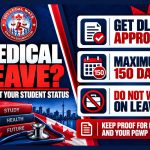
A student who is not actively pursuing their studies, whether due to an authorized leave, an academic suspension, or a dismissal, generally is not entitled to rely on off-campus work conditions in the same way as a student in active status. Study permit conditions require holders to show they are actively pursuing their studies, and work authorization tied to active study status does not automatically continue during periods when that condition is not being met. A student navigating a leave, suspension, or dismissal should treat their ongoing eligibility to work as a distinct question requiring careful review, rather than assuming their existing work authorization continues unaffected.
Self-Employment and Informal Work
Self-employment does not exempt a student from work-hour rules or from immigration requirements more broadly. A self-employed study permit holder must still track their own hours and remain within the applicable limits, and must be able to demonstrate this compliance if asked. Informal or unpaid arrangements can also raise questions depending on the nature of the activity; if the activity constitutes the kind of work that would otherwise require authorization, the absence of formal pay does not automatically remove it from consideration as work for immigration purposes. Students engaging in freelance work, informal gig arrangements, or unpaid roles that resemble paid employment should not assume these fall outside the scope of work-hour rules without confirming their specific situation.
Important Distinction: A Study Permit Alone Does Not Authorize Unlimited Work
It is worth stating plainly: holding a valid study permit does not, by itself, mean a student can work any amount, in any arrangement, at any time. Work authorization depends on specific conditions printed on the permit, on the student actively pursuing their studies, and on staying within the applicable hour limits where they apply. Students should read their own study permit conditions carefully rather than relying on general assumptions about what international students are typically allowed to do.
Consequences of Unauthorized Work
IRCC’s own guidance on unauthorized work sets out a range of serious potential consequences. These include being removed from Canada, having a permanent record of fraud associated with the immigration file, being barred from returning to Canada for five years in serious cases, and negatively affecting the chances of future applications being approved, including applications for permanent residence. Working more hours than authorized specifically is described as a violation of study permit conditions that can result in loss of student status and can prevent approval of future study or work permit applications.
This article does not predict how any individual instance of unauthorized work will be treated, since outcomes depend heavily on the specific circumstances, including how the violation is discovered, its extent, and whether it appears connected to any broader concern such as misrepresentation. However, the range of consequences described in official guidance makes clear that this is not treated as a minor administrative matter.
How This Affects Study Permit Status
A student who works without authorization risks being found to have violated the conditions of their study permit, which can lead to loss of student status. Losing status in this way is a different and more serious situation than simply having a permit expire, since it stems from a compliance issue rather than the passage of time, and it can affect how future applications are assessed.
How This Affects Future Work Permit and Study Permit Applications
Because unauthorized work is treated as a documented compliance issue, it can affect a student’s ability to have future study or work permit applications approved. An officer reviewing a later application may take a history of unauthorized work into account when assessing the applicant’s overall compliance with Canadian immigration law. This article does not describe every possible way this history might be weighed, since this depends on the specific facts and the officer’s assessment, but students should understand that a work-hour violation does not simply disappear once corrected; it can remain relevant to the student’s immigration record going forward.
How This Affects PGWP Eligibility
PGWP eligibility depends on having met the conditions of a study permit throughout a program, including any work-related conditions. A history of unauthorized work during studies can accordingly raise concerns during a PGWP application, since the officer assessing that application is reviewing whether the applicant complied with their study permit conditions throughout their studies, not only at the point of program completion. A student with a possible history of unauthorized work should treat this as a serious factor to address carefully, ideally with qualified legal advice, before submitting a PGWP application.
Documents Students Should Obtain and Preserve
- The study permit itself, showing the exact work conditions printed on it
- Employment records, including pay stubs and scheduling records, that can help demonstrate actual hours worked
- Records of the program start date, to confirm the point from which work authorization began
- Any communication with employers about hours and scheduling
- Records related to any leave, suspension, or change in enrolment status, and how this affected work eligibility
- For self-employed students, personal tracking records of hours worked and income earned
Step-by-Step Actions to Consider
- Read your study permit conditions carefully to confirm exactly what kind of work you are authorized to do and under what circumstances.
- Track your work hours across all employers, since the 24-hour limit applies to combined hours, not per employer.
- Do not work before your program of study has officially started, even if your permit already includes work conditions.
- Confirm your work eligibility during any leave, suspension, or change in enrolment status before continuing to work.
- If self-employed, keep detailed personal records of hours worked and be prepared to demonstrate compliance if asked.
- If you realize you may have exceeded your authorized hours, address the situation proactively rather than continuing the same pattern, and consider seeking advice from a qualified immigration professional.
- Before applying for a PGWP or a new study or work permit, review your work history carefully for any potential compliance concerns.
- Do not assume informal, unpaid, or freelance arrangements automatically fall outside work-hour rules without confirming your specific situation.
Possible Consequences
- A student who works more hours than authorized, works before their program starts, or works without proper conditions on their permit may lose their student status and face difficulty with future study or work permit applications.
- In serious cases, unauthorized work may result in removal from Canada and a period during which the person cannot return.
- A student who proactively identifies and corrects a compliance issue, and who seeks appropriate legal advice, is in a different position than one who continues a known violation, though this article does not predict how any specific case will be assessed.
- A history of unauthorized work may affect the assessment of future applications, including PGWP and permanent residence applications, since these assessments generally consider compliance with study permit conditions throughout the period of study.
Common Mistakes to Avoid
- Assuming that holding a valid study permit automatically means unlimited or unrestricted work is allowed
- Working before a study program has officially started
- Miscounting hours by tracking each employer separately instead of combining total hours across all jobs
- Assuming self-employment or freelance work falls outside work-hour rules without confirming this
- Continuing to work during a leave, suspension, or after a dismissal without confirming continued eligibility
- Assuming unpaid or informal work is automatically exempt from consideration as work for immigration purposes
- Waiting to address a known compliance issue instead of correcting it proactively and seeking advice
A 101 Legal Ways Educational Example
Consider a fictional student, referred to here as Femi, who is not a real client and whose situation is used strictly as an educational example. Femi held two part-time jobs and had been tracking his hours separately for each employer, believing that as long as neither individual job exceeded 24 hours in a week, he was complying with his study permit conditions.
After reading 101 Legal Ways guides on unauthorized work, Femi realized that the 24-hour limit applied to his combined hours across both jobs, not to each job separately, and that he had likely exceeded the limit in several weeks without realizing it. He began tracking his combined hours carefully going forward and sought guidance on how to address the situation properly before it could affect any future application.
This scenario does not represent a real client, does not describe a real case, and does not guarantee that any student’s situation will be resolved in a particular way. It illustrates how a seemingly reasonable assumption about work-hour rules can lead to an unintended compliance issue, and how understanding the actual rule can help a student correct course. 101 Legal Ways provides practical public education about Canadian laws and immigration procedures so that students and prospective students can understand their situation clearly before making decisions.
Four Actionable Takeaways
- Know the exact work conditions printed on your own study permit rather than relying on general assumptions about what international students can do.
- Track your combined hours across all employers, since the 24-hour off-campus limit applies to total hours worked, not per job.
- Never work before your program of study officially begins, even if your permit already includes work conditions.
- If you discover a possible compliance issue, address it proactively and seek qualified advice, particularly before applying for a PGWP or another future permit.
Final Thoughts
Work authorization for international students in Canada is a genuine privilege that comes with real limits, and the consequences of stepping outside those limits, even unintentionally, can be serious and long-lasting. Understanding exactly what your study permit authorizes, tracking your hours carefully across every job, and treating any potential compliance issue with the seriousness it deserves are the best ways to protect both your current status and your future immigration prospects in Canada.
Official Government Sources
- Work off campus as an international student
- Understand the consequences of unauthorized work
- Study permit conditions
- What to do if your permit expired
Legal Disclaimer
This article provides general public legal and immigration information only. It is not legal advice and does not create a lawyer-client or consultant-client relationship. Immigration rules, institutional procedures and individual circumstances may change. Consult IRCC, your designated learning institution or an authorized Canadian immigration professional for advice about your specific situation. Information was reviewed against official guidance available on August 24, 2026.