





























Full-time enrolment is one of those requirements that seems simple on the surface but carries real weight throughout an international student’s time in Canada. A single term of reduced course load, taken for entirely reasonable personal or academic reasons, can have consequences that only become apparent much later, often at the exact moment a student applies for a post-graduation work permit and discovers the decision they made years earlier is now central to that application. Understanding how full-time and part-time status interact with study permit conditions, work eligibility, and PGWP requirements is essential before making any decision to reduce a course load.
This guide explains what full-time and part-time status mean in the study permit context, the narrow exceptions that exist, how off-campus work eligibility depends on enrolment status, and how a part-time term can affect PGWP eligibility later on.
What This Guide Covers
This article covers the general requirement to maintain full-time status as a study permit holder, the specific and limited exceptions to that requirement, how a school defines full-time and part-time status, how enrolment status affects off-campus work eligibility, and how part-time enrolment during a program can affect PGWP eligibility after graduation.
A Realistic Opening Scenario
Omar was finding one particular semester unusually difficult, both academically and personally, and considered reducing his course load to part-time for that term to manage his workload. He assumed that because he intended to return to full-time studies the very next semester, and because he was still actively enrolled and attending classes, a single part-time term would not cause any lasting problem.
Before making the change, a friend mentioned that this kind of decision could affect his eligibility for a post-graduation work permit much later, which was not something Omar had previously considered. He began looking more closely at how his designated learning institution defined full-time and part-time status for his specific program, and what the actual rules said about reduced course loads outside of an authorized leave or a final semester, rather than assuming that a single difficult term would have no lasting consequences.
The General Requirement to Maintain Full-Time Status
As a condition of holding a study permit, a student must generally show that they are actively pursuing their studies, which includes being enrolled full-time or part-time during each academic semester, excluding regularly scheduled breaks, and making progress toward completing their program. While the study permit conditions themselves allow enrolment to vary between full-time and part-time in certain circumstances, this general study permit compliance requirement is separate from the specific and stricter full-time requirement that applies to PGWP eligibility, which this article addresses in detail below.
What counts as full-time or part-time status is generally defined by the designated learning institution itself, based on its own academic standards for a given program, rather than by a single universal number of credits that applies across all schools. A student should confirm with their own institution exactly what course load qualifies as full-time for their specific program before assuming their own understanding is correct.
Off-Campus Work Eligibility and Full-Time Status
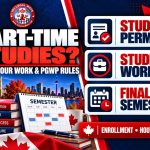
Eligibility to work off campus without a separate work permit depends, among other conditions, on being enrolled full-time at a designated learning institution. A student who is enrolled part-time generally does not meet this requirement and is not eligible to work off campus on the strength of their study permit alone, unless a specific exception applies.
The main exception to this rule applies to a student’s final semester. A student may work off campus while studying part-time if they are in their final semester and do not require a full course load to complete their program, provided they were enrolled full-time in all preceding semesters. Outside of this final-semester exception, and outside of regularly scheduled breaks where full-time status before and after the break is maintained, a part-time student generally does not qualify for off-campus work eligibility under the standard rules. Students who were not eligible for off-campus work but whose situation has since changed can apply to have their study permit conditions amended if they now meet the requirements.
PGWP Eligibility and Full-Time Status
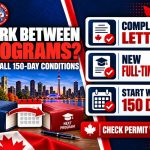
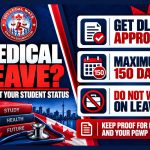
The requirement to maintain full-time status is applied even more strictly when it comes to PGWP eligibility. To be eligible for a PGWP, an applicant must generally have maintained full-time student status in Canada during each academic session of their study program, with a specific, limited exception for the final academic session, which may be part-time. Beyond scheduled breaks, which do not count against a student since they are built into the academic calendar, and an authorized leave approved by the DLI of no more than 150 days, there is no general allowance for a part-time term at any other point in a program.
This means a student who reduces their course load to part-time during a middle semester, for reasons entirely unrelated to an approved leave or their final semester, risks losing PGWP eligibility for their entire program, even if every other semester was completed full-time. This is a significant and, for many students, an unexpected consequence, since the decision to go part-time in a given semester is often made without any awareness of its long-term effect on a PGWP application that may not be submitted until years later.
Important Distinction: The Final Semester Exception Is Narrow
It is important to understand precisely how limited the final semester exception actually is. It applies only to a student’s genuinely last academic session, and only where the student does not need a full course load to complete their remaining program requirements. A student assumed to be in their final semester due to a delayed graduation, for example following a failed course that pushes graduation back, may still fall under this exception in some circumstances, but this depends on the specific facts, including whether the student continued to show reasonable academic progress throughout their studies. A student should not assume that any semester they personally consider to be their “last one” automatically qualifies for this exception without confirming this against the specific PGWP eligibility criteria and their own institution’s records.
Documenting a Part-Time Final Semester or Authorized Leave
For students relying on the final semester exception, or on an authorized leave, keeping clear documentation is essential. This includes an official transcript or letter from the DLI confirming the reduced course load was due to finishing final program requirements, or documentation confirming an authorized leave was properly approved and did not exceed 150 days. When submitting a PGWP application, a student in this situation may wish to explain the specific circumstances clearly, since an officer reviewing a transcript that shows a part-time term will be assessing whether it falls within a recognized exception or represents a general compliance concern.
How This Affects Study Permit Status
A student who does not maintain full-time or part-time enrolment consistent with actively pursuing their studies, and who does not fall within a recognized exception, risks not meeting the ongoing conditions of their study permit. This is a separate and more general compliance concern from the specific PGWP full-time requirement, but both stem from the same underlying principle: a study permit is tied to genuine, active pursuit of a program of study, not simply to holding a valid document.
How This Affects Work Authorization
As explained above, off-campus work eligibility depends on full-time status except in narrow circumstances such as an eligible final semester. A student who drops to part-time status outside of these exceptions, while continuing to work off campus based on their existing study permit conditions, risks working without the required eligibility, since the underlying enrolment condition supporting that work authorization is no longer being met.
Documents Students Should Obtain and Preserve
- Official transcripts showing enrolment status, course load, and grades for every semester of the program
- Written confirmation from the DLI of what constitutes full-time status for the specific program
- Documentation of any authorized leave, including DLI approval and exact start and end dates
- If relying on the final semester exception, a letter or transcript confirming the reduced course load was specifically due to finishing final program requirements
- Records of continued academic progress throughout the program, particularly if a final semester was delayed
Step-by-Step Actions to Consider
- Confirm with your designated learning institution exactly what qualifies as full-time status for your specific program before making any decision about course load.
- Understand that the final semester exception is narrow and applies only if you do not need a full course load to complete your remaining requirements.
- If you are considering an authorized leave instead of reducing your course load, confirm the DLI approval process and the 150-day limit before proceeding.
- Keep detailed transcripts and enrolment records for every semester, since these will be reviewed carefully at the PGWP stage.
- Before working off campus during any part-time term, confirm whether you actually meet the eligibility requirements, since part-time status generally disqualifies a student outside the recognized exceptions.
- If your graduation is delayed and your final semester becomes uncertain, keep clear records connecting the delay to your specific remaining program requirements.
- When applying for a PGWP, review your full academic history for any part-time terms outside an authorized leave or your genuine final semester before submitting the application.
- If you have already completed a part-time term outside these exceptions, seek advice from a qualified immigration professional before applying for a PGWP, since this is a significant eligibility question best assessed individually.
Possible Consequences
- A student who studies part-time in a semester that is not their genuine final semester, and that is not an approved leave, may lose eligibility for a PGWP based on that entire program, even if all other semesters were completed full-time.
- A student who works off campus while enrolled part-time outside a recognized exception may be considered to be working without proper eligibility, which can carry its own separate consequences.
- A student who properly documents an authorized leave or a genuine final semester exception is in a stronger position when a PGWP application is later reviewed, though this article does not guarantee that any specific application will be approved.
Common Mistakes to Avoid
- Assuming that intending to return to full-time studies the following semester protects a part-time term from affecting PGWP eligibility
- Confusing a personally perceived “final semester” with the specific final semester exception defined for PGWP eligibility
- Reducing course load without confirming the school’s specific definition of full-time status for that program
- Continuing to work off campus during a part-time term without confirming eligibility still applies
- Taking an unapproved break instead of formally requesting an authorized leave through the DLI
- Failing to keep documentation connecting a reduced course load to genuine final program requirements
- Assuming a single part-time semester is a minor issue that will not be scrutinized at the PGWP stage
A 101 Legal Ways Educational Example
Consider a fictional student, referred to here as Priscilla, who is not a real client and whose situation is used strictly as an educational example. Midway through her program, Priscilla considered reducing her course load for one semester due to a demanding part-time job, intending to return to full-time studies immediately afterward.
After reading 101 Legal Ways guides on part-time studies and PGWP eligibility, Priscilla understood that this kind of mid-program part-time term, outside an approved leave or her actual final semester, could jeopardize her PGWP eligibility for her entire program regardless of her intention to return to full-time status. She spoke with her school’s international student office about either maintaining full-time status through a lighter distribution of courses or formally requesting an authorized leave instead, rather than informally reducing her course load without addressing the compliance question directly.
This scenario does not represent a real client, does not describe a real case, and does not guarantee that any student’s enrolment decisions will lead to a particular PGWP outcome. It illustrates how understanding the narrow exceptions to the full-time requirement can help a student make a more informed decision before changing their course load. 101 Legal Ways provides practical public education about Canadian laws and immigration procedures so that students and prospective students can understand their situation clearly before making decisions.
Four Actionable Takeaways
- Full-time status is generally required in every semester for both study permit compliance and PGWP eligibility, with only narrow exceptions.
- The final semester exception applies only if you do not need a full course load to complete your remaining requirements, and only if you were full-time in every preceding semester.
- An authorized leave, approved by your DLI and lasting no more than 150 days, is different from a part-time term and follows its own separate rules.
- Confirm your enrolment status and its consequences with your DLI before reducing your course load, since a single unapproved part-time term can affect your entire PGWP eligibility.
Final Thoughts
The requirement to maintain full-time status throughout a study program is one of the more rigid rules in the Canadian international student system, with very little flexibility outside a genuine final semester or a properly authorized leave. Because the consequences of an unplanned part-time term often only surface much later, at the PGWP stage, students facing academic, personal, or work-related pressure to reduce their course load should treat this decision with real caution and confirm the specific rules with their institution before proceeding. Careful planning and clear documentation throughout a program are the best tools a student has to protect their eligibility for a PGWP down the line.
Official Government Sources
- Post-graduation work permit: Who can apply
- Work off campus as an international student
- Study permit conditions
- Guide 5580: Applying for a Work Permit – Student Guide
Legal Disclaimer
This article provides general public legal and immigration information only. It is not legal advice and does not create a lawyer-client or consultant-client relationship. Immigration rules, institutional procedures and individual circumstances may change. Consult IRCC, your designated learning institution or an authorized Canadian immigration professional for advice about your specific situation. Information was reviewed against official guidance available on August 24, 2026.